Climate is the long-term pattern of weather in a particular region, usually measured over 30 years or more. Weather can change every few hours, but throughout the year, similar patterns repeat annually- for example, summers are typically hot and tend to occur during the same months each year. However, these patterns are now shifting due to climate change.123
Our current atmosphere456789101112
A planet’s atmosphere is a layer of gases that blanket the planet because its gravity has caught hold of them. For Earth, this layer begins at the surface of the planet, and extends up to around 10,000 kilometres, though most of the atmosphere lies within the first 100 kilometres.
Our atmosphere at the moment is approximately 78% nitrogen, 21% oxygen, and 1% other gases including carbon dioxide (approximately 0.04% of the atmosphere, which is 420+1314 ppm as of 2024), water vapour, and argon. It is now divided into five distinct layers based on how temperature changes with altitude:
1. The Troposphere (0-12 km)1516
This is the lowest layer where we live and breathe. It contains about 75-80% of all the air in the atmosphere and almost all water vapour, which forms our clouds and weather. Temperature decreases as you go higher- about 6.5°C cooler for every kilometre up. This is where all our weather happens, including storms, rain, and snow. Commercial airplanes typically fly in the upper part of this layer.
2. The Stratosphere (12-50 km)17
Above the troposphere lies the stratosphere, which contains the ozone layer (formed between 600 to 500 million years ago18, the Stratosphere contains about 90% of Earth’s ozone). Unlike the troposphere, temperature increases with altitude here because ozone absorbs UV energy from the Sun. This layer is very stable with little weather activity, making it ideal for some aircraft to fly in.
3. The Mesosphere (50-85 km)
The mesosphere is where the temperature decreases again with altitude, reaching as low as -90°C. Most meteors burn up in this layer, creating “shooting stars.” Rare, shimmering noctilucent clouds also appear here sometimes.
4. The Thermosphere (85-600 km)
In this layer temperatures can reach up to 1,500°C or higher, though the air is so thin that you wouldn’t feel hot. This is where the International Space Station orbits and where we see the beautiful aurora (northern and southern lights) when solar particles interact with the atmosphere. Radio waves also bounce off this layer, enabling long-distance communication.
5. The Exosphere (600+ km)
The outermost layer, the exosphere, gradually fades into space. The air here is so thin that molecules rarely collide with each other, and this is where many satellites orbit.
Structure 1920
The Earth’s orbital parametres, axial tilt, and magnetic field have profoundly shaped our planet’s atmosphere, climate, geology, and ecology throughout its 4.6-billion-year history. Our orbital variations, known as Milankovitch cycles, operate on timescales of tens to hundreds of thousands of years and have been fundamental drivers of climate change throughout our planet’s geological history.
Birth212223
When our planet was new (new-ish, around 4.6 billion years ago), it had no atmosphere at all. However, sometime later it likely captured passing helium and hydrogen atoms to cover itself in a flimsy lamina of hydrogen and helium, which are the lightest and most abundant materials in the universe, but later, because early Earth was so hot and these gases were so light, these gases escaped into space, leaving our planet with virtually no air.
Several billion years later, between 4.5-4.0 billion years ago2425, the planet had (finally) begun to cool, and massive volcanic eruptions had started spewing gases from the Earth’s interior. These gases included water vapour (steam), carbon dioxide, nitrogen, methane, and ammonia, in a process now named “outgassing”.2627 This was our second atmosphere, a thick, steamy, poisonous (to the current inhabitants of the planet) soup largely dominated by carbon dioxide and water vapour, and no oxygen.28
There is evidence from zircon magnetism indicating the planet’s geomagnetic field existed at least 4.2 billion years ago.29 This early establishment coincides with genetic estimates for the age of the Last Universal Common Ancestor (LUCA)30, suggesting the magnetic field provided crucial protection for early life by shielding against solar and cosmic radiation.31
Already at this stage early geological changes were shaping climate: as the first solid crust formed and differentiated into early landmasses, these geographical features began affecting atmospheric circulation patterns.3233 Volcanic activity also wasn’t random- it was concentrated along the boundaries of the first primitive tectonic plates, creating regional variations in atmospheric composition and temperature.34
Oceans, Outgassing, CO₂ Reduction
The Earth continued to cool, and the water vapour that dominated the atmosphere started to condense into liquid water and formed the first oceans between 4.0-3.5 billion years ago.3536 The bad weather continued for millennia, and much of the atmospheric carbon dioxide that the volcanoes had worked so hard to belch out earlier was dissolved in the rain, now forming carbonate compounds that were deposited as sedimentary rocks.3738 This process gradually reduced the amount of CO₂ in the air and helped stabilise Earth’s climate.3539 We got lucky here in three distinct ways:
1. We were the right distance from our star: if the planet had been too close to the Sun, the water vapour would never have condensed into liquid, and if we were farther away than we are, our water would have been ice;40
2. Our size: Our planet was large enough to have enough gravity to hold on to all the atmosphere and water;4142 and
3. The Earth’s molten iron core: The planet has a molten iron core, and due to this we have a magnetic shield (called the “magnetosphere”) protecting us from solar wind (charged particles ejected continuously from the Sun outwards towards the planets.4344 Solar winds help produce the beautiful auroras our poles are famous for when they interact with our magnetosphere, but damage technology and organisms due to solar radiation. They also affect climate and weather).45
This is also when Earth’s first stable continents were being formed, and their development was crucial for shaping climate at the time: as the earliest continental masses formed through volcanic activity and tectonic processes, they created the first true land-ocean contrasts.3546 These early landmasses absorbed heat differently than oceans, creating the first temperature gradients that drove primitive atmospheric circulation. The beginnings of continental drift also started affecting global heat distribution as landmasses slowly moved to different latitudes.46
Life arrives
Around 3.8-3.5 billion years ago, the first life forms appeared in Earth’s oceans.4748 These early organisms were simple prokaryotes (bacteria and archaea) that thrived in the oxygen-free environment.4849 Many of these early life forms were anaerobic, meaning they didn’t need oxygen and actually found it toxic.3950 Stellar evolution models indicate that the Sun’s luminosity was approximately 25-30% lower during the Archean (3.8-2.5 billion years ago) compared to present-day.5152 Despite this “faint young Sun,” geological evidence clearly shows liquid water existed on Earth’s surface throughout this period.5152 Some climate models suggest that higher levels of greenhouse gases like CO₂ and methane could warm the early Earth. Lower planetary albedo (meaning less sunlight reflected back into space) and fewer continents would also contribute to these temperatures. Together, these factors may have kept the planet above freezing without extremely high greenhouse gas concentrations.5152
Photosynthesis!
3.5 billion years ago, the first cyanobacteria (the Blue-Green Algae we studied in school) invented photosynthesis: i.e., they began using sunlight to make their own food, while producing oxygen as a waste product.5354 Initially, this oxygen didn’t accumulate in the atmosphere because it immediately reacted with dissolved iron in the oceans, forming banded iron formations (rust-coloured iron oxide deposits that we can still see in rocks today).5455 This process continued for over a billion years, slowly removing iron from the oceans while cyanobacteria continued producing oxygen.54
At this time our planet had 17-ish hour days rather than 24-hour days: evidence from ancient banded iron formations suggests the Moon was approximately 60,000 kilometres closer to Earth 2.46 billion years ago.56 This closer lunar proximity would have created much stronger tidal forces and more rapid precession cycles, fundamentally altering climate patterns.57
For several million years, nearly all the oxygen being produced by the Blue-Green Algae was used up by the free oxygen molecules reacting with other chemicals on our planet or in the atmosphere. However, around 2.4 billion years ago, there was finally enough oxygen in the atmosphere that it could not all be used up in the chemical reactions, and the excess oxygen started building up in the atmosphere.58 This critical tipping point is known as the Great Oxidation Event (GOE).59
This is the first example of life forms fundamentally altering the planetary atmosphere, and also the first great extinction event. Oxygen was toxic to the anaerobic organisms that had dominated Earth for over a billion years, and it’s accumulation in the atmosphere caused massive die-offs.60
Due to this catastrophe, some organisms learnt to tolerate oxygen, which was toxic to them up until this point, by creating special defence mechanisms against the poisonous effects of oxygen such as antioxidants and protective enzymes.6162 Other organisms evolved a brand new way of using oxygen- instead of just tolerating it, they started using it for a process called cellular respiration. Before oxygen, organisms had to get energy through anaerobic (meaning “without oxygen”) respiration, which yields much less energy from the same quantity of fuel: using oxygen for energy produces more than seven times more energy than anaerobic respiration.63
This energy revolution resulted pivotal evolutionary advances:6465
1. Cells could now afford to be more complex because they had abundant energy to run more sophisticated machinery;66
2. Organisms could grow larger because they had enough energy to power bigger bodies;6465 and
3. More complex behaviours and functions became possible because there was energy to spare for “luxury” activities.6768
These three points led to another evolutionary breakthrough: the evolution of eukaryotic cells (cells with a nucleus).69 These cells had a nucleus which works as a control centre, several mitochondria (yes, that one), which works as a (yes, that (mitochondria is the powerhouse of the cell)), and organelles that all work specialised functions.
So the oxygen produced by photosynthetic organisms completely transformed Earth’s atmosphere, oceans, and even geology: it caused iron to rust out of the oceans, changed the chemistry of rocks, and created new minerals that had never existed before on Earth.7071
Snowball Earth7273
Some of the most extreme climate events in Earth’s history occurred during the Neoproterozoic Era (750-580 million years ago), when the planet experienced several “Snowball Earth” glaciations that covered most of its surface in ice. These events covered most of Earth’s surface in ice and represented the one of the most dramatic climate changes in planetary history. Analysis of banded iron formations from the Sturtian glaciation shows evidence for orbital forcing (which are variations in Earth’s orbit which influence the amount of solar radiation received by the Earth over time74), with ice sheets advancing and retreating in response to changes in the planet’s orbit. This orbital control provided crucial refugia where life could survive during these extreme times.
The first migration
Around 600 million years ago, a single lineage of freshwater green algae began evolving adaptations that would eventually enable life to transition to land. These early charophyte algae lived approximately 540-520 million years ago during the early Cambrian Period approximately 540-520 million years ago during the early Cambrian Period in shallow freshwater pools and muddy banks, slowly developing resistant coatings to prevent them from drying out when water levels dropped.7576 This remarkable burst of biological innovation fundamentally transformed things: recent research indicates that only a modest increase in atmospheric oxygen around 540 million years ago was sufficient to trigger major ecological changes. The Cambrian Period featured extraordinarily high atmospheric CO₂- between 4,000 and 7,000 ppm, with some estimates peaking at 8,960 ppm. These levels produced intense greenhouse conditions: global temperatures were significantly warmer than today, sea surface temperatures were likely 10–15°C higher than today, and the planet was entirely ice-free, with no permanent polar ice sheets.7778
One of the most significant developments in this period was the widespread emergence of biomineralisation, which is the ability of organisms to produce hard shells and skeletons. The timing of biomineralisation appears linked to changing seawater chemistry during the formation of the Great Unconformity, when widespread erosion released massive quantities of calcium, iron, potassium, and silica into the oceans.7980 Another transformative evolution was bioturbation- the mixing and burrowing activities of early animals in seafloor sediments. This behaviour changed the interaction between ocean floor sediments and sea water, increased the circulation of nutrients and altered porewater chemistry.81
Around this time, as oxygen levels continued to increase, oxygen molecules high in the atmosphere continued to be split apart by the Sun’s ultraviolet radiation and recombined to form ozone (O₃).82 This thickened the ozone layer, a protective shield that blocks harmful UV radiation, which had been accumulating in the atmosphere since the previous 2 billion years,83 but was now reaching protective capacity due to the additional free oxygen now present in the atmosphere.84 This was another crucial planetary development: Before the ozone layer had asserted itself, UV radiation made Earth’s land surface deadly to most life forms.8285
The ozone shield, created entirely by the oxygen from living organisms, made it possible for life to eventually colonise land around 500–470 million years ago.86 Without life producing oxygen, there would be no ozone layer, and Earth’s surface would still be uninhabitable. Around 470-485 million years ago,86 the first true land plants (called embryophytes) made their appearance. These early pioneers were tiny, simple organisms that looked more like green carpets than modern plants,87 and due to this primitive rug oxygen levels started rising again as land-based photosynthesis added to marine oxygen production, and as these plants and organic matter started breaking down rock surfaces, and atmospheric CO2 started dropping due to photosynthesis (which uses CO2 as fuel).8889
When plants colonised land, they created another major feedback loop with the atmosphere. Land plants dramatically increased oxygen production through photosynthesis while simultaneously removing carbon dioxide from the air. In time, forests became massive carbon storage systems, locking CO₂ in wood and soil.8889 The rise of plants also affected Earth’s planetary energy balance because green vegetation reflects less sunlight than bare rock, changing Earth’s albedo (reflectivity, with a value between 0 and 1; a high albedo means more light is reflected by the planet or surface in question into space, while a low albedo means more light is absorbed. For example, Earth’s albedo is about 0.31, reflecting approximately 31% of the solar radiation it receives) and affecting global temperature.90
Meanwhile between 485-443 million years ago, throughout the Ordovician Period, the most significant and sustained diversification of marine life in Earth’s history occurred, fundamentally transforming oceanic ecosystems.91 This extraordinary evolutionary radiation lasted nearly 42 million years and represented a fundamental shift from the simple post-Cambrian fauna to complex, multi-tiered marine ecosystems.91 This is called the Great Ordovician Biodiversification Event (GOBE), and is our planet’s greatest marine evolutionary revolution.91 Unlike the rapid burst of the Cambrian Explosion, GOBE was a sustained, long-term adaptive radiation that occurred at different times across different regions, driven by the unique paleogeographic configuration of the Ordovician world. Ordovician phytoplankton diversity reached approximately 400 species,92 the highest levels of the entire Paleozoic, which had profound effects on Earth’s carbon cycle and atmospheric composition through enhanced photosynthesis. This contributed significantly to rising atmospheric oxygen levels and increased organic matter production and burial thereby helping draw down atmospheric CO₂, contributing to global cooling trends.9293
It is thought that the late Cambrian Steptoean Positive Carbon Isotope Excursion (SPICE) around 500 million years ago which triggered a major atmospheric oxygen increase from 10-18% to 20-28%.949596 Full ocean oxygenation to modern levels didn’t occur until approximately 521 million years ago (deep waters remained largely oxygen-poor until around 400 million years ago), and may have played a significant role in GOBE specie diversification and population explosion.9396
Around 430-450 million years ago (land) plants evolved vascular systems-internal “plumbing” that could transport water and nutrients throughout the plant.97 Vascular plants could extend deeper into soils with primitive root systems, accelerating the chemical breakdown of rocks and removing more CO₂ from the atmosphere. This led to plant roots and acids creating the first recognisable soils, fundamentally changing land surface chemistry. Atmospheric CO₂ continued declining as more efficient photosynthesis spread across larger land areas.88
Devonian through Carboniferous
Between 419-358 million years ago, called the Devonian Period, true roots evolved,98 so plants could now anchor themselves firmly and access deep water and nutrients, trees evolved,99p the first seeds evolved100, and stomata (tiny pores that allow plants to exchange gases) evolved101. This led to a drop in atmospheric CO₂ from 4,000 ppm102 (parts per million) to around 1,000 ppm103104 as vast new forests absorbed carbon. Oxygen levels soared, rising from about 15% to 21%,105 as forest photosynthesis accelerated, and the first deep, complex soils formed as tree roots penetrated far into bedrock. Tree roots produced organic acids that dramatically increased rock dissolution rates, removing even more CO₂.103
The Carboniferous period came next (358-298 million years ago) and was named for the massive coal deposits formed during this time.106107 This period saw the formation of Earth’s first massive forest ecosystems: seed plants diversified, some trees grew to heights of more than 40 metres, and tree ferns dominated swampy lands. During this period atmospheric CO₂ crashed to 300 ppm.108109 This was lower than pre-industrial levels (which were around 280 ppm) which triggered the beginning of a major ice age (because CO2 is a green house gas- it traps heat like a figurative blanket, and if your blanket is thin during winter, you will likely freeze), oxygen levels rose to 35% (compared to today’s 21%), so high that even damp wood could ignite.105107
Pangaea & Climate Shifts
While the above was happening, 305 million years ago, climate became drier and cooler, causing the “rainforest collapse.”110 This crisis favoured seed plants over spore-bearing plants, fundamentally changing forest composition.110 At the same time (around 300 million years ago), all continents were joined in a supercontinent called Pangaea, and a single massive ocean (Panthalassa) surrounded Pangaea, creating very different heat distribution patterns than today’s multiple ocean basins.110 This massive landmass had profoundly different climate to what we have now. With most land far from moderating ocean influences, the interiors experienced extreme temperature variations and reduced rainfall. Ancient glacial deposits found across today’s southern continents (including India and Australia) demonstrate they were once clustered around the South Pole when they were part of Gondwana (southern Pangaea).110111
Over the past 540 million years, Earth’s magnetic field strength and atmospheric oxygen levels have correlated strongly. Both peaked between 330 and 220 million years ago and have exhibited remarkably similar patterns throughout the Phanerozoic Eon, suggesting connections between deep Earth processes and surface conditions.112113114
Permian-Triassic Mass Extinction115116
The Permian–Triassic boundary (252 million years ago) marks Earth’s largest mass extinction, offering insights into how extreme environmental changes can affect life. Atmospheric CO₂ concentrations increased six-fold from approximately 426 ppm to 2,507 ppm within about 75,000 years, primarily due to massive volcanism from the Siberian Traps. These eruptions released approximately 36,000 gigatons of carbon into the atmosphere.108 The resulting greenhouse effect raised global temperatures by about 10°C and dramatically lowered ocean pH. These conditions eliminated nearly 96% of marine species and about 70% of terrestrial vertebrates.108
Angiosperm evolution
Beginning around 200 million years ago,109 Pangaea broke apart into modern continents, forming new oceans, altering heat distribution, and changing global climate patterns. The evolution of flowering plants (angiosperms) during the Cretaceous Period (145-66 million years ago) represents the most recent major plant revolution.110 The breakup of Pangea eliminated the vast desert belts that had dominated Pangaea, replacing them with humid temperate zones111 ideal for plant growth112113 and created numerous smaller landmasses and archipelagos,111114 providing isolated environments perfect for rapid speciation,115 and the creation of the new climactic zones created diverse climate conditions that encouraged angiosperm diversification.116
Mid Cretaceous (100-94 million years ago) sea levels were 100-200 metres higher than today,117 creating extensive coastal wetlands and island systems. The period witnessed high CO₂ levels (up to 1,500 ppm)118119 providing abundant carbon for photosynthesis, and warm, humid conditions with minimal temperature gradients between the poles and and the equator.117118 All of this favoured plant growth, and contributed to explosive angiosperm diversification (called the “Mid-Cretaceous Angiosperm Radiation”).120121 Flowering plants spread from wetlands to floodplains, then to coastal areas121 and eventually to most terrestrial environments, and some plants evolved into the ancestors of plants we have today (such as orchids, mints, magnolias).122123124
By the late Cretaceous (100.5 to 66 million years ago), angiosperms had become dominant in most terrestrial ecosystems.120125 Angiosperm expansion contributed to oxygen level changes, though not as dramatically as earlier plant evolutions, as well as more efficient photosynthesis and rapid turnover rates increased carbon cycling between the atmosphere and the biosphere. Bees, butterflies, and many other pollinating insects, as well as birds evolved alongside flowering plants at this time.126127 New plant tissues and chemicals drove the evolution of specialised plant-eating insects, and this plant-insect coevolution created much more complex terrestrial food webs. This also affected the lives of early mammals (some of our earliest ancestors had arrived, yay!) which evolved to exploit angiosperm fruits, nectar, and the insects they supported.126128129130131132133
Grasses
Early grasses evolved around 65-70 million years ago,134 and were mainly shade-tolerant species that lived under forest canopies, and used C3 photosynthesis (C3 Photosynthesis is the typical pathway in most plants). C4 photosynthesis evolved around 35 million years ago during the Oligocene and is used by plants like corn and sugarcane to minimize photorespiration.134135 Photospiration is a light-dependent plant process that consumes oxygen and releases carbon dioxide which is more efficient in hot environments. It acts as a counter-process to photosynthesis, and improves plant efficiency in hot environments.134135 C4 photosynthesis evolved over 60 times independently in grasses.136
Extraterrestrial visitor
The Cretaceous-Paleogene (K-Pg) extinction event happened 66 million years ago, and is one of the most dramatic and well-documented climate and ecological catastrophes in Earth’s history.137 A massive asteroid approximately 10-15 kilometres in diametre struck the Yucatán Peninsula in Mexico, creating the 180 kilometre wide Chicxulub crater.138 This impact occurred precisely at 66.043 ± 0.043 million years ago, and eliminated approximately 75% of all species on Earth, including non-avian dinosaurs, and fundamentally reshaped the planet’s climate, atmosphere, and ecosystems.139140141
The asteroid impact created temperatures hot enough to ignite vegetation globally for the first hours after the event.142143 Evidence suggests 15,000-70,000 teragrams (1 teragram is 1,000,000,000,000 grams, or 383,523,886,956.52 tsp of all purpose flour for our bakers) of soot144 was injected into the atmosphere from burning biomass and hydrocarbons and massive amounts of pulverized rock were ejected into the stratosphere. These events eventually led to soot and dust particles blocking 50-90% of sunlight from reaching the Earth’s surface, causing a planetary twilight lasting 1-2 years which then caused food webs to collapse due to unavailability of sunlight for photosynthesis.145146 Global average temperatures dropped by 7-28°C on land and 11°C in oceans: mid-to-high latitudes experienced more severe cooling than tropical regions, and temperatures remained below freezing for at least 3 years in many regions.144145 Ocean cooling persisted for decades after the impact, affecting ocean circulation.144145
The impact also vaporised 67 ± 39137 Gigatonnes of sulphur from gypsum-rich target rocks (Pure gypsum (calcium sulfate dihydrate) contains about 18.5% to 18.6% sulphur by weight. However, agricultural-grade gypsum typically has other impurities and may contain a slightly lower percentage of sulphur, often in the range of 13% to 17% depending on the source147). This led to the formation of aerosols in the stratosphere, creating acid rain and further cooling. sulphur aerosols persisted for 10+ years longer than dust particles.148
Simultaneously, stratospheric heating from soot absorption caused extreme ozone layer depletion, and the 145 release of nitrogen oxides and other compounds created a toxic atmosphere.145 Sulphuric, nitric, and carbonic acid rain acidified land and freshwater, due to which ocean pH decreased by 0.25 units within 100-1,000 years after impact, leading to acidic conditions dissolving the shells and skeletons of marine organisms.145 Overall land precipitation decreased by over 85% in the months following impact, and tropical areas experienced severe drought while maintaining milder cooling.144 Normal precipitation patterns took more than 10 years to reestablish.144
This event devastated oceanic and terrestrial ecosystems: most living beings were killed,140145 and those that lived had few ways to find or make food.
Deccan volcanism
Coincident with the impact, the Deccan Traps in present day western India were experiencing one of the largest volcanic eruptions in Earth’s history.149150 These eruptions created lava flows over 2 kilometres151 thick covering an area larger than modern France (There is some controversy about the timing, but it is thought that most intense eruptions occurred within ~250,000 years152 of the boundary, and some evidence suggests the Chicxulub impact may have triggered intensified Deccan volcanism150153). Due to these eruptions, volcanic sulphur dioxide was released into the air creating aerosols that temporarily cooled climate and volcanic ash blocked sunlight to an extent, these eruptions also released enormous amounts of CO₂. Some sources saying it could have caused 2-8°C154 warming in some regions, while others peg the warming at a much lower level.155 However, unlike the impact cooling caused by the asteroid, the volcanic warming persisted for thousands of years,156157 and also contributed to ocean acidification before and after the impact due to the release of sulphur, chlorine, and other toxic gases into the air which dissolved in rain.158159160
Climate began recovering within 10-30 years of impact,161 helped on by the Deccan CO₂ emissions. Hydrological cycles took a few decades to recover.140144 Life eventually snapped back.162162
While there are several evolutionary consequences of the impact, the extinction of dinosaurs allowed mammals to diversify and eventually dominate terrestrial ecosystems (yay, us!).163 Angiosperms filled many ecological niches left vacant by extinct plant groups: currently approximately 300,000 of the world’s 400,000 plant species are angiosperms.164 The K-Pg event marked the beginning of modern Cenozoic ecosystems.165
Paleocene–Eocene Thermal Maximum (PETM)
The Paleocene–Eocene Thermal Maximum (PETM) was a brief but extreme global warming event that occurred about 56 million years ago, marking one of the fastest natural climate shifts in Earth’s history.166 Roughly 2,000–7,000 gigatons of carbon (as CO₂ and methane) were injected into the atmosphere and oceans over 2,000–20,000 years,167 likely from volcanic activity and the destabilisation of deep-sea methane hydrates.168 Global average temperatures rose by 5–8 °C and remained elevated for 170,000-220,000 years,169 profoundly warming both land and sea surfaces.
The extra CO₂ made oceans more acidic, leading to rapid extinctions among marine microorganisms like foraminifera.170 But on land, forests expanded poleward,171 animal-pollinated flowers became much more common (insects and early mammals co-evolved), forest diversity exploded as new climate zones opened up, and plants could suddenly grow in previously impossible places.120175
Mammal groups underwent evolutionary bursts as new niches opened up: primates (ancestors’ alert!) spread from Asia to Europe to North America for the first time, even-toed ungulates (ancestors of deer, pigs, cows) emerged, and odd-toed ungulates (ancestors of horses, rhinos, tapirs) punched in their evolutionary attendance as well.172173 This is also when mammals became smaller due to heat stress and lower-quality plant nutrition from high CO₂, and several species went extinct as per available fossil records.170174
The PETM wasn’t isolated- it was followed by ETM2, H1, H2, and other “hyperthermals” that collectively created the Early Eocene Climate Optimum, the warmest period of the last 65 million years. Recovery from this level of warming took over 200,000 years.169176
Eocene and Himalayas
The Early Eocene period from 52 to 50 million years ago had global mean temperatures of ~30°C (compared to ~15°C today).177 Antarctica and Greenland were completely ice-free with subtropical forests (fossil evidence shows crocodiles and palm trees in Arctic regions, tropical mollusks and sharks found in Alaska and Norwegian Arctic, and modern mammals expanded around the planet).177178179180181 Atmospheric CO₂ levels remained above 800 ppm, more than double pre-industrial levels.182
While this was happening, around 50 million years ago,183 the Indian subcontinent plate started crashing into what we now call Asia (the Eurasian plate) after drifting up from near Antarctica,184 thus raising the mighty Himalayas and closing the Tethys Sea184 (an ancient ocean between India and Asia, 50-15 million years ago).184185186 This had several profound climactic effects:
1. The rising Himalayas (50-15 million years ago) created a massive topographic barrier that blocked winter winds from Siberia187 and channeled warm, moist air from the Indian Ocean creating the Asian monsoon system that now affects billions of people;188
2. The Tibetan Plateau acts as a “giant attractor of fresh water” in the Northern Hemisphere, fundamentally altering global precipitation patterns and ocean circulation;189
3. It helped shut down deep water formation in the Pacific while enhancing it in the Atlantic, contributing to our current global ocean circulation pattern;190 and
4. The massive amounts of fresh rock exposed by Himalayan uplift increased chemical weathering rates, removing more CO₂ from the atmosphere and contributing to global cooling over millions of years.191192
The closure of the Tethys Sea also had pivotal consequences for planetary climate:
1. The Tethys Sea had allowed warm water to flow from the Atlantic to the Indian Ocean. Its closure forced major reorganization of global ocean currents;193194
2. As the Tethys closed, the Mediterranean Sea formed as a remnant, fundamentally changing European and North African climate;195 and
3. Tethys closure helped intensify the Asian monsoon by creating stronger temperature contrasts between land and sea (since there was now no water mass between the Eurasian plate and the Indian plate).196197
Drake Passage, Antarctic isolation, and grass 2.0
While all this was happening, the separation of South America from Antarctica created the Drake Passage between 40 and 30 million years ago.198 When this passage opened, it allowed the formation of the Antarctic Circumpolar Current- the world’s largest ocean current that now transports between 130 million cubic metres198 to 173 million cubic metres199 of water per second around Antarctica. This isolated Antarctica from warm ocean water flowing south, leading to its rapid glaciation and the formation of permanent ice sheets.200 These events contributed to the major global cooling that occurred between 33-34 million years ago, ending the warm Eocene period, altered global ocean heat transport, and altered climate worldwide.198200
The expansion of grasslands helped draw down atmospheric CO₂ during the late Miocene (23.03 to 5.33 million years ago) to help cool the planet again by promoting widespread chemical weathering through plant roots, which drew down CO₂ and facilitated global cooling.201202 This process was driven by geological factors like the uplift of mountain ranges (such as the Himalayas), that changed land configurations, and climate patterns that created open, arid, and seasonally dry environments ideal for grassland proliferation,203204 ultimately reinforcing climate feedbacks that further decreased greenhouse gases and enhanced cooling.205 Once again, changes in vegetation patterns changed our planet’s climate.206
Later, the rise of the Isthmus of Panama (between 15 and 3 million years ago) was one of the most climate-altering geological events in recent Earth history by cutting off deep water exchange between the Atlantic and Pacific was cut off by 9.2 million years ago207 (shallow water exchange continued until about 3 million years ago207). This created the modern Gulf Stream that keeps northwestern Europe 10°C warmer than it would otherwise be,208209 made the Atlantic saltier (because trade winds carried moisture from the Atlantic to the Pacific, increasing evaporation in the Atlantic which helped drive the formation of modern deep water circulation in the North Atlantic),207 and contributed to the glaciation of the North by providing the moisture needed for glacier formation.208
Grasses 3.0
While early C4 grasses were restricted to open, disturbed habitats with high light and temperature, by 8-4 million years ago204 they had expanded globally. Due to drying climate at this time trees that evolved in humid, wet weather conditions found difficult to hold on to areas they had earlier conquered.204209 So grasses went from minor components of ecosystems to dominating vast landscapes: savannas, prairies, and steppes as we know them formed during this period. This concurrently created entirely new ecosystems that significantly transformed regional climates and atmospheric conditions by promoting open areas with sparse vegetation. These changes altered albedo (how much light the planet is reflecting back into space, and grasslands have highly variable albedo- dark green during wet seasons, light brown/yellow during dry seasons),210211 increased evapotranspiration (the total process by which water moves from the land surface and plants into the atmosphere, combining evaporation from soil and water bodies with transpiration from plants),212 and influenced local and global climate patterns.
Grasslands create fire-climate feedbacks because they create continuous fine fuel that burns easily,213 increasing fire frequency from once per century to every 1-3 years.214 When burning, they produce smoke and particles that can cool regional climate by blocking sunlight, but grasses also re-grow within weeks of burning,213 quickly restoring carbon uptake. Fire-climate interactions also help grasslands expand, since fire kills off forests, but as mentioned, grass has the advantage over trees since it can regrow quickly in those previously forested areas.215
Grasslands store 80-90% of their carbon underground in massive root systems,216 compared to trees that store most carbon aboveground, which means if there is a fire above ground, the underground carbon storage won’t be destroyed. Later, grassland-supported herbivores became major methane producers, adding an interesting layer to the workings of grasslands as greenhouse gas stores.217 Atmospheric CO₂, already lower than in ancient times, was further drawn down: grasslands, soil formation, and slower growth of woody plants reduced the amount of carbon being released back to air.211218
Ice age intensification
2.6 million years ago, our planet crossed a threshold: the climate cooled enough for glaciers to form.219 The planet entered the Pleistocene epoch, defined by cycles:219 cold glacials (big ice sheets advancing) and warmer interglacials (ice retreating), repeatedly, in roughly 40,000‑year cycles.219220 The cycling between cold and warmth in long glacial-interglacial rhythms were driven by subtle changes in Earth’s orbit (Milankovitch cycles).220 These rhythms controlled how much sunlight different parts of the planet received, and with them came massive atmospheric and ecological changes.221222
These ice sheets locked up huge amounts of water and also reflected a lot of sunlight (ice has high albedo) which meant less solar heating of Earth’s surface, leading to lower sea levels, ecosystem retreat (due to cold weather), and the retreat of high-latitude forests areas (tundra and steppe replaced them).223224225226 Animal life in the cold areas either adapted to the frigid weather (for example by developing thick fur),227228 or moved to warmer locations.227229 Plant communities also shifted poleward or downslope, depending on latitude and geography.229230 Meanwhile, atmospheric CO₂ levels fluctuated: during glacial periods CO₂ dropped231 (as colder oceans hold more CO₂, fewer plants232 in cold areas which meant more ice reflecting the Sun’s heat and light into space, etc.), then rose in interglacials.
The Mid‑Pleistocene Transition (~1.2 to 0.7 million years ago)
The glacial cycle now expanded to roughly 80‑ 100,000 years233 from the previous approximately 40,000 year cycles. It is thought that there were multiple interacting factors that over time caused ice sheets to grow larger and last longer, which contributed to a cooler planet.231 Cooler global temperatures meant CO₂ drawdowns during glacials were deeper,231 and ecosystems had to cope with even longer cold periods. With bigger ice sheets, land that had been vegetated became barren under ice, further reducing photosynthesis and raising local albedo, all amplifying cooling.232
Homo Sapiens
300,000 years ago the planet was in the grips of a glacial period. Vast ice sheets covered much of the Northern Hemisphere, stretching down over what is now Canada, northern Europe, and Russia.234 Sea levels were over 100 metres lower than today- so much water was locked in ice that entire land bridges emerged: Siberia connected to Alaska, Australia was linked to New Guinea, and the British Isles were part of mainland Europe.234 Forests shrank, pushed back by advancing ice or cold, dry air. Grasslands, steppe, and tundra spread. Deserts expanded in some regions, while other regions were cooler and wetter.234235 Dust from dry landscapes filled the air, carried by powerful winds into the atmosphere, affecting solar reflection and local climate. The planet was dry, windy, and colder by around 5-8°C on average compared to today.234235 Atmospheric CO₂ levels hovered around 180-200 ppm, far lower than modern concentrations.234235
These are the conditions that birthed our first recognisably human ancestors.236237
Several hominin species were alive at the time, and we persisted through the frequent freezes, as well as brief warm intervals like the Eemian (130,000 to 115,000 years ago). During the Eemian, the ice retreated, CO₂ rose to approximately 280-300 ppm, forests expanded again into higher latitudes, and savannas and wetlands bloomed across parts of Africa and Eurasia.235238 These were golden times for human evolution: food sources diversified,239240 migration became easier (remember, lots of land bridges were still available),241 and new ecological niches242 opened up, and our ancestors left our original home in Africa and started colonising our planet 100,000 to 70,000 years ago.243244 Along the way, they encountered different biomes (a distinct geographical region with specific climate, vegetation, and animal life): such as forests, deserts, coasts, grasslands, and adapted to each with tools, social cooperation, and eventually, fire.242245
Fire
Fire was the first way hominins exerted any control over the atmosphere.246 Controlled burning is among the oldest forms of ecological management. Early Homo sapiens and even earlier hominins like Homo erectus and Neanderthals used fire not just for warmth or cooking, but likely to clear land, encourage new growth, or drive animals.246 By setting fires, they released stored carbon in vegetation back into the atmosphere as CO₂.246 While these emissions were small compared to modern levels, over tens of thousands of years they changed regional vegetation patterns, created more open savanna-like landscapes, and influenced albedo (burned land reflects differently than dense forest).246 This fire-land-atmosphere feedback was the beginning of human involvement in biogeochemical cycles.246
Ecosystem Engineering
Homo sapiens spread into Europe and Asia (by about 70,000– 50,000 years ago),247 and immediately started redecorating the landscape. They entered terrain with healthy populations of megafauna such as woolly mammoths, giant ground sloths, cave bears, mastodons, all ecosystem engineers in their own right that kept forests open, trampled plants, redistributed nutrients248249 until hominins hunted them down to nothing.250 The decline of megafauna had major ecological and atmospheric consequences:
1. Fewer grazers meant that open ecosystems like steppe and savanna could revert to denser forests, drawing down more CO₂ (however, in other regions human fire regimes maintained grasslands, potentially stabilising CO₂ through fire-vegetation balance).246251252
2. Loss of large herbivores reduced methane emissions (methane is a potent greenhouse gas).253
This shifting mosaic of forest, grassland, wetland, and desert reshaped the carbon cycle on a continental scale even before agriculture began.249251253254
Laschamps Magnetic Excursion
The most recent example of magnetic field impacts on climate and ecology occurred during the Laschamps excursion 42,000-41,000 years ago.255256 During this brief magnetic reversal, the field strength dropped to only 6% of its current value during the transition period.255256 This magnetic weakening correlated with:
1. Sudden climate cooling recorded in sediment and ice core records globally;257
2. Megafauna extinctions, including woolly mammoths and giant Australian marsupials;257
3. Changes in human behaviour including increased use of caves and red ochre (possibly as sunscreen);256 and
4. Ozone depletion which allowed increased cosmic radiation to reach Earth’s surface.255
The Last Glacial Maximum
The Earth descended into its last major glacial phase between 26,500 to 19,000 years ago.258 Once again ice sheets locked up water, and covered vast areas of the northern hemisphere,258 sea levels dropped,259 and atmospheric CO₂ bottomed out at around 180 ppm while methane fell to 350–400 ppb.260261 These greenhouse gas levels were among the lowest in millions of years.260261 Human populations during this time survived in isolated refuges, like parts of southern Europe, Africa, and Asia.262263264 But they continued to hunt, migrate, and use fire, and these interactions shaped the ecosystems they worked with.246265 In some areas, especially Australia, the combination of fire and human hunting dramatically changed plant communities and may have contributed to extinction of large marsupials.266267
Holocene
Between 19,000 and 11,700 years ago, the Earth began transitioning out of the icy grip of the glacial period once again.268 Glaciers melted, CO₂ began to rise naturally (due to warmer seas, lesser albedo, more vegetation, thawing soil) from around 180 to 260 ppm.269270 This warming triggered profound changes:
1. Sea levels rose by over 120 metres, redrawing coastlines;271
2. Forests reclaimed northern latitudes as tundra and ice receded;272
3. Wetlands expanded, becoming methane sources;273 and
4. Animals and plants shifted ranges dramatically- some followed the climate northward; others were stranded.274275
For the first time in over 100,000 years, humans experienced a world with reliably warm temperatures, regular rainfall, and stable sea levels.269276 This period was not just a reprieve from glacial chaos: it was the cradle of civilisation.269276 The Holocene (named after the Greek words for “entirely recent.”277278) gave humans everything they needed to shift from a mobile, foraging species to sedentary builders of complex societies.279280281 We began to shift the biosphere, and the atmosphere shifted with us.282
Agriculture
Humans had been domesticating plants and animals in small ways for thousands of years before the Holocene, but around 9,000–10,000 years ago, the process accelerated and spread across multiple regions nearly simultaneously.283284 In the Fertile Crescent, people began cultivating wheat, barley, and legumes. In China, rice and millet. In India, wheat, barley, and rice. In the Americas, maize, squash, and potatoes. In Africa, sorghum and yams.285286
Our earliest agriculturist ancestors cleared forests to plant crops, often using fire- thus releasing CO₂ into the atmosphere. They also tilled soil, exposing carbon-rich topsoil to oxygen, further increasing emissions. Further, as irrigation and livestock practices developed, they emitted methane, a more potent (though shorter-lived) greenhouse gas.287288289 By some estimates, early farmers increased atmospheric methane by enough to delay the next ice age.290291 William Ruddiman’s “Early Anthropogenic Hypothesis” suggests that without early agriculture, Earth’s natural orbital cycles might have sent us sliding into another glaciation by now.290
Civilisation
As agriculture spread, forests fell across Mesopotamia, the Indus Valley, Egypt, China, and Mesoamerica.292293 Wetlands were drained.292 Terraces were carved into mountains.292293 Rivers were redirected.292293 Every alteration changed local climate and hydrology, and increasingly, the global atmosphere.292293 By around 5,000 years ago, large-scale civilisations were flourishing: the Sumerians in Mesopotamia, the Harappans in the Indus Valley, dynastic Egypt, and the early Chinese states.294295296297298 These societies built cities, roads, irrigation systems, and often concentrated millions of people in tightly packed regions, relying on surrounding land to feed them.294295296297298
With increasing population came a growing demand for timber, grazing land, and even more land for crop farming.299 Every hectare converted from wildland to farmland shifted the carbon budget of the Earth. By 2,000 BCE, the cumulative effects were measurable in the ice core records: atmospheric CO₂ began creeping upward again, alongside methane.300301
Collapse
At this time, human societies were entirely dependent on the planet’s bounty, and its moods. Around 2,200 BCE a sudden drying period affected the Middle East, India, and parts of Africa.302303304 Crop failures and societal strain may have helped collapse the Akkadian Empire, disrupted the Indus Valley Civilisation, and weakened Old Kingdom Egypt. The Mycenaeans, Hittites, and other Eastern Mediterranean powers fell together around 1,200 BCE due to what are thought to be volcanic eruptions, droughts, and migration pressures.302303304 Three massive volcanic eruptions (536, 540, and 547 CE), contributed to global cooling, failed harvests, and pandemics.305306 Tree ring records and ice cores show a drop in temperatures of 1-2°C globally.307308 Famine, migration, and disease followed.309310
By around 1,000 CE, the cumulative impact of human land use was enormous: half of Europe’s original forests were gone, Asian rice agriculture had become a major methane source, pastoralism spread across Central Asia, North Africa, and the Andes, and indigenous Americans managed landscapes on a continental scale through fire, terracing, and irrigation.311312 This was a warmer period, known as the Medieval Warm Period (950– 1250 CE), temperatures in some regions (especially Europe) rose modestly.313 This led to population booms in China and Europe, longer growing seasons, and even encouraged the Viking expansion to Greenland.313314
But the Earth’s climate system remained dynamic: we once again had a cooler period, now named the Little Ice Age (1300– 1850 CE), possibly linked to solar minima, increased volcanic activity, and a slight dip in CO₂ and methane levels- partly due to reforestation after pandemics (e.g., the Black Death) reduced human populations.315316317 Glaciers advanced,318 winters became harsher,319320 European rivers like the Thames froze,321 and crops failed more often.322
Coal
Beginning around 1750 CE, the Industrial Revolution marked humanity’s first major leap from regional to global atmospheric influence.323 this period fundamentally altered the relationship between human society and Earth’s atmosphere through the large-scale burning of fossil fuels.323 The shift to steam-powered manufacturing created the first truly industrial cities.323 Places like Manchester, Birmingham, and Glasgow became centres of coal-burning factories that blackened skies with soot and smoke.324 By the first half of the 19th century, manufacturing contributed over 30% of GDP in early industrializing countries like Britain and Belgium.324 Steam engines weren’t just for factories- they powered the first steamships (1807)325 and railways (1825).326 These transportation networks built using coal-smelted iron and steel created a feedback loop: more coal was needed to power the very systems that moved coal around the world.326327228329
The era is documented visually by artists like Claude Monet, along with other pioneering artists like J.M.W. Turner, who painted the smoke, haze, and atmospheric changes brought by the Industrial Revolution. Recent scientific studies have revealed that the hazy, dreamlike quality of many Impressionist paintings is a faithful rendering of the actual air pollution these artists experienced in cities like London and Paris during the 19th and early 20th centuries.330331332 Interestingly, as sulphur dioxide and particulate pollution increased during the Industrial Revolution, the contrast in Monet’s paintings dropped and his palette shifted toward paler, hazier colours.330333 This trend closely matched real rises in air pollution;334335 Monet and Turner literally painted what they saw. The result is an atmospheric “polluted realism”. The diffuse, foggy quality of many Impressionist masterpieces provides a unique artistic record of environmental change that complements scientific air quality data from the era.
The widespread use of coal led to the first anthropogenic air pollution on an industrial scale.334335 Urban areas developed thick smog, rivers became dumping grounds for industrial waste, and forests were cleared for fuel and construction.334335 While the environmental impacts were initially local, the atmospheric effects were beginning to accumulate globally.335 By 1850, atmospheric CO₂ had risen from pre-industrial levels of 275 ppm to approximately 285 ppm- a seemingly small increase that represented the beginning of exponential growth.336337 Methane levels also started rising from pre-industrial levels of around 722 parts per billion (ppb).338 Earth’s average surface temperature began its upward trajectory during this period, warming by approximately 0.1-0.2°C by 1850.339340
This early warming was subtle compared to later changes, but it marked the end of the natural climate variability that had characterized the Holocene.
Electricity
The late 19th century brought two revolutionary technologies: electricity and the internal combustion engine. By 1909, 23% of industrial power was generated by electrical motors; by 1929, this had soared to 77%.341342
Meanwhile, Rudolf Diesel’s engine (1897) and the Ford Motor Company (1903) launched the automotive age. In 1919, there were 6.7 million cars in the US; by 1929, there were 23 million.343 Between 1920 and 1929 alone, global motor vehicle production soared from 2.2 million to 5.3 million annually.343 This was a fundamental shift from coal-powered stationary industry to oil-powered mobile transportation.
War
The period between the World Wars saw unprecedented industrial expansion.344 Steel production, powered by improved blast furnaces reaching temperatures of 1000°F and heights of 80+ feet, enabled massive construction projects.345 The 75,000 miles of railroad track laid in the US during the 1880s represented the largest railroad expansion in world history.344 By the 1920s, the environmental consequences were becoming visible:345 urban areas developed thick smog, and automotive emissions were already recognised as problematic- accounts from the 1890s described petrol motors as notably “dirty”.346 However, systematic efforts to address emissions wouldn’t begin until decades later.
World War II (1939-1945) triggered the largest industrial mobilization in human history.347 Factories converted to military production, aircraft manufacturing exploded, and petroleum consumption reached new heights. This wartime surge established the industrial infrastructure and energy-intensive mindset that would characterize the post-war boom. By 1950, global CO₂ emissions had reached 6 billion tonnes annually- a massive increase from pre-industrial levels of essentially zero,347 and atmospheric CO₂ concentrations had risen from 280 ppm to approximately 310 ppm.347 This represented the steepest change in atmospheric chemistry in over 10,000 years.347
Anthropocene
Antonio Stoppani first proposed the idea of a new geological era named after human impact on the planet in 1873. He proposed we call our age the “Anthropozoic”.348 A century later, in the 1980s, Eugene Stoermer coined the term “Anthropocene” (Anthropo = man, Cene = new)349.348 In 2019 a panel of scientists voted to nominate Anthropocene as a new geologic era that began in 1950.350
This proposal of formal geological recognition was rejected in March 2024. Even so, the Anthropocene remains scientifically valid as a descriptor of human impact. The International Union of Geological Sciences (IUGS) voted down the formal epoch proposal with 12 against, 4 in favour, with 2 abstentions out of 18 total voting members, not because they dismissed human impact, but because they couldn’t constrain it within traditional geological frameworks.351352353 The IUGS concluded: “Despite its rejection as a formal unit of the Geologic Time Scale, Anthropocene will nevertheless continue to be used not only by Earth and environmental scientists, but also by social scientists, politicians and economists, as well as by the public at large”, and “Anthropocene” remains “an invaluable descriptor of human impact on the Earth system”.352
Since 1950, humans have:
1. Doubled fixed nitrogen on the planet through industrial fertiliser production354355
2. Created a hole in the ozone layer through CFC releases356357
3. Released enough greenhouse gases to cause planetary-level climate change358359
4. Created tens of thousands of synthetic compounds that don’t naturally occur on Earth360
5. Caused one-fifth of river sediment to no longer reach oceans due to dams361362
6. Geologists have identified novel “anthropogenic rocks” (Plastiglomerates, which are rock-plastic composites formed by melting, Pyroplastics, plastics altered by fire, Plasticrusts, plastic crusts on natural rock surfaces, and Plastisandstones, sandstones cemented with plastic particles)363
7. Human-made materials now exceed natural geological processes. We move more sediment and rock annually than all natural processes combined.364365
8. Beyond nuclear weapons, nuclear power and accidents have left distinct radioactive signatures in sediments worldwide.366367
9. Coal and fossil fuel burning since 1950 has created distinct carbon particle layers in ice cores and sediments globally.358359
The 2019 UN IPBES Global Assessment confirmed that about one million species are at risk of extinction within decades. A 2023 study suggests two million species are threatened. This is double the previous estimates:
1. 12% of all bird species are threatened with extinction;368369
2. 48% of monitored species are experiencing population declines;370
3. Only 3% have increasing populations;370 and
4. 81% of megaherbivores went extinct during Late Pleistocene human expansion.371
Microplastics have become ubiquitous geological markers.363 Since mass plastic production began in the early 1950s, microplastics are “forming a near-ubiquitous and unambiguous marker of Anthropocene”. Microplastics now appear in archaeological dig sites as deep as 7.35 metres (24+ feet) below surface in deposits as old as the first century CE.363 This contamination shows how rapidly plastic pollution has infiltrated Earth’s sedimentary record (or maybe this is proof of time travel, who can say?).
So unprecedented is the scale of human-made changes to the planet, that we’re now adding 2-3 ppm of CO₂ every single year372373374 (2024 saw the largest one-year increase on record at 3.75 ppm373), when before us, even during the fastest (non volcanic) natural changes (like after ice ages), CO₂ rose by 1-2 ppm every 1,000 years.375376 When CO₂ levels changed naturally, it usually took between 1,000-7,000 years to add 1-2 parts per million ppm to the atmosphere, which means that a natural change of 100 ppm would normally take 5,000-20,000 years.377378 We did it in just 120 years.379380 We’ve warmed the planet about 1°C in just 150 years, 10 times faster than any climate change in the past 65 million years.381382383 If we examine the rate of human-attributable (whether caused or accelerated) species extinction, it is now 1,000 times higher than what would happen naturally384 (normally, about 1-5 species per million go extinct each year385): so difficult have we made life for others we share this planet with, even whales don’t feel like singing any longer.383384385386
At current rates, we might match the total PETM carbon release by 2159- in just 4-5 generations.387 Even during that ancient catastrophe, CO₂ rose 5-27 times slower than today, and the PETM lasted for more than 200,000 years.388389 This also means various species had time to adapt to the new (well, old) normal, which is not to mention the planet took another 200,000 years to recover from it.390 We’re doing in months and years what took millennia.
Had the proposal to call the age Anthropocene been approved, the first age of the Anthropocene would have been called “Crawfordian” after Crawford Lake. This naming reflects the precision with which the 1950 boundary can be identified in geological records (The first atomic bomb test on July 16, 1945, in New Mexico spread radioactive isotopes globally, creating an unambiguous geological marker. Crawford Lake in Ontario, Canada was chosen as the candidate site because its sediments clearly show the spike in plutonium from hydrogen bomb tests starting in the 1950s).367
Perhaps most telling: Future geologists will find a sharp spike in CO₂, methane, and artificial materials in sediments beginning around 1950394395– a Boudica layer marking the human footprint.
Sources (Some citations are repeated but now I’ve forgotten which ones, so this list does not correspond exactly to the citation list, but is nevertheless a comprehensive repository of the sources I consulted while writing this post.)
- Climate | Definition, Weather, & Meteorology | Britannica
- Climate – (Intro to Geology) – Vocab, Definition, Explanations | Fiveable
- Climate | World Meteorological Organization
- Composition of the Atmosphere
- Earth’s Atmosphere: A Multi-layered Cake – NASA Science
- Strato- and Troposhperic Ozone – ESA
- Layers of Earth’s Atmosphere – UCAR
- Troposphere – UCAR
- Stratosphere – UCAR
- Mesosphere – UCAR
- Thermosphere – UCAR
- Exosphere – UCAR
- Climate change: atmospheric carbon dioxide | NOAA Climate.gov
- Atmospheric CO2 ppm by year 1959-2024 | Statista
- Troposphere – UCSB Physics
- Troposphere – ScienceDirect Topics
- Stratospheric Ozone Formation | METEO 300
- Life on land made possible by ozone layer | Earth Archives
- What causes the Earth’s climate to change? – British Geological Survey
- Research Portal Utrecht University – PDF
- Age of the Earth – NPS & Britannica
- Earth Evolution – Stephen Hui Geological Museum
- Earth’s First 2 Billion Years – Physical Geology
- Cooler Early Earth Article – NASA Astrobiology
- Earth’s Atmosphere: Historical Overview – EBSCO
- Evolution of the Atmosphere – Plymouth University
- Development of the atmosphere and oceans – Britannica
- Evolution of the Atmosphere – Plymouth University
- Paleomagnetism in zircon records Hadean geodynamo – PubMed
- Nature of LUCA and Early Earth System – Astrobiology
- Earth’s ancient magnetic field just got a lot older – Nature
- Early continental crust formation – PMC
- Earth’s Early Atmosphere and Oceans – Geology Science
- Planetary tectonics – EBSCO
- Evolution of Earth’s Oceans – EBSCO
- University of Mustansiriyah Lecture PDF
- University of Michigan Deep Blue Archive
- The Carbon Cycle – NASA Earth Observatory
- Hadean Eon – Britannica
- Goldilocks Zone – Mars on Earth Project
- Sizing up a planet’s habitability – Harvard Gazette
- The Solar System – NASA Science
- How Earth’s core generates magnetic field – USGS
- Earth’s Magnetosphere – NASA Science
- Perplexity AI Search
- Deep formation of Earth’s earliest continental crust – Nature
- NCBI Bookshelf
- Kingdoms Bacteria and Archaea – Biology LibreTexts
- Early Life on Earth & Prokaryotes – Georgia Tech
- University of Mustansiriyah Lecture PDF
- Faint young Sun paradox – Nature
- Faint young sun paradox review – Harvard
- Photosynthesis evolution origins – MIT News
- Oxygen available for life – Imperial College
- Banded iron formations – PMC
- Earth’s 17-hour day 2.46 billion years ago – Universe Today
- Moon drifting away from Earth – Space.com
- Great Oxidation Event – Nature
- Great Oxidation Event explained – ASM
- Oxygen triggered Earth’s first mass extinction – Imperial
- Antioxidant defense mechanisms – PMC
- Cellular responses to oxidative stress – PMC
- Aerobic vs anaerobic respiration energy yield – TutorChase
- Energy metabolism evolution – PMC
- Oxygen and eukaryotic evolution – PMC
- Complex cellular machinery – PMC
- Energy availability and behavior – Nature
- Oxygen and complex life – Science
- Evolution of Eukaryotes – Biology LibreTexts
- Oxygen transformed early Earth – ScienceDaily
- Oxygen and mineral formation – Nature
- Snowball Earth glaciations – PMC
- Sturtian glaciation orbital forcing – Nature
- Orbital forcing definition – ScienceDirect
- Land plant transition – Frontiers
- Charophyte algae evolution – PMC
- Cambrian atmospheric conditions – Nature
- Cambrian greenhouse conditions – University of Northern Colorado
- Great Unconformity and biomineralization – University of Wisconsin
- Biomineralization timing – PubMed
- Bioturbation and ocean chemistry – ScienceDirect
- Ozone layer formation – EPA
- Ozone layer development timeline – Earth.com
- Ozone protective capacity – NASA
- Ozone layer protection – Britannica
- Land colonization timeline – University of Bristol
- Early land plants appearance – YouTube
- Plant colonization atmospheric effects – PMC
- Plants and atmospheric CO2 – NASA GISS
- Plant albedo effects – Oxford Academic
- Great Ordovician Biodiversification Event – BioOne
- Ordovician phytoplankton diversity – SCUP
- Ordovician oxygen and climate – Wesleyan
- SPICE event oxygen increase – Nature
- Ordovician ocean oxygenation – ScienceDirect
- Ocean oxygenation timeline – USGS
- Vascular system evolution – University of Bristol
- Root evolution – PMC
- Tree evolution – ScienceDirect
- Seed evolution – Britannica
- Stomata evolution – ScienceDirect
- Devonian CO2 levels – Appalachian State
- Tree roots and CO2 removal – Nature
- Devonian atmospheric CO2 – AGU
- Carboniferous oxygen levels – PMC
- Carboniferous Period overview – Palaeontology Online
- Coal Age forests – Google Sites
- Permian-Triassic carbon emissions – Nature
- Pangaea breakup – USGS
- Rainforest collapse and Pangaea – PMC
- Gondwana glacial deposits – PNAS
- Magnetic field and oxygen correlation – Nature
- Phanerozoic magnetic field patterns – Nature
- Deep Earth processes – PMC
- Permian-Triassic mass extinction – Frontiers
- Siberian Traps volcanism – Nature
- Cretaceous Period climate – Britannica
- Mid-Cretaceous ocean temperatures – TOS
- Cretaceous CO2 levels – Skeptical Science
- Angiosperm diversification – PMC
- Mid-Cretaceous Angiosperm Radiation – PNAS
- Angiosperm evolution overview – EBSCO
- Angiosperm phylogeny – Digital Atlas of Ancient Life
- Angiosperm evolution textbook – VMOU
- Angiosperm paleobotany – Britannica
- Plant-insect coevolution – Nature
- Evolution of seed plants – Biology LibreTexts
- Plant-pollinator evolution – Oxford Academic
- Angiosperm-insect interactions – ScienceDirect
- Plant-insect coevolution patterns – Entomology Journals
- Early mammal-plant interactions – PNAS
- Plant-animal coevolution – New Phytologist
- Mammalian evolution and flowering plants – PubMed
- Grass evolution timeline – PMC
- C4 plant evolution – UMCES
- C4 photosynthesis evolution – Royal Society
- K-Pg extinction event – Nature
- Chicxulub crater discovery – LPI
- Dinosaur extinction overview – Ancient Odysseys
- K-Pg extinction impacts – PMC
- Mass extinction causes – National Geographic
- Asteroid impact global fires – New Scientist
- Global firestorm evidence – Innovations Report
- Asteroid impact cooling – Nature
- K-Pg climate effects – PNAS
- Photosynthesis collapse – ScienceDaily
- Gypsum sulfur content – OSU
- Sulfur aerosols persistence – PMC
- Deccan Traps volcanism – AGU
- Deccan eruptions triggered by impact – GSA
- Deccan Traps thickness – ScienceDirect
- Deccan volcanism timing – Princeton
- Chicxulub and Deccan coincidence – Innovations Report
- Deccan CO2 warming effects – University of Alabama
- Deccan volcanism climate models – PubMed
- Long-term volcanic warming – Science
- Deccan volcanism duration – Princeton
- Deccan ocean acidification – Princeton
- Volcanism and extinction – Science Advances
- Volcanic acid rain effects – ScienceDirect
- Climate recovery after K-Pg – PNAS
- Life recovery patterns – Wiley
- Mammal diversification post-extinction – Advanced Science News
- Angiosperm diversity statistics – GBIF
- Cenozoic ecosystem beginnings – EBSCO
- PETM CO2 growth rate – Earth.org
- CO2 rising faster than PETM – Skeptical Science
- PETM volcanic CO2 – GEOMAR
- PETM temperature patterns – AGU
- PETM ocean acidification – Penn State
- PETM forest expansion – VLIZ
- PETM mammal evolution – PNAS
- Primate dispersal during PETM – PNAS
- PETM mammal size changes – ScienceDaily
- PETM plant-animal interactions – Cambridge
- PETM recovery timeline – AGU
- Eocene temperatures – Climate.gov
- Eocene crocodiles in Wyoming – Harvard
- Eocene global warmth – National Geographic
- Arctic mammals in Eocene – Alaska DGGS
- Eocene mammal evolution – UConn
- Eocene CO2 levels – Science
- Himalayan formation timeline – University of Edinburgh
- Continental collision – Geological Society
- Tethys Sea closure – PMC
- Himalayan geology – USGS
- Himalayan climate barrier – Himalayan Club
- Asian monsoon formation – ScienceDirect
- Tibetan Plateau water cycle – Chalmers
- Ocean circulation changes – PMC
- Himalayan weathering and cooling – University of Rochester
- Himalayan uplift climate effects – Columbia Climate School
- Tethys closure ocean currents – PMC
- Mediterranean formation – Nature
- Mediterranean Sea history – Britannica
- Asian monsoon intensification – PMC
- Tethys closure monsoon effects – PMC
- Drake Passage opening – British Antarctic Survey
- Antarctic Circumpolar Current strength – EOS
- Antarctic glaciation – University of Florida
- Grassland CO2 drawdown – Yale
- Grassland climate cooling – Science
- Grassland biome formation – Geographic Book
- C4 grass expansion – PMC
- Vegetation climate feedbacks – Royal Society
- Plant-climate interactions – Wiley
- Isthmus of Panama formation – PMC
- Gulf Stream formation – Nature
- Panama closure climate effects – ScienceDirect
- Grassland albedo effects – Utrecht University
- Grassland carbon storage – Conservation.org
- Evapotranspiration definition – FAO
- Grassland fire dynamics – PMC
- Grassland fire frequency – ScienceDirect
- Fire-grassland expansion – AGU
- Grassland carbon storage – Plantlife
- Grassland methane emissions – Chaire BEA
- Grassland carbon dynamics – ScienceDirect
- Pleistocene climate cycles – EBSCO
- Milankovitch cycles – NASA
- Milankovitch effects on species – Save My Exams
- Milankovitch evolutionary effects – Cambridge
- Ice age CO2 cycles – Carbon Brief
- Albedo effect warming – Greenly
- Pleistocene ecosystems – EBSCO
- Ice sheet vegetation interactions – Science
- Ice age animal adaptations – BBC
- Pleistocene animal evolution – Boell Foundation
- Pleistocene biogeography – Fiveable
- Species range shifts – Science
- Glacial CO2 variations – PMC
- Ice sheet albedo effects – Nature
- Mid-Pleistocene transition – NASA
- Ice age human survival – Sapiens
- Glacial climate reconstruction – Harvard
- Human ice age survival – The Conversation
- Human origins in glacial conditions – PubMed
- Eemian interglacial – New Phytologist
- Human evolution food sources – PMC
- Human migration from Africa – Live Science
- Land bridge migrations – ScienceDirect
- Human ecological adaptation – Nature
- Early human migration – Sapiens
- Human dispersal patterns – University of Florence
- Human biome adaptation – PMC
- Human fire use and atmosphere – PMC
- Human spread to Europe and Asia – PNAS
- Megafauna ecosystem engineering – PNAS
- Human impact on ecosystems – Royal Society
- Human megafauna hunting – Down to Earth
- Megafauna loss impacts – Rewilding Academy
- Ecosystem changes from megafauna loss – PMC
- Herbivore loss methane reduction – PNAS
- Human landscape modification – Annual Reviews
- Laschamps magnetic excursion – Science
- Magnetic reversal extinctions – Science News
- Adams Event climate cooling – Ngawha Generation
- Last Glacial Maximum – Britannica
- Glacial sea level comparison – USGS
- LGM greenhouse gas levels – PMC
- IPCC glacial CO2 data
- Ice age human refugia – Max Planck
- Ice age survivors – Natural Sciences Museum
- Plant refugia during ice ages – JSTOR
- Human fire use in ice age – ScienceDirect
- Australian megafauna extinction – PMC
- Fire and hunting impacts – ScienceDirect
- Holocene transition – NOAA Arctic
- Holocene carbon release – Princeton
- Holocene CO2 rise – PMC
- Sea level rise Holocene – PMC
- Forest expansion Holocene – ScienceDirect
- Wetland methane sources – Copernicus
- Species range shifts Holocene – PLOS One
- Holocene species migrations – Nature
- Holocene civilization cradle – Oxford Academic
- Holocene etymology – Online Etymology Dictionary
- Holocene definition – Sustainability Directory
- Holocene economic legacy – Resilience
- Holocene human impact – ScienceDirect
- Holocene social changes – Portland State
- Human biosphere interactions – ScienceDirect
- Agricultural origins – ScienceDirect
- Plant domestication – IAS
- How agriculture began – Britannica
- Agricultural revolution – JSTOR
- History of agriculture – AAU
- Slash and burn agriculture – Britannica
- Slash and burn impacts – Ecologic
- Ruddiman hypothesis – Humans and Nature
- Early agriculture climate effects – University of Virginia
- Early agriculture deforestation – University of South Carolina
- Agriculture land use – IPCC
- Agricultural civilization impacts – ESA Journals
- Ancient India civilizations – National Geographic
- Ancient Egypt history – National Geographic Kids)
- Mesopotamian civilization – Britannica Kids
- Ancient Chinese agriculture – JSTOR
- Early deforestation impacts – University of South Carolina
- Early CO2 increases – PAGES
- Agricultural methane emissions – PMC
- 4.2k year event drought – Smith College
- Bronze Age collapse – PMC
- 4.2k climate event – Nutters World
- 536 CE worst year – Science
- 536 CE volcanic winter – Wiley
- 6th century cooling – PMC
- 536 CE temperature drop – Historical Climatology
- 6th century famines – PMC
- Old Kingdom collapse – Smith College
- Medieval land use – Annual Reviews
- Pre-industrial human impacts – Annual Reviews
- Medieval Warm Period agriculture – Deposits Magazine
- Medieval climate Europe – VPRO
- Little Ice Age causes – IPCC
- Little Ice Age cooling – Boston University
- Little Ice Age effects – Smith College
- Little Ice Age glaciers – Polish Academy
- Little Ice Age Britain – History Extra
- Little Ice Age history – New Yorker
- Thames freezing – History Extra
- Living during Little Ice Age – UCAR
- Industrial Revolution – Britannica
- Industrial Revolution economics – LSE
- First steamship – Project Gutenberg
- Steam locomotive history – Britannica
- Steel production history – World Steel
- Coal and Industrial Revolution – UC Berkeley
- Impressionist air pollution – PNAS
- Monet pollution paintings – PMC
- Climate art inspiration – Financial Express
- Turner Monet pollution documentation – UA Magazine
- Industrial air pollution – Royal Society
- Environmental history air pollution
- CO2 ppm definition – Born in PPM
- History of CO2 emissions – WRI
- CO2 doubling effects – Climate.gov
- 1.5C warming – IPCC
- Early warming trends – AGU
- Electric motor adoption – JSTOR
- Electricity industrial power – PMC
- American automobile industry 1920s – EBSCO
- Railroad expansion history – US Census
- Steel production climate – Steel Watch
- Early car pollution – Victoria & Albert Museum
- Global CO2 emissions 1950-2022 – Visual Capitalist
- Anthropozoic term origin – PMC
- Anthropocene definition – National Geographic
- Anthropocene epoch vote – Scientific American
- Anthropocene working group – Quaternary Stratigraphy
- IUGS Anthropocene decision – PDF
- Anthropocene rejection – BBC
- Industrial nitrogen fixation – PMC
- Global nitrogen budget – Copernicus
- Ozone hole discovery – Discovering Antarctica
- Healing ozone hole – MIT News
- IPCC AR6 climate change – IPCC
- IPCC AR6 full report – IPCC PDF
- Synthetic compounds – PMC
- River sediment dams – Landsat
- World rivers changes – NSF
- Microplastics geological marker – Nature
- Human geological processes – Science
- Human erosion impacts – Live Science
- Nuclear signatures sediments – Copernicus
- Radioactive markers Crawford Lake – ACS
- IUCN Red List species
- Extinction crisis statistics – Center for Biological Diversity
- Species population declines – PubMed
- Megaherbivore extinctions – PMC
- CO2 growth rate acceleration – CSIRO
- Atmospheric CO2 data – Climate.gov
- Global CO2 growth rate – NOAA
- Ice core CO2 data – British Antarctic Survey
- CO2 past present future – Time Scavengers
- Current CO2 growth fastest 50k years – Earth.org
- Carbon threshold 400ppm – Yale E360
- Human vs natural CO2 emissions – CHE Project
- Human CO2 emissions myths – Skeptical Science
- 1.5C warming report – IPCC
- Climate change speed comparison – Scientific American
- Blue whales going silent – Earth.org
- Blue whale vocalization decrease – Independent
- Blue whales losing voices – ITV
- Whale song stopping – Bloomberg
- CO2 emissions 56 million years – Earth.com
- Last great warming – UCF Physics PDF
- Carbon release 10 times faster – WUN
- PETM information – Xylene Power
- IPCC AR6 report – IPCC
- IPCC AR6 full volume – IPCC PDF



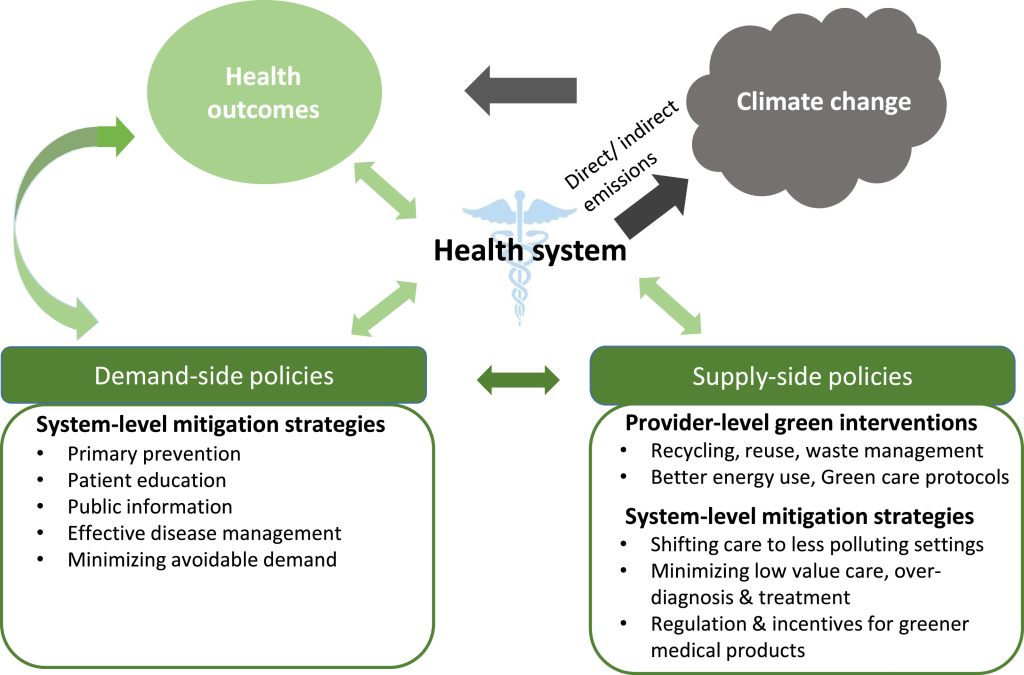


 Chasing Tales