The Finrod-Eöl scale

As any Tolkien nerd knows, first age Tolkien characters (and storylines) are a goldmine of layered characters, events, and rich psychology. One never knows what they’ll discover in the books themselves, and what that will change in the reader as an individual. Here are a couple of things I’ve come up with.

The Finrod-Eöl scale of male behaviour
The golden Finrod Felagund represents the idealized “good man” archetype in Tolkien’s legendarium. He’s the eldest son of Finarfin, the King of Nargothrond, and exemplifies noble masculinity: he is described as wise, generous, and uniquely disposed toward friendship with humans. His story culminates in ultimate self-sacrifice when he dies protecting Beren from a werewolf, using only his bare hands, fulfilling an oath he had made. Finrod embodies compassion, cross-species alliance-building, emotional depth, and willingness to sacrifice power for ethical principles. He is frequently characterised as saintly, keeping his oaths no matter the cost and loving those around him even when they were undeserving. His actions demonstrate a form of manhood that resists some aspects of patriarchal dominance. He’s even Galadriel’s big brother.

Eöl the Dark Elf is the other pole of the scale, and is characterised by isolation, misogyny, control, and violence. He traps the lovely Aredhel in the forest of Nan Elmoth and “marries” her in what multiple scholars have interpreted as a relationship founded on coercion and violation. He attempts to control every aspect of Aredhel’s life, forbidding her contact with her kin and the Noldor. When Aredhel and their son Maeglin, born of her rape by Eöl, escape to Gondolin, Eöl pursues them with murderous intent, throwing a poisoned javelin that kills Aredhel when she shields their son. Before his execution, he curses Maeglin, demonstrating profound vindictiveness even in death, even against his own child. He represents violent, controlling, possessive masculinity that views women as property.

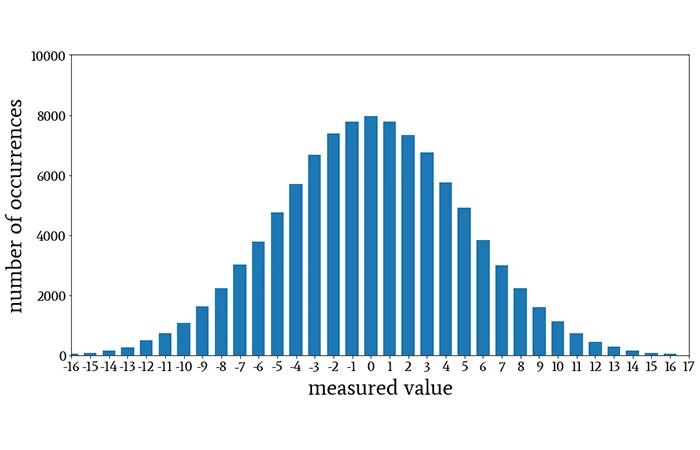
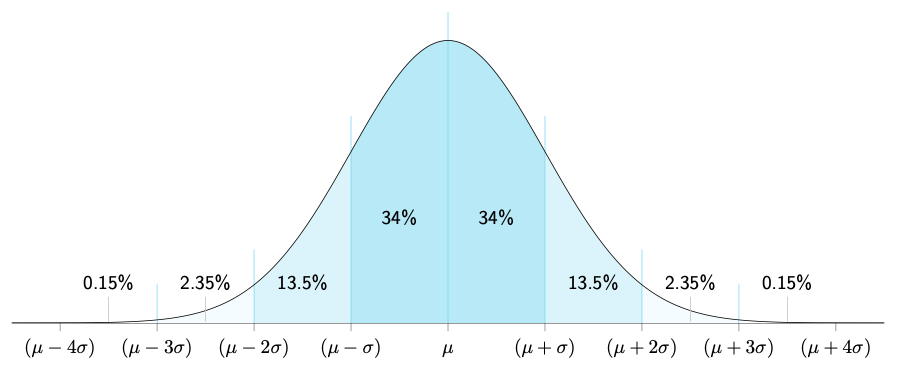
In the Finrod-Eöl scale of male behaviour, I posit that Earthly male behaviour is distributed across this spectrum, with most behaviours occupying positions between these extremes. Men’s behaviour isn’t stuck in one place. Each action, each relationship, each choice lands somewhere on this spectrum, with most actions and indeed most men falling between the two poles like any normal distribution. This reflects Raewyn Connell observation that hegemonic masculinity—the culturally idealised form that legitimises patriarchy—is not “normative in the numerical sense, as only a small minority of men may enact it”: few men fully embody either Finrod’s exceptional virtue or Eöl’s extreme toxicity.12

I want to reiterate this is explicitly about male behaviours, not about male identity or being. This is not about fixing men in permanent positions on the scale. Rather, each behaviour or act can land at a different point on the scale, and whilst each man will find himself at a particular position, this is due to their personal actions overall clustering around that part of the scale. This conceptual scale is supported by both the existence of multiple concepts of masculinities,3 such as hegemonic, complicit, subordinate, and marginalised, as well as by research on masculinity norms.

Besides, identity is fluid.

This is demonstrated by the “Man Box” study, which found that young Australian men who endorsed dominant masculinity norms (inside the “Man Box”) were significantly more likely to perpetrate violence: 47% had perpetrated physical bullying in the past month compared to 7% of those outside the Man Box, and 46% had made sexual comments to unknown women compared to 7%.4 That is to say, masculinity is a scale. Most men practise what Connell terms “complicit masculinity,” in which they do not fully embody hegemonic ideals but “still benefit from the ‘patriarchal dividend’ that advantages men in general through the subordination of women”. These are men who may not personally engage in the most extreme forms of masculine domination but who tacitly support the system that enables it.​5

The Core Thesis: How “Finrods” Benefit from “Eöls”
My central argument is that men positioned toward the Finrod end of the scale—those who exhibit more prosocial, egalitarian, or feminist behaviours—derive systematic benefits from the existence of men at the Eöl end. Relative comparison (moral and social) becomes a mechanism that sustains patriarchy, even among men who see themselves as “progressive”. This operates through several mechanisms:

  • The Relativity Advantage:6 Egregiously bad actors make average male behaviour seem exceptional by comparison, granting unearned credit to men who are merely ‘not-Eöl.’
  • The Deflection Function: The existence of extreme cases allows men across most of the spectrum to deflect responsibility for systemic gender oppression. That is, by pointing to Eöls, men on the Finrod side of the scale, and those in between the poles, can maintain that they are fundamentally different, obscuring the ways they may still benefit from and participate in patriarchal systems.​
  • The Patriarchal Dividend:789 Another of Connell’s theories, which says that “men benefit from the overall subordination of women” regardless of their individual beliefs or behaviors. In patriarchal systems, “all men receive economic, sexual, and psychological benefits from male supremacy”. Even men who genuinely oppose gender inequality receive material advantages—higher wages, freedom from fear of sexual violence, presumed competence in professional settings—that flow from systemic structures maintained by the more overtly oppressive behaviors of men further along the scale toward Eöl.​
  • The Protection Racket:101112 Men who present as “good” often receive trust, access, and emotional labour from women specifically because they are perceived as safe in contrast to dangerous men. The fear women experience from the Eöls of the world makes them grateful for and dependent on the Finrods. This manifests in what scholars call “protector masculinity,” where men gain status by positioning themselves as guardians against other men’s violence, which “affirms femininity as subordinate and lacking in agency”.
  • Structural Complicity:13141516171819 All men benefit from economic, sexual, emotional, and/or psychological benefits from the overall subordination of women regardless of their individual beliefs or behaviors. Even men who genuinely oppose gender inequality receive material advantages—higher wages, freedom from fear of sexual violence, presumed competence in professional settings—that flow from systemic structures maintained by the more overtly oppressive behaviors of men further along the scale toward Eöl.
  • Male solidarity: Men across the scale often maintain solidarity with one another through silence about other men’s problematic behaviors. This silence remains common because it preserves male homosocial bonds. The “good guys” benefit from not disrupting male solidarity, even as this silence enables the “bad guys” to continue harmful behaviors (you may have heard that German saying about how if there is 1 Nazi at the table and 9 other people not refuting the Nazi, there are actually 10 Nazis at the table. The male solidarity I’m talking about is something like that).
  • Reputation Without Transformation: The scale creates a reputational economy in which men can gain feminist credibility through relatively minimal actions. The bar for male allyship is lowered by the existence of egregious actors, such that basic respect for women’s autonomy or basic emotional competence becomes praiseworthy rather than normal.

Patriarchy: the Money-Labour-Violence Pyramid
But first: does the patriarchy even exist? I’ll prove that it does in three points. But first, is there a widely agreed definition of this patriarchy?

Patriarchy is defined by the United Nations and international organizations as a social structure in which men and boys hold primary power and privilege in families, governments, and social organization, while women and marginalized genders are subordinated and structurally disadvantaged. Sociologist Sylvia Walby characterizes it as “a system of social structures and practises in which men dominate, oppress, and exploit women”.​2021

So now, about the proof. According to this widely accepted definition, patriarchy is a pervasive social power structure. Now let’s analyse whether the evidence supports the existence of such a system by looking at three key dimensions:
1. Money is power: who controls wealth and property;
2. What is paid: who performs labour that sustains the system; and
3. Power is power: how that power is protected.

If money is power, then the global distribution of wealth reveals who holds structural power:

  • Men globally own $105 trillion more in wealth than women—a gap equivalent to more than four times the size of the entire US economy.​2223
  • Women own less than 20% of the world’s land globally, with this figure dropping to as low as 10% in some regions.2425
  • Only 15% of agricultural landholders worldwide are women; 85% are men.​25
  • In India, despite progressive legal reforms, women constitute only 14% of landowners and own just 11% of agricultural land in rural landowning households.​25
  • Only 15% of the world’s 100 richest billionaires are women, and most inherited their wealth rather than creating it themselves.​26
  • The 22 richest men in the world have more wealth than all the women in Africa combined.​27

Even among the poorest populations (bottom 25% of wealth distribution), the gender gap persists:27

  • Poorest men hold median wealth of €1,755.92
  • Poorest women hold median wealth of €171.11
  • This means poorest men have approximately 10 times the wealth of poorest women.​
  • Among the extremely poor living on less than $1.90/day, there are 122 poor women for every 100 poor men in peak working years (ages 25-34). This proves patriarchy isn’t just a “rich woman’s problem”—it’s a structural feature that disadvantages women at every economic level.​2829

The concentration of wealth in male hands isn’t accidental—it’s the result of centuries of legal restrictions that prevented women from accessing, owning, and controlling economic resources:

United States:30

  • Until the 1960s, women could not open bank accounts in their own names.​
  • Until 1974 (Equal Credit Opportunity Act), single women almost always needed a male co-signer to obtain credit, and married women were routinely denied credit cards and loans.​31
  • Before 1848 (Married Women’s Property Act in New York), a married woman’s property automatically became her husband’s property upon marriage.​​
  • 1839: Mississippi became the first US state to allow women to legally own property in their own names.​​

Europe:

  • France: Women were not allowed to open bank accounts in their own name until 1881.​3233
  • United Kingdom: The Married Women’s Property Act allowing women to control their own earnings was passed in 1870.​34

Current Global Restrictions (as of 2024):

  • In 34 countries, daughters do not have equal inheritance rights to sons.​35
  • In more than 30 countries, women do not have the right to inherit land, either because laws specifically prohibit it or customary practises override legal protections.​36
  • In 38 countries, inheritance laws for daughters and sons are unequal.​37
  • In 18 countries, husbands can legally prevent their wives from working.​38
  • In 17 countries, including Afghanistan, Saudi Arabia, and Qatar, laws restrict women’s ability to travel outside the home.​38
  • In 32 countries, including Jordan, Haiti, and the Philippines, women cannot obtain a passport without male permission.​38
  • In 104 countries, women are prevented from working in the same occupations as men.​39
  • 167 countries (88% of all countries surveyed) have at least one law restricting women’s economic opportunity.​39

So that’s the first part of my proof that the patriarchy exists. Now let’s talk about how this power structure is protected. Sociological theory establishes that social power structures are maintained through the monopoly and strategic deployment of violence. The state maintains its power through the “legitimate monopoly on violence”, and hierarchical social systems are similarly sustained through the threat and use of force.​

Crucially: There are NO jurisdictions where men face equivalent legal restrictions on property ownership, banking access, or economic participation.​

Inheritance laws are among the strongest structural evidence of patriarchy (because they document how wealth and property are systematically transferred through male lineages across generations):

Islamic Inheritance Law:

  • Under Islamic law, which governs inheritance for 1.8 billion people globally:
  • Sons receive twice the share of daughters (Surah An-Nisa 4:11: “to the male, a portion equal to that of two females.”).​4041
  • If a Muslim man dies, his wife receives:424344
  • 1/4 of his estate if he has no children
  • 1/8 of his estate if he has children​
  • The remainder goes primarily to his children and male relatives.
  • If a Muslim woman dies, her husband receives:4546
  • 1/2 of her estate if she has no children
  • 1/4 of her estate if she has children​
  • Notably, her property can revert to her husband and his family, rather than to her natal family, however there is no blanket rule that her entire estate “reverts” to her husband and his family—her natal family (parents, siblings, etc.) can inherit if they are eligible heirs under Islamic law.47
  • A Muslim’s will can only dispose of up to one-third of their property beyond these fixed shares; the rest is strictly governed by Islamic inheritance laws.48
  • This legal structure ensures that wealth remains concentrated in male hands across generations, as women inherit less and their property flows back into male-controlled family lines (because sons receive double and husbands get a significant fixed share, it is often the case that more property flows back into the husband’s lineage or remains concentrated in the hands of male relatives across generations).49

Hindu Succession Act (India), that is applicable to at least 1 billion people:

  • According to Section 15(1) of the Hindu Succession Act, 1956, when a Hindu woman dies without a will, her property (including self-acquired property) devolves in the following order:50515253
    • First: To her sons, daughters, and husband
    • Second: To the heirs of the husband (not her own parents)
    • Third: To her mother and father
    • Fourth: To the heirs of the father
    • Fifth: To the heirs of the mother​
    • This means even property a woman earns herself is legally structured to flow back into her husband’s family or her father’s family—not through her maternal lineage. As expected, property she inherited from her father or husband automatically returns to those male lineages if she has no children.​54
    • Since amendments in 2005, Hindu women have equal rights to inherit property, but upon their death, the succession order dictated by Section 15 preserves a male lineage priority, especially for self-acquired property.5556

Global Pattern:57

  • Men inherit earlier in life than women, giving them critical time to invest and grow wealth.​58
  • Men receive larger inheritances and more valuable assets (businesses, real estate) while women receive cash.​
  • In families of large business owners, daughters are 18 percentage points less likely to receive business or financial assets than sons.​

This systematic pattern of inheritance laws globally ensures that wealth, property, and economic power remain concentrated in male hands across generations—the operational definition of a patriarchal economic structure.

Pierre Bourdieu’s concept of “symbolic violence” explains how power structures are maintained not only through physical force but through normalized domination. However, physical violence remains the ultimate enforcement mechanism:596061 patriarchal theory sees violence as an extension of authority, control, and maintenance of the social order—especially when boys and men are socialised to see violence as a legitimate tool of power and when male-headed households wield disproportionate control over women and children. Sociological studies and UN definitions argue that “patriarchal violence is all violence that creates or maintains men’s power and dominance … the enforcement tool that sustains patriarchy”.62636465

If patriarchy is a real power structure, we should expect to see:

  • Men disproportionately committing violence to establish and maintain dominance
  • Women disproportionately targeted for control, especially in contexts related to sexuality, reproduction, and family
  • Consistent patterns across all cultures and jurisdictions, indicating structural rather than individual causes

The evidence overwhelmingly confirms this:

  • Defining Violent Crime and Crimes of Power/Dominance: Violent crimes include: homicide, assault, rape, sexual assault, robbery, kidnapping, and domestic violence—crimes involving the use or threat of force against others.​66
  • Crimes of power/dominance include: violent crimes committed to establish hierarchical control, assert authority, control resources or people, or subordinate victims. These include sexual violence, intimate partner violence, human trafficking, and gang/territorial violence.​6768

Global Statistics: Male Perpetration of Violent Crime
Homicide (Murder):6669

  • 90-95% of all homicide suspects globally are male, based on data from 193 countries.​
  • 80% of all homicide victims are male—but this reflects male-on-male violence to establish dominance and status in public contexts.​
  • However, 82% of intimate partner/family homicide victims are female, while only 18% are male. Women are killed by intimate partners; men are killed by other men in public/gang violence.​70
  • In the US, recent data shows 51% of child maltreatment perpetrators are women, and 49% are men, largely because mothers are overwhelmingly primary caregivers. However, when looking at severe violence (serious physical and sexual abuse), men are overrepresented as perpetrators.7172
  • Male non-parents (stepfathers, adoptive fathers, boyfriends, unrelated men) are much more likely to maltreat girls as compared to women perpetrators. Additionally, male offenders acting alone are more likely to target girls than boys.71

Rape and Sexual Violence:

  • 99% of rapists worldwide are male.​7273
  • 91% of rape victims are female.​72
  • The WHO confirms: “Intimate partner and sexual violence are mostly perpetrated by men against women” across 161 countries.​74
  • Victims span all identities—men, women, children, trans people—but the perpetrators are overwhelmingly male regardless of victim identity.​727576
  • Globally, about 90% of sexual abuse against children is perpetrated by men or male adolescents, and only around 10% by women or female adolescents. This pattern holds across institutional, intrafamilial, and online environments.7778
  • Key government reports in places like Australia found that 93.9% of institutional child sexual abuse was perpetrated by adult men.78
  • Both male and female perpetrators victimize boys and girls, but men are more likely to target girls, while women (in rare cases) are more likely to target boys.77
  • Studies consistently show that even when accounting for underreporting of female perpetrators, the vast majority of detected offenders are male.77

Human Trafficking:7879

  • 70-75% of all convicted human traffickers worldwide are men.​
  • 61% of detected trafficking victims globally are women and girls (39% women, 22% girls).​
  • For sexual exploitation specifically: 98% of trafficking victims are women and girls.​81

Sex Work and Commercial Sexual Exploitation:8283

  • 85-95% of customers/buyers of sex workers and trafficking victims are men.​
  • In regions where sex work is criminalized, men comprise the overwhelming majority of buyers.​
  • 80-90% of prostitutes/sex workers globally are female, with an average starting age of 14.​84
  • Approximately 99% of forced prostitution or sex trafficking victims are female.81

These patterns demonstrate that:

  • Men systematically use violence to establish and maintain dominance—over other men (public violence, gang violence) and over women (intimate partner violence, sexual violence, trafficking).​
  • Women are disproportionately targeted for violence in contexts of control—especially sexual and reproductive control.​
  • The pattern is global and consistent, appearing across all 193 countries measured, all cultures, and all legal systems.​

This is not about “men being bad by nature”—it’s about a structural system that allocates to men the role of using force to maintain hierarchies, and positions women as targets of control, particularly regarding sexuality and reproduction.​ Violence is not peripheral to patriarchy—it is the enforcement mechanism through which male dominance is maintained.

And now onto the backbone that sustains the pay and inheritance disparity, and feeds male violence: girls’ and women’s unpaid labour, or the systematic extraction of unpaid labour from women, which subsidizes the entire economic system while keeping women economically dependent and disadvantaged.

  • Globally, women spend 2.8 more hours per day than men on unpaid care and domestic work.​86
  • By age 29, women do over 3 times more unpaid care work than men: women spend 5.3 hours more per day on unpaid care work in Ethiopia and India, and 4.5 hours more per day in Peru.​87
  • Girls aged 17-18 spend an average of 5 hours and 15 minutes per day on unpaid care work—more than double the time spent on homework, and nearly 1 hour more than adult women globally.​88
  • When combining paid work + unpaid care work, women do more total work than men in every country measured.​87

Labour Force Exclusion:89

  • 708 million women worldwide are outside the labour force because of unpaid care responsibilities, compared to only 40 million men.​
  • 45% of all women outside the labour force cite care responsibilities as the reason, compared to only 5% of men.​
  • This means unpaid care work prevents nearly three-quarters of a billion women from participating in paid employment.​

If valued at minimum wage rates, women’s unpaid care work would contribute trillions of dollars annually to the global economy—work that is currently invisible in GDP calculations.​8789

The gendered division of unpaid labour is not a natural outcome of preferences—it is a systematic pattern that:

  • Concentrates wealth in male hands: Men’s work is paid; women’s work is unpaid. This directly creates and maintains the gender wealth gap.​9089
  • Restricts women’s economic independence: 708 million women cannot participate in the paid labour force because they’re doing unpaid care work, making them economically dependent.​89
  • Benefits men as a class: Men’s participation in the paid labour force is subsidized by women’s unpaid labour at home (cooking, cleaning, childcare, eldercare).​8788
  • Is enforced through social norms and lack of alternatives: Women don’t “choose” to do 5.3 more hours of unpaid work per day—structural factors (lack of affordable childcare, social expectations, lack of parental leave for men) enforce this division.​8788
  • Research consistently shows that mothers earn lower hourly wages than women without children. Nationally in the United States, employed mothers are paid just 62.5 cents per dollar paid to fathers. Mothers who work full-time year-round earn 71.4 cents per dollar compared to fathers. The motherhood penalty is responsible for nearly 80 percent of the gender pay gap, and each child under five years old is projected to reduce the earnings of a typical mother by 15 percent.91 (of course, for this society will have to first acknowledge that pregnancy and delivery is labour, parenthood is labour and of this latter form most of the labour is performed by mothers, not fathers).

Crucially, this pattern is consistent across cultures, religions, and economic systems, appearing in rich and poor countries, capitalist and socialist economies, individualist and collectivist cultures. This universality indicates a structural system, not individual choice.​

Therefore, if patriarchy is defined as a social structure that perpetuates the dominance of one gender (men) over all others, and if we accept that:

  1. Money is power, and
  2. Power is maintained through violence and the threat of violence, and
  3. Power is born and sustained through the extraction of unpaid labour.

Then the evidence is irrefutable:

  1. We live in a patriarchy because:
    Economic Power Is Concentrated in Male Hands.
  2. This Power Is Protected Through Violence.
  3. This power is sustained through systematically devalued and unpaid work done primarily by women, and women do more total work (paid + unpaid) than men in every country measured​

These are documented facts from UN agencies, World Bank, WHO, UNODC, and national legal codes—not interpretations or opinions. The patterns are consistent across all 193 countries, all cultures, all legal systems, and all economic levels, from the richest to the poorest.

Empirical Support for Universal Male Benefit
Now back to my scale.

The proposition that all men benefit from patriarchy, regardless of their position on the Finrod-Eöl scale, finds support across feminist scholarship. Studies examining men’s attitudes toward gender equality reveal that men often recognize these benefits. One analysis notes that even men who intellectually support feminism may resist it because “men as a group are removed from their privileged position” under more egalitarian systems, which “does appear to be a net decrease” in their advantages. The research also demonstrates that patriarchy benefits men “more than it harms them,” creating rational incentives for men across the spectrum to maintain the system even when it also imposes costs.92 The idea is that masculinity as a whole conspires and works to maintain its empire.

We’re all caterpillars
Now here comes my second theory: all of us live in a cocoon of patriarchy- some of us more sheltered than others, men definitely more advantaged than women, but all of us inside the same social chrysalis.

No one is free.

In her 1993 book The Robber Bride, Margaret Atwood says “You are a woman with a man inside watching a woman. You are your own voyeur”. But I’d like to extend this and say, not even men are free from the male gaze: a Reddit discussion93(I’m using Reddit as proof of culture, not as an academic source) on whether men internalise the male gaze notes that “the idealized gym physique often appeals to men more than to women. The tough, muscular archetype they idolise tends to be more attractive to their male peers”. This observation is supported by research showing that men experience body-objectification, body shame, and self-surveillance when their physical appearance fails to fit unrealistic body ideals.94

Men must constantly perform strength, emotional suppression, aggression, competitiveness, and other qualities appreciated by other men, not women, to maintain their position within masculine hierarchies and justify their own masculinity to other men, including, maybe, their own internalised male gaze that tells them what is or isn’t masculine. Even men who occupy the “Finrod” position on the scale remain trapped within these structures, performing “good masculinity” in ways that are still legible within patriarchal frameworks.

The panopticism is real.

Our circus and our monkeys
If we accept that the male gaze entraps everyone—women internalising surveillance from imagined male audiences, men performing for the approval of other men—then we must confront an uncomfortable truth: all of us are living in different layers of patriarchal cocoons. These cocoons are not uniform; they vary by gender, race, class, sexuality, ability, and other intersecting identities. As intersectional feminist theory teaches us, oppression is not “a one-size-fits-all scheme”. Different groups experience oppression differently, and these experiences are compounded by the “interlocking oppressions” of multiple systems of domination: women exist within patriarchal cocoons that constrain their movement, economic participation, self-perception, and bodily autonomy, and men exist within patriarchal cocoons that demand constant performance of masculinity, suppression of vulnerability, and adherence to hierarchical dominance structures. The cocoon that constrains men may offer more privileges and freedoms than those constraining women, but it is a cocoon nonetheless.

These cocoons are further layered by other axes of identity. Dalit women in India face oppression “differently” than upper-caste women, fighting not only sexism but “casteism and fetishisation of minorities”. Muslim women navigate “sexism in their community and outside the community, objectification of their Muslim identity”. Black women in the United States experience discrimination at “the intersection of two aspects of their identity; their race and their gender,” creating “a unique lived experience” that cannot be reduced to the simple addition of racism and sexism. LGBTQ+ individuals face subordination within masculine hierarchies that privilege heterosexuality.​

Similarly, a wealthy white “Finrod” benefits far more from the patriarchal dividend than a poor Black “Finrod”, a Dalit man may be subordinated within caste hierarchy but still benefits from patriarchy within his community, and gay men face subordination within traditional heteronormative masculinity hierarchies but may still receive economic benefits if they’re white and middle-class, and certainly they will receive more “blind” privilege (that is, privilege for just being men when those they are interacting with are unaware of their sexual orientation) than women of the same or lower socio-economic classes, and sometimes even in comparison to women of comparatively higher SECs.

All this just means that privilege and disadvantages exist in complex webs of identity: A heterosexual upper-caste man may benefit enormously from patriarchy and caste hierarchy while still being constrained by the demands of his own internalised male gaze. A white feminist woman may fight gender oppression while benefiting from racial privilege that shields her from experiences faced by women of colour. “Privilege and oppression can exist at the same time”, creating what scholars call “intersectional” or “multiply marginalised” positions.

This also means that acknowledging the existence, protection and oppression of this patriarchal cocoon is the first step to liberation: after all, only those who recognise their own entrapment can free themselves of it. The cocoon cannot be pierced unless people can acknowledge it exists at all.

Madonnas and non-madonnas
The Madonna-Whore complex, first formally described by Sigmund Freud (though present in cultural thinking long before), describes a psychological splitting in which women are categorised into two mutually exclusive categories: the Madonna (pure, nurturing, asexual, maternal) and the Whore (sexual, promiscuous, degraded, dangerous). There is no middle ground. A woman cannot be both nurturing and sexual, both respectable and sexually expressive, both Madonna and autonomous agent. She is one or the other, and the split serves patriarchal interests.

So how do these fictional women compare with our fictional men? Well they don’t because first of all there is no scale, and my theory posits a scale. Secondly, and importantly, according to patriarchy women are either inherently Madonnas or Prostitutes, and are characterised so by men themselves based on how men feel about them (ever seen men turn on women they are pursuing and call them either unattractive or whores or both when those women reject sexual advances by these men?) The Finrod-Eöl scale is about male behaviour, not their inherent worth has humans, not their beauty, nor even their availability to female fantasies.

Patriarchy insists on creating splits- you as a person fit either one description, or it’s opposite- a forced bifurcation into nonexistent extremes. The Madonna-Whore split tells women: “You can be respected or sexual, but not both. Choose.” This constrains women’s freedom and keeps them divided (respectable women blame “sluts,” and vice versa). But the Finrod-Eöl scale says you can choose to behave in any way you like, and that behaviour will fall on a spectrum- but still be constrained within the patriarchy unless you work to dismantle it.

Sources (I’ve duplicated one somewhere, cannot find which one, apologies)

  1. Patriarchy – Gender Transformative Education Glossary (UNGEI)
  2. Lightening the Load: New Evidence on the Impacts of Unpaid Care Work on Women and Girls (Young Lives Policy Brief)
  3. Gender-Specific Wage Structure and the Gender Wage Gap in the U.S. Labor Market (PMC)
  4. The Evolution of Women’s Financial Rights Over the Ages (Portfolio Adviser)
  5. 11 Times Women Got the Short End of the Stick in History (Time Magazine)
  6. Section 15 of the Hindu Succession Act Discriminates Against Hindu Women (SC Observer)
  7. Hindu Inheritance and Property Rights (Pink Legal)
  8. Male Perpetrators of Child Maltreatment: Findings from NCANDS (HHS)
  9. Sexual Violence Statistics (Humboldt University)
  10. Unpaid Care Work Prevents 708 Million Women from Participating in the Labour Market (UN DESA)
  11. Complicit Masculinity: Definition & Example (Study.com)
  12. Hegemonic Masculinity Research (Sobider)
  13. Women’s Land and Property Rights (FAO)
  14. Poverty is Not Gender Neutral (SDG Action)
  15. Inheritance Right of Women Under Islamic Law of Succession (Law Bhoomi)
  16. Muslim Inheritance Law & Estate Planning in India (GetYellow)
  17. Patriarchal Violence: An Attack on Human Security (Racism.org)
  18. Dissertation on Gender and Violence (CUNY Academic Works)
  19. Racial Justice and Gender Violence Fact Sheet (Rights4Girls)
  20. What Is the Male Gaze? (Verywell Mind)
  21. Violence Against Women Fact Sheet (WHO)
  22. Who Perpetrates Child Sexual Abuse? (Australian Child Safety)
  23. The Enduring Grip of the Gender Pay Gap (Pew Research)
  24. Patriarchy: Definition and Overview (Anthroholic)
  25. Women’s Rights to Own Property Through History (Habito)
  26. 11 Times Women Got the Short End of the Stick (Time Magazine)
  27. Criticism of Female Intestate Succession Under Hindu Succession Act (SC Online)
  28. Gender Wealth Gap Research (Oxford Academic)
  29. Forecasting Time Spent in Unpaid Care and Domestic Work (UN Women)
  30. Forecasting Time Spent in Unpaid Care and Domestic Work (UN Women)
  31. Intimate Partner Violence and Health Outcomes (PMC)
  32. Child Victims of Violence Statistics (OJJDP)
  33. Good Men and the Dichotomy Between Toxic Masculinity and Masculinity (Race Baitr)
  34. Protector Masculinity Research (SAGE Journals)
  35. Women’s Land and Property Rights (FAO)
  36. Gender Poverty Gap (World Bank)
  37. Islamic Law Study Materials (IILS India)
  38. Early Life Stress and Violence (PMC)
  39. Girls Spend 5 Hours a Day on Unpaid Care Work (Plan International)
  40. Muslim Law of Inheritance (iPleaders)
  41. Early Inheritances Widen the Gender Wealth Gap (IZA Newsroom)
  42. Gender-Based Violence Statistics (NCBI Bookshelf)
  43. Sexual Violence Statistics (Humboldt University)
  44. Who Perpetrates Child Sexual Abuse? (Australian Child Safety)
  45. Patriarchal Violence and Law (Law Society of Saskatchewan)
  46. 60 Facts About the Gender Wealth Gap (Wealth Inequality Network)
  47. 11 Times Women Got the Short End of the Stick (Time Magazine)
  48. Unpaid Care Work Prevents Women from Labour Market Participation (UN DESA)
  49. Unpaid Care Work Research (Young Lives)
  50. Sons and Daughters Inheritance Patterns (Our World in Data)
  51. Women’s Right to Succession and Inheritance Under Muslim, Christian, Jews and Parsi Law (Delhi University)
  52. Hindu Succession Act for Female Intestates (LiveLaw)
  53. Gender-Related Killing of Women and Girls (UNODC 2018)
  54. Male Perpetrators of Child Maltreatment (HHS)
  55. The Patriarchal Dividend (ERIC)
  56. Masculinity and Caregiving (Wisconsin Law Journal)
  57. When Could Women Have a Bank Account? A Short History (Spiral)
  58. Unpaid Care Work Impact on Women (Young Lives)
  59. Just 15% of World’s Richest People Are Women (Startups Magazine)
  60. Countries That Restrict Women from Working (Global Citizen)
  61. Widow’s Share in Her Husband’s Property Under Muslim Law (LawRato)
  62. Patriarchal Violence: An Attack on Human Security (Swedish Government)
  63. Who Are the Perpetrators of Sexual Abuse? (German Federal Government)
  64. Sex Worker Statistics (IUSW)
  65. Sex Trafficking and Sexual Violence (PMC)
  66. Hegemonic Masculinity (EBSCO)
  67. State Monopoly on Violence (Britannica)
  68. Men and Boys: Hidden Victims of Sexual Violence (Peace Palace Library)
  69. The $100 Trillion Gender Wealth Gap (Oxfam)
  70. Conflict-Related Sexual Violence: Patriarchy’s Bugle Call (Georgetown Law)
  71. Voices of Independence: Women’s Economic Power (Smithsonian)
  72. Do Inheritance Law Reforms Work for Women? (Resource Equity)
  73. Devolution of Self-Acquired Property of an Intestate Hindu Female (AMS Shardul)
  74. Sexual Violence Statistics (Humboldt University)
  75. Unpaid Care Work and Labour Market Participation (UN DESA)
  76. Unpaid Care Work and Labour Market Participation (UN DESA)
  77. Do Women Have an Unfair Share in Inheritance? (Alislam)
  78. Global Study on Homicide 2023 (UNODC)
  79. The Patriarchal Dividend at War (The Disorder of Things)
  80. The Benefits and Costs of Being Male (Howard CC Pressbooks)
  81. Women Own Less Than 20% of the World’s Land (World Economic Forum)
  82. World’s Billionaires Have More Wealth Than 4.6 Billion People (Oxfam)
  83. Women’s Right to Property Under Muslim Law (FreeLaw.in)
  84. Reproductive Coercion and Domestic Violence (Buffalo Law Review)
  85. Global Report on Trafficking in Persons 2024 (UNODC)
  86. Global Prostitution Statistics (Zipdo)
  87. Hegemonic Masculinity: Formulation, Reformulation, and Amplification (SAGE Journals)
  88. Countries That Restrict Women from Working (Global Citizen)
  89. Physical Dating Violence Among Sexual Minority Youth (PubMed)
  90. Child Sexual Abuse: Medical Diagnosis and Management (NCBI Bookshelf)
  91. Who Are the Perpetrators of Sexual Abuse? (German Federal Government)
  92. Why Patriarchy Hurts Men Too (NextGen Men)
  93. Men, Gender Equity & Creating Better Workplaces (Shape Talent)

The numbers we know – II

For every 19th November, a 2nd November.

The numbers we know

Tomorrow, jersey numbers 10 and 18 will represent India in a World Cup final once again.

Somewhere, a mud-stained India Blue jersey number 5 might be folded carefully away— hopefully never to be washed.

Once again, we’ll be led by jersey number 7.

And the date is the 2nd.

Destiny awaits.

A tiny primer on principles of finance

While finance is a vast and multifaceted industry, there are certain principles that underpin every decision or transaction made by it. This post is an explanation of these principles.

Time Value of Money (TVM)123
This principle says that money available earlier is worth more than an identical sum available at a later time; so money in the past was worth more than the same amount today, and any amount today is worth more than the same amount at a later date.

The reason this happens is threefold:
1. Interest:45 money available at an earlier date can be invested to earn an interest that increases that total quantity of money available at the later date. Interest is a fee paid to any entity (such as an individual, a group, or an organisation) when that entity allows another entity to use its money. For example, if a person deposits their salary in a savings account, the bank pays them interest for keeping the money and making it available for use by the bank. Conversely, if an organisation gives another organisation a loan, the borrower pays the lender interest as a fee for being able to access and use those funds.

2. Compounding:67 in finance, interest is of two types- simple interest and compound interest. If money is invested so that it earns simple interest, it will earn interest on the original sum that is invested, and only on that amount. Let’s say an individual invests INR 1,000 for 5 years at a simple interest of 10% per annum, they will get an interest amount of INR 100 per annum for 5 years if they do not withdraw any of the original money they deposited (the INR 1,000 which is called the “Principal” in finance). Therefore at the end of their investment period, they will receive INR 1,000 + INR 100 + INR 100 + INR 100 + INR 100 + INR 100 = INR 1,500.

Compound interest pays a higher rate of interest, because as long as the interest amount earned at the end of the first year was not withdrawn, that INR 100 of interest would also earn an interest (unlike SI which only pays interest on the principal amount of INR 1,000). So, if the individual who invested the INR 1,000 had invested at a rate of 10% compound interest annually, at the end of Year 1, they would receive the same amount as with SI- INR 100, but at the end of Year 2, they would receive 10% interest on INR 1,000 + 10% interest on the INR 100 interest amount that was added to the investment at the end of Year 1. Therefore at the end of Year 2, they would have a total amount of INR 1,000 + INR 100 + INR 100 + INR 10 in their account.

Here’s a table to help explain this better:

YearSimple Interest: Year-end Total (INR)7Compound Interest: Year-end Total (INR)6
11,100 (Principal 1,000 + Interest: 10% × 1,000 = 100)1,100 (Principal 1,000 + 10% of 1,000 = 100)
21,200 (Last year total 1,100 + Next 100 interest)1,210 (Last year total 1,100 × 10% = 110; 1,100 + 110)
31,300 (Last year total 1,200 + Next 100 interest)1,331 (Last year total 1,210 × 10% = 121; 1,210 + 121)
41,400 (Last year total 1,300 + Next 100 interest)1,464.10 (Last year total 1,331 × 10% = 133.10; 1,331 + 133.10)
51,500 (Last year total 1,400 + Next 100 interest)1,610.51 (Last year total 1,464.10 × 10% = 146.41; 1,464.10 + 146.41)
Tabular explanation of the difference between calculations for simple interest and compound interest

Therefore in SI, each year the interest is always INR 100 (just 10% of 1,000), added without change, but in compound interest, each year new year interest is calculated on a bigger amount (previous year’s total), so the yearly interest keeps growing. Notice the difference- via compounding, the investor would have earned INR 110.51 more after the five year period of investment.

3. Inflation:8 The final reason is something called inflation, which is the rise in the general price levels in the economy (that is, in general, the prices rise or the amount you can buy for a certain amount of money reduces, even if some things remain static in price or may have even reduced in per unit price), which makes it so that the same amount of money will purchase fewer goods and services at a later date, since they have become more expensive in comparison to an earlier date.

Materiality
More here.

Risk
In finance, “risk” means the uncertainty or variability of returns associated with an investment.910

There are multiple types of risk in finance. Some risks affect everything, and they simply cannot be avoided, but others can be minimised.

1. Systematic (or sometimes called systemic) Risk:11 those risks that affect the entire national economy, or in these interconnected times, affect most of the world at the same time. The 2008 subprime financial crisis was an example of one such issue. Imagine somebody, may it never be so, lives in a country that is at war- most sectors in the economy of such a country are likely to be affected by the war. It is unlikely that they could invest in a sector that is not affected at all, not even indirectly. Such risks are simply impossible to minimise. How to know if something is a systemic risk- ask, can the risks be avoided? No? It’s systemic.

2. Unsystematic (unsystemic) Risk:11 those risks that affect only one sector in the entire economy, or an industry, or even one company. Imagine a corruption scandal erupts at a particular company- the risk will be limited to the company, or at most the industry the company belongs to, rather than spread through the entire national economy. Can the risks avoided? Yes, easily.

Understanding risk helps individuals make better decisions. There are several specific types of risk that are explained briefly in the table.

TypeMeaning (Simple Words)Example For Beginners
Market RiskPrices move because of the whole marketStocks fall when economy dips
Credit RiskBorrower may not repay moneyPerson takes a loan and can’t pay it back
Liquidity RiskCan’t sell asset quickly for fair priceYou own a rare toy, but no one wants to buy it today
Operational RiskFailure inside a company (mistake, fraud)Computer glitch at a bank
Inflation RiskMoney loses buying power over timePrices of groceries go up, money buys less
Currency RiskForeign money value changesINR to USD exchange rate changes
Reputational RiskBad publicity affects businessNews breaks that a company did something unethical
Types of risk

Risk and Return Tradeoff1213
Now, in the example in the Time Value of Money section, we knew exactly how much interest would be earned by the investment. However, there are many avenues of investment that do not guarantee any returns, and may even lead to losses.

Generally speaking, the higher the risk any investor takes, the higher their expectations of returns for that risky investment. Think about it- if they could achieve the same returns for a lower amount of perceived or actual risk, then would they not opt for getting the same returns for the lower returns? In this way, each percentage point of higher risk taken must reward the risk taker with greater returns, or they would have no incentive to take the extra risk at all.

This is called also called the Efficient Frontier. It is a graph where the x-axis maps the risk taken, and the y-axis represents the returns for each point of risk taken. Points to keep in mind:
1. For any given level of risk, the aim is to receive the highest possible expected return; and
2. For any given expected return, the aim is to take the lowest possible risk.

Any investment that doesn’t meet these conditions is inefficient: either the investment involves too much risk for the amount of returns they are offering, or too few returns for the amount of risk being taken.

But what is “too much risk”?

Every individual has a particular “Risk Tolerance”, or their personal capacity to withstand losses in case something goes wrong with their investments. Investors must always understand what their personal capability is to stomach losses, and this is also why investments must be risk efficient, so that on the occasion of a loss, that loss is not more than they can tolerate. This is a matter of personal comfort with loss.

Risk tolerance is determined for each individual via multiple factors, such as how soon they need the money invested- those with long investment horizons (let’s say 50 years for example), may invest and easily tolerate shorter term losses since their investment has the time to build back up (this may never happen, but they still have the time to see if it will). Another factor is how much money they have outside of the particular risky investment in question. Those with a large nest egg will naturally feel safe even if the entire amount invested in the riskier investment were to disappear.

Every individual has a different personal relationship with financial risk, which they must understand thoroughly and stay within their own limits.

Diversification14151617
Diversification is the risk management strategy of spreading investments across various assets to reduce exposure to any single investment (an asset is anything that will earn you returns in the future, this post has other such definitions). Diversification is best explained as not putting all your eggs in one basket. By spreading investments across multiple assets classes, geographies, and industries, an investor gains the benefit of never leaving their entire investible corpus or all their savings at the mercy of an unsystematic risk event. If there is an event that affects the entire economy, diversification will not help for any asset classes that are based (fully or partially) in that region, but this too can be diversified against these days- it is now possible to invest in other countries, and this works against the kind of systematic risk that spreads only within the boundaries of a particular nation. In case the risk event has spread across the globe… well, that’s you done for the moment.

Efficient Market Hypothesis18192021
Imagine if an individual wanted to buy a house, and the only thing they know is the area they wish to purchase the house in, and what their own budget is. They find out that in that area, no house sales have taken place at all in the last few years (even though it is a residential area with 100s of houses). How would such a person determine what buying the house in the locality would cost them?

They won’t, because there is no historic price or volume data available at all, and they may withdraw from buying in the area. It is also possible that they decide to pay whatever they are asked for as long as it is within their budget, but there is no way for them to know whether they are receiving the correct value for the money they are being asked to pay, since there is no comparison available.

Now imagine two houses are sold in the same area- let’s say one for INR 30,00,000 and another for INR 35,00,000: so now the buyer has price data and volume data both- two houses, and around INR 30-35,00,000. Are they likely to offer somewhere in the vicinity of these numbers for any house they may wish to buy, or are they likely to offer much less or more than the established price level? In case the buyer chooses to offer less than the established price level, they are unlikely to get any sellers, correct? And why would they offer much more than the established price level?

In a financial market, when the historical price and volume data is known, that market is considered to be at the first level of market efficiency, called Weak Efficiency. It is data without which no fair transactions are possible.

Now, let us say the buyer decides on a few houses they really like, and to find out more about them, they go and ask neighbours about whether those houses are well built, or have any issues. etc. This information is publicly available, and is likely to shape their opinions about the properties in their shopping cart. Let us imagine one of the houses has a well known termite problem- is this new publicly available information likely to change the buyer’s valuation of the product? Then they find out another house in the locality that they have their eyes on has built in parking space for 5 cars- even if they themselves don’t have five cars yourself, are they more likely to look at this house more favourably? Perhaps offer a little more for it in comparison to other houses?

In a financial market, this is the second level of market efficiency. It is called Semi-Strong Efficiency. All publicly available information is known to everyone.

And now back to 1984: Strong form market efficiency, where there is no private information- all information, no matter how seemingly private, is known publicly. Clearly (thankfully), such a world does not exist. In the context of markets, this means that there will always be insiders who will know more than outsiders.

One thing to note here before we move on- since we’re talking about financial markets, the theory is about stock prices.

Information Asymmetry222324
Information asymmetry is the situation where one party in a transaction possesses more or better information than other parties, which leads to outcomes that are optimal only for the party with the good information.

Information problems have significant implications for financial markets. For example, because borrowers know their own financial conditions better than lenders, lenders may not be able to assess the potential borrowers true creditworthiness. Assets may also be priced wrongly due to information asymmetry, again causing inefficiency in the market.

There are several market intermediaries that help lower information asymmetry, such as credit rating agencies that assess an individual or organisation’s creditworthiness so that lenders may have a level playing field; auditors, who provide independent verification of organisation’s financial claims, and even IPO grading agencies (IPO = Initial Public Offering) that independently evaluate a company’s financial credentials when it is issuing shares to help investors make more informed decisions before subscribing to that IPO.

Agency252627
A Principle-Agent relationship is the relationship between the owners, or Principals, and the people who work for them, such as managers, or Agents.

The larger an organisation, the more agents there will be, and the more information asymmetry there will be between the owners and their agents. Add to that the fact that Agents and Principals have very different inherent motivations, and it’s easy to see conflicts of interests arising between these parties.

The Principal-Agent problem can manifest in a number of ways, for example, managers may be more interested in short term profits while shareholders may wish to build their organisation up to ensure long term value; or managers may avoid risky but profitable projects over the worry that if it goes wrong they may lose their job even if the shareholders would prefer to go for the project, etc. Information asymmetry exacerbates these issues, as managers typically know more about what is happening in the company and the decisions being taken than shareholders.

Several mechanisms exist to counter agency problems. Monitoring agent behaviour and decisions through audits and oversight as well as strong corporate governance helps ensure management acts appropriately. Aligning the incentives of the management and the shareholders can be done through compensation packages that include profit-sharing with employees.

Stakeholders2829
All those individuals, or groups of individuals, who are affected by the activities of the company are stakeholders of that company. Stakeholders may be internal or external. The table below has examples:

TypeExampleHow They’re Impacted
InternalEmployeesTheir jobs, pay, and stability depend on the business.
InternalManagementMake decisions and want success for their own reputation and bonuses.
InternalBoard of DirectorsSet the company’s big-picture vision, provide oversight, and uphold good governance.
InternalShareholdersInvested money in the company, want profits and growth.
ExternalCustomersUse the products or services produced by the company, seek quality, safety, and value.
ExternalSuppliersSell goods and supplies, need reliable buyers and prompt payments.
ExternalLendersThe company owes them money.
ExternalDebtorsThey owe money to the company.
ExternalCommunityCare about jobs, environment, local development.
ExternalGovernmentCollect taxes, set regulations, interested in company compliance and economic contribution.

Every stakeholder benefits in some way when the company succeeds, and can be hurt if things go badly. In finance, all decisions were made earlier from the perspective and for the benefits of shareholders only. This is now changing towards more holistic stakeholder management which balances (or attempts to) the shareholders’ requirement for profits while also making sure that other stakeholder’s points of views are incorporated into decision making. This is called Stakeholder Capitalism (as opposed to regular capitalism), and it aims to create long term value for everyone affected by the company rather than just prioritising shareholders.

These are a web of financial concepts that build all financial logic. All higher financial concepts are based on one or an interaction of these concepts. I’ve explained the very basics of these concepts here from my own understanding, but please use all the sources provided through the post as a further reading library.

Sources


  1. Time Value of Money in Finance (CFA Institute)
  2. Time Value of Money: What It Is and How It Works (Investopedia)
  3. Time Value of Money (TVM): A Primer (Harvard Business School Online)
  4. Interest – Definition, History, Determinants, Types (Corporate Finance Institute)
  5. Interest: Definition and Types of Fees for Borrowing Money (Investopedia)
  6. Compound: What It Means, Calculation, Example (Investopedia)
  7. Understanding Simple Interest: Benefits, Formula, and Examples (Investopedia)
  8. What is inflation: The causes and impact (McKinsey & Company)
  9. How to Identify and Control Financial Risk (Investopedia)
  10. Risks in Large Cap Funds: Difference between Systematic and Unsystematic Risks (Bajaj AMC)
  11. What Makes Systematic Risk and Unsystematic Risk Different (Shiksha.com)
  12. Efficient Frontier – Overview, How It Works, Example (Corporate Finance Institute)
  13. Understanding the Efficient Frontier: Maximize Returns, Minimize Risk (Investopedia)
  14. What Is Diversification? Definition As an Investing Strategy (Investopedia)
  15. Guide to Diversification (Fidelity Investments)
  16. The importance of diversification (Vanguard UK)
  17. Beginners’ Guide to Asset Allocation, Diversification, and Rebalancing (Investor.gov, US SEC)
  18. Market Efficiency (CFA Institute)
  19. The Efficient Market Hypothesis and Its Critics (CFA Digest)
  20. Efficient Market Hypothesis (EMH): Definition and Critique (Investopedia)
  21. Forms of Market Efficiency (AnalystPrep CFA Level 1)
  22. Theory of Asymmetric Information Definition & Challenges (Investopedia)
  23. How to Fix the Problem of Asymmetric Information (Investopedia)
  24. Transaction Costs, Asymmetric Information, and the Free-Rider Problem (LibreTexts)
  25. The Principal–Agent Problem in Finance (CFA Institute, PDF)
  26. What Is Agency Theory? (Investopedia)
  27. Agency Theory in Financial Management (Plutus Education)
  28. Stakeholders: Definition, Types, and Examples (Investopedia)
  29. Stakeholders | Finance Definition + Business Examples (Wall Street Prep)

    Materiality

    Information is considered material if its inclusion or exclusion could significantly affect stakeholders’ judgments. In accounting, it is a concept from Generally Accepted Accounting Principles (GAAP) that asks whether omissions or misstatements in financial reporting would influence the economic decisions of users.12 This is often called the Materiality Threshold, or the limen at which financial information becomes significant enough to potentially influence the decisions of users of financial statements, such as investors, stakeholders, or auditors. Both quantitative and qualitative factors are involved in setting and applying these thresholds, and there is substantial professional judgment involved.​3

    Materiality Thresholds23
    Quantitative thresholds provide a numerical basis for determining whether a misstatement or omission is material or not. For example, a company may decide that if an incident affects their gross revenue by 1%, they will inform stakeholders about it. That percentage can be anything that the company decides, for instance, their threshold may be 5% of post tax net profits, or 3% of EBITDA, etc.

    Qualitative thresholds reflect circumstances where the nature or context of an item makes it significant, even if the amount involved is not large, and typical examples include information that may lead to a different rating by analysts if they knew about it, information that will affect whether the organisation has to comply with different regulations (say a small change in numbers that would lead to an Indian company needing to comply with Section 135 of the Companies Act, 2013, which prescribes the quantitative floors for which companies must participate in mandated CSR). Other issues that may be considered are likely to be changes in earnings trends, changes in key ratios, anything that has an impact on the company’s reputation, or any other situation that involves a change in stakeholder risk perception.

    Materiality thresholds ensure financial information is decision-useful for stakeholders. Regulatory frameworks require professional accountants and auditors to apply judgment and not just formulas in deciding what is material. This ensures that both the letter and spirit of decision-useful disclosure is respected for investors and other users

    Another thing to note is that material issues are not static- they change over time with shifts in business models, regulations, stakeholder expectations, or major events.

    Materiality in ESG45
    Materiality in ESG determines which sustainability topics are most relevant not just to financial stakeholders, but to broader stakeholder groups including employees, communities, regulators, and civil society. Unlike accounting, ESG materiality often considers both quantitative metrics (such as emissions, water use, or injured employees per year) and qualitative factors (like reputation, regulatory compliance, or community relationships).

    Double Materiality67
    Double materiality means looking at two types of materiality while making decisions:

    1. Financial Materiality: how ESG issues impact the company’s finances and operations; and
    2. Impact Materiality: the company’s influence on the environment and society, such as its carbon footprint, labor practices, or community impact (even if those impacts do not affect financial performance).

    Materiality assessments allow organisations to understand which matters are important, or material, for their stakeholders.

    How to do a Materiality Assessment89
    Frameworks like SEBI’s BRSR in India or the EU’s CSRD mandate ongoing materiality assessments and transparent disclosures for regulated companies, and they also want to know how the company has determined what is material.101112

    1. Define objectives and scope: why is the assessment being done?
    2. Identify and prioritise stakeholders: list all stakeholders, map how they are affected by the issue or project, and for each, explain how they can influence the company.
    3. List potentially material topics: make a list of all topics that are material for the company and the different stakeholders (whether for financial or ESG materiality assessment).
    4. Stakeholder engagement: understand through discussions, interviews, questionnaires, or any other such participative method what different stakeholders think about the issues at hand.
    5. Materiality matrix: Score and rank topics by their importance to stakeholders (vertical axis) and their impact on the business (horizontal axis). The most important issues will naturally find themselves at the top right of the matrix, and the visual display will help prioritise the critical issues. At this point, it is important to understand whether the issue is time critical or issue critical, or both. Once you do have a handle on this, you can act on the most crucial matters.
    6. Review: Review your findings, make any corrections as required- for example, perhaps there is a vocal stakeholder who is not as important in the scheme of things for your company, but a quiet one who is very important, so adjust your findings accordingly.
    7. Act: Now you have your reporting priorities sorted, so go ahead and report. Make sure to review your materiality matrix annually, or whenever anything out of the ordinary occurs (if it requires an EGM, it also requires a review of your matrix).

    Here’s an example of materiality matrix:

    Materiality matrix of a hospital group:

    TopicStakeholder InterestBusiness ImpactExample/Notes
    Patient Safety and QualityVery HighVery HighReduction of harm, regulatory compliance, central to brand trust
    Data Security & Patient PrivacyVery HighHighDigital records, ransomware risk, GDPR/HIPAA provokes stakeholder concern
    Affordability & Access to CareHighHighPress, patient, regulator & government pressure for inclusive access
    Staff Wellbeing & RetentionHighHighBurnout, turnover, COVID-19 impact, unionization risk
    Infection PreventionHighHighCOVID-19, MRSA, and other healthcare-associated infections
    GHG Emissions/Energy UseMediumHighHospital operations, energy/waste, regulatory/PR risk
    Responsible ProcurementMediumMediumEthical sourcing of drugs, equipment; supply chain resilience
    Community Health InitiativesHighMediumVaccination, awareness programs raise reputation, stakeholder goodwill
    Diversity, Equity & InclusionMedium-HighMediumWorkforce diversity, bias reduction, EEO/anti-discrimination focus
    Medical Research EthicsMediumMediumConsent, transparency, clinical trial reputation
    Water Use & Waste ManagementMediumMediumMedical waste, recycling, water conservation efforts
    Hospital group materiality matrix

    Pitfalls
    While doing the above, make sure to avoid the most common pitfalls, which are:

    1. Not involving external stakeholders (relying only on internal voices leads to bias).​
    2. Poor documentation or lack of transparency in why and how topics were prioritised.​
    3. Treating materiality as a one-off exercise instead of reviewing it annually or when major events occur.​
    4. Not linking materiality to company strategy; using it only for reporting/compliance, not real decision-making.​

    Embedding materiality into an organisation’s core functions protects it from Financial and ESG related risks (I just call them FESG in my head nowadays), and using materiality-informed strategy will lead to better-than-competition, more resilient long term performance, as well as improved reputation: materiality is the bedrock of value creation and risk avoidance. This is why organisations should pay attention to it.

    Sources

    1. What Is Materiality in Accounting? | HBS Online
    2. Materiality in Finance | Business Literacy Institute
    3. Materiality in Accounting | Trullion
    4. What is ESG Materiality? | Lisam Systems
    5. What Does ESG Materiality Mean? | Corporate Governance Institute
    6. Double Materiality in ESG & Sustainability Explained | Quentic
    7. Unpacking the Double Materiality Assessment Under CSRD | Deloitte
    8. A Guide to ESG Materiality Assessments | Wellington Management
    9. Materiality Assessment: Definition, Guidelines, and Examples | WifOR
    10. Sustainability Reporting in India under SEBI’s BRSR Framework: A Primer | IRIS Carbon
    11. Linking the GRI Standards and the SEBI BRSR Framework | GRI
    12. BUSINESS RESPONSIBILITY & SUSTAINABILITY REPORTING by Listed Entities | SEBI

    A probability analysis of India’s men’s cricket coin toss losses – II UPDATED 25/10/2025

    NB: This post is now updated to include the 18th consecutive toss loss.

    It’s come to my attention that we have lost the last 17 18 coin tosses in One Day International matches for men’s cricket,1 so here’s a continuation of our unfortunate probabilities.

    Here’s a more detailed explanation of probability and our toss-losing powers. This post is a continuation of the linked post, so please read that first. However for the lazy buggers who won’t:

    1. Every coin toss is considered an independent event- the outcome of one fair coin toss will not have any impact on the outcomes of any other fair coin tosses.
    2. The probability of two independent events happening at the same time is the product or multiplication of the probabilities of the two events in question. This is called “joint probability”, so If event A has probability P(A) and event B has probability P(B), and their outcomes do not affect each other, the probability that both occur is P(A) × P(B).
    #DateOpponentVenueCaptainToss Result
    1Nov 19, 2023AustraliaAhmedabadRohit SharmaLost
    2Dec 17, 2023South AfricaCenturionKL RahulLost
    3Dec 19, 2023South AfricaGqeberhaKL RahulLost
    4Dec 21, 2023South AfricaPaarlKL RahulLost
    5Feb 6, 2024EnglandHyderabadRohit SharmaLost
    6Feb 9, 2024EnglandVisakhapatnamRohit SharmaLost
    7Feb 12, 2024EnglandRajkotRohit SharmaLost
    8Aug 10, 2024Sri LankaColomboRohit SharmaLost
    9Aug 12, 2024Sri LankaPallekeleRohit SharmaLost
    10Aug 15, 2024Sri LankaDambullaRohit SharmaLost
    11Feb 20, 2025BangladeshDubaiRohit SharmaLost
    12Feb 23, 2025PakistanDubaiRohit SharmaLost
    13Mar 2, 2025New ZealandDubaiRohit SharmaLost
    14Mar 4, 2025AustraliaDubaiRohit SharmaLost
    15Mar 9, 2025New ZealandDubaiRohit SharmaLost
    16Oct 19, 2025AustraliaPerthShubman GillLost
    17Oct 23, 2025AustraliaAdelaideShubman GillLost
    18Oct 25, 2025AustraliaSidneyShubman GillLost
    India’s 17 18 consecutive ODI coin toss losses in men’s international cricket

    You’ll notice that once again the tosses have been lost across tournaments, three different captains, and multiple venues (home and away), and the calling captains choosing heads or tails at random and India still losing every time.

    Now, at first I thought that the all format streak of losing 16 consecutive tosses and this ODI streak of losing 17 consecutive tosses were just one series of unfortunate events, but now I want to understand what the probability is of these being considered separate streaks and both “events” still occurring.

    So here are the two overlapping streaks:

    1. The ODI-specific streak (Nov 2023–Oct 2025): 17 18 consecutive ODI toss losses.
      Probability = (1/2)^17 = 1/131,072 ≈ 0.00076% (1/2)18 = 1/262,144 ≈ 0.000381%; and​
    2. The all-format streak (Jan–Oct 2025): 16 consecutive toss losses across formats. Probability = (1/2)16 = 1/65,536 ≈ 0.0015%.

    And the probability that these two have coexisted is just the multiplication of the two independent streaks, which is P = (1/131072) × (1/262,144) = 1/8589934592, or about 1/8,600,000,000, which is one in 8.6 billion 1/17179869184, or about 1/17,000,000,000, which is one in 17 billion.

    As of mid-2025, the world population was estimated to be around 8.2 billion.2 So if in the middle of this year, if every single person had tossed a fair coin TWICE, there is a possibility that these two streaks would still not have overlapped. It’s an astronomical rarity, so of course we’re on the wrong side of it, *depressed emoji*.

    In probability theory, there is a concept of waiting time. Waiting time in streak probability asks how long before you see the streak in question happen? So here it will ask, “How many tosses, on average, until you first see a streak of n consecutive heads (or losses, or wins)?” For a fair coin, the expected number of tosses (waiting time) to see an uninterrupted streak of length n is approximately: En = 2(n+1) – 2.3

    In the formula, “n” is the length of the streak.

    For a streak of 6 coin toss losses, we will have to wait for

    E6 = 2(6+1) – 2

    E6 = 27 – 2

    E6 = 2 × 2 × 2 × 2 × 2 × 2 × 2 – 2

    E6 = 128 – 2 = 126 coin tosses.

    • So, for our first streak of 16 consecutive coin toss losses, the world waited with bated breath for 217 – 2 = 131,070 fair tosses;
    • For the ODI 17 18 coin toss loss streak, we waited for 218 − 2 = 262,142 219 -2 = 524,286 fair tosses; and
    • For both to happen together, we waited 131,070 × 262,142 524,286 fair tosses, or 68,718,166,020, or more than 34 68.7 billion fair coin tosses- A NUMBER SO WILD (okay, calm down, calm down) even cricket fans don’t expect it.

    What the hell, my guys?

    NB: I just realised that the most widely accepted scientific estimate for the age of the known universe is about 13.8 billion years,4 so the chances of these two streaks happening at all, let alone together, actually involves numbers several times greater than the entire age of the universe in years. Personal suggestion to Shubman Gill- havan karwale bhai.

    Sources

    1. A 1 in 130,000 chance: India extend world record ODI toss losing streak to 17 matches
    2. World Population Day: trends and demographic changes
    3. How many coin flips on average does it take to get n consecutive heads?
    4. How old is the universe?

    Bedfellows with the Taliban: cricket beds down with terrorists

    One day, a young Talib beat Laila with a radio antenna. When he was done, he gave a final whack to the back of her neck and said, “I see you again, I’ll beat you until your mother’s milk leaks out of your bones.” – A passage from the novel A Thousand Splendid Suns by Khaled Hosseini, which describes the lives of two fictional Afghan women.1

    While the above quote is said to a fictional woman in a novel, the reality is that in just the past 12 months, Afghanistan’s Taliban government has:
    1. Codified 35 restrictive articles banning women’s voices in public, requiring full Arabic-style hijab, and prohibiting depiction of humans or animals in media. Women may not travel, study, or appear in public spaces without a male guardian (mahram).​2
    2. Mandated that women adopt “Arabic hijab style” within five days, with imprisonment for violators. Families are held responsible for non-compliance.3
    3. Prohibited women from entering three district parks, extending the preexisting national ban.3
    4. Criminalised women speaking or singing audibly in public, across broadcast and real-life settings.4
    5. Prohibited women from afternoon medical visits without male accompaniment, severely restricting access to care in provinces like Badakhshan.5
    6. Authorised arrests of women and men for “moral corruption”; 38 arrests reported in nine provinces.6
    7. Expelled all female medical students from health training colleges nationwide.7
    8. Prohibited shopkeepers from talking to female customers in Takhar and Nangarhar provinces to “protect modesty”.8
    9. Ordered women to block home windows to avoid being seen by neighbors.9
    10. Blocked Hazara-led religious ceremonies in Bamyan and Daykundi Provinces ahead of Ashura.10
    11. Facilitated dispossession of Hazara farmlands for Kuchi nomads under “historic restitution” justifications; over 25,000 displaced in 2024–25.11
    12. Diverted international rations away from Hazara-majority central highlands to Pashtun-controlled areas.11
    13. Marginalised Shia observances by defining “permissible Islamic behavior” under Sunni Hanafi doctrines.12

    In all, in the past few months, Afghanistan’s Taliban government has entrenched a dual system of apartheid– gender and sectarian- now recognised by experts as constituting crimes against humanity and genocide risk indicators according to the UN and Human Rights Watch.​

    And yet, cricket remains nearly entirely silent.

    ICC’s policy on political intervention in cricket
    The International Cricket Council (ICC) is cricket’s international governing body. It claims to uphold the autonomy of cricket via its official policy, which prohibits political appointments and undue government interference in the administration of national cricket boards, favouring free elections and board independence,13 and they can suspend a country’s membership for government meddling, with bans or warnings applied until compliance is restored.14

    Here are some recent examples of this policy in action:

    • Zimbabwe (2019): The ICC suspended Zimbabwe Cricket for failing to ensure no government interference in its cricket administration, barring their teams from ICC events until the suspension was lifted.15
    • Sri Lanka (2024): Sri Lanka Cricket was suspended by the ICC due to evidence of government interference, including the sacking of board officials and attempts at regulatory control.16 

    The South Africa Precedent
    One does wonder what the difference is between apartheid South Africa, and present-day Afghanistan in ICC’s eyes. ​

    In 1970, the ICC banned South Africa from international cricket due to racial apartheid policies that prevented non-white players from representing the national team and subjected touring players of color to discriminatory treatment.1718 This ban remained in effect for 21 years, until Nelson Mandela’s release and the dismantling of apartheid in 1991.1718

    The ICC maintained the ban despite South Africa’s 1976 attempt to desegregate cricket through the formation of a non-racial governing body, the South African Cricket Union.1718 Only after apartheid’s complete dismantling and at the personal request of Nelson Mandela was South Africa readmitted to the ICC and Test cricket in 1991.17

    Here’s a comparison of the actions of the Taliban government in Afghanistan with those of some other comparable governments:

    CategoryTaliban Afghanistan (2024–2025)Apartheid South Africa (1948–1991)Nazi Germany (1933–1945)Myanmar Junta vs Rohingya (2016–Present)
    Basis of OppressionGender, ethnicity, and religion (women, Hazaras, Shia, Tajiks)Race and ethnicity (Black Africans, Coloureds, Indians)Race and religion (Jews, Roma, disabled)1819Ethnicity and religion (Rohingya Muslims)2326
    Right to EducationTotal ban on women and girls attending secondary and tertiary institutionsSegregated and inferior “Bantu Education Act” (1953)Jews banned from universities (1933–1938)2021Rohingya schools closed or destroyed2728
    Employment RestrictionsWomen banned from most occupations; Hazara excluded from government postsNon‑whites restricted to menial labourJews removed from public service (1933)21Rohingya barred from public sector roles2930
    Freedom of MovementWomen require male guardian; Hazaras displaced from ancestral landsPass laws required for Black movement across provincesJews prohibited from using public transport (1941)2223Rohingya confined to internment camps3132
    Legal SystemShia and women excluded; Taliban enforces Hanafi systemSeparate, racially biased courts; no franchise for non‑whitesNuremberg Laws stripped Jews of citizenship (1935)24No legal recourse for Rohingya abuses3334
    Violence and AtrocitiesTargeted killings, sexual violence, execution of Hazara protestorsPolice brutality, executions, detentionsHolocaust: extermination camps, 6 million Jews killed242017–present killings, over 700,000 displaced3536
    Cultural ErasureDestruction of Hazara monuments; ban on female voices and presenceSuppression of African culture and languagesBook burnings, bans on Jewish culture25Destruction of mosques and Rohingya villages3738
    International ResponseLimited sanctions, ICC charges for gender persecutionUN boycott and sports sanctions, 1970–1991Nuremberg Trials post‑WWII20ICC genocide probe, UN sanctions on Myanmar3940
    ClassificationGender apartheid & ethnic persecutionRacial apartheidGenocide [UN 1948]19Genocide [UN Fact‑Finding Mission 2018]3941
    Apparently not an apartheid according to the powers that be in Cricket

    Negotiating with terrorists
    It’s evident that the ICC believes in being gentle with cricket’s resident terrorists. In April 2025, the ICC confirmed it would not cut funding to the Afghanistan Cricket Board and would instead “pursue dialogue and constructive engagement”.42 An ICC spokesperson told Sky News: “We are committed to leveraging our influence constructively to support the Afghanistan Cricket Board in fostering cricket development and ensuring playing opportunities for both men and women in Afghanistan”.43

    Naturally, this approach has yielded no progress.

    The India Connection
    I believe India’s geopolitics is directly shaping the ICC’s approach to Afghanistan, a pattern evident across multiple recent ICC decisions.

    India is responsible for a large part of the ICC’s global revenue,44 primarily through the BCCI and the massive domestic cricket market, and Jay Shah, the son of Indian Home Minister Amit Shah, was elected unopposed as ICC chairman in December 2024, after serving as BCCI secretary and Asian Cricket Council chief.45 India has helped build Afghanistan’s cricketing infrastructure, provided technical training, hosted Afghan teams, funded stadiums, and arranged commercial sponsorships.46

    While India does not formally recognise the Taliban government in Afghanistan,47 it (we the citizens, our elected politicians) have adopted a policy of “engagement without recognition.”4849 This means India maintains working diplomatic and economic relations with the Taliban regime, while refraining from granting it official, de jure legitimacy.49 We engage with the Taliban government as the de facto authority in Kabul for practical and strategic reasons, therefore granting it legitimacy.

    India’s activities in Afghanistan under the Taliban include diplomatic representation, large-scale humanitarian aid, development assistance, and ongoing political dialogue, especially to safeguard its security and regional interests.50 This approach mirrors India’s policies towards other regimes like the Myanmar junta and Taiwan: open channels for practical coordination, yet withholding formal recognition, consistent with international law on diplomatic relations.5152

    ​However, In October 2025, following the visit of Taliban Foreign Minister Amir Khan Muttaqi to New Delhi, India announced the upgrading of its technical mission in Kabul to a full embassy, a clear sign of deepening engagement, despite the absence of formal recognition.53

    At this point, please also note that I do understand that sanctions against Afghanistan would be less effective than those against apartheid South Africa because the Taliban government, unlike South Africa’s white minority regime, does not depend on international legitimacy or economic integration with cricket-playing nations, and yet if India cared about the girls, women and minorities being oppressed in Afghanistan, they would be banned from cricket.

    But India needs a counterweight to Pakistani terrorism against India. Afghanistan under the Taliban serves as a strategic buffer and potential ally in India’s regional security calculations,54 and the Afghan women and minorities are simply not part of the consideration. And as we know, India’s power has affected ICC’s decisions previously.555657

    What’s happening right now
    Australia remains the only country in cricket that has taken a stand on the matter by refusing to play bilateral matches, citing deep discomfort with the Taliban regime’s escalating crackdown on women’s rights and participation in sport. Since 2021, Cricket Australia has cancelled multiple series, most recently a T20 fixture in 2025.5859

    Australia also hosts exiled women cricketers from Afghanistan, such as Benafsha Hashimi and Firooza Amiri, the latter of whom has pleaded that the ICC doesn’t even need to ban the Afghanistan men’s team: “Don’t ban the Afghanistan men’s side from playing international cricket but do expect them to do more for the women and girls who don’t have the same rights they do,” Amiri told ESPN, once again underlining cricket’s silence.60

    In March 2025, Human Rights Watch addressed an open letter to ICC Chair Jay Shah, urging the council to suspend Afghanistan’s membership until women and girls regain access to education and sport. Minky Worden, HRW’s Director of Global Initiatives, argued that the ICC’s permissiveness “places it on the side of the Taliban, not the women cricketers in exile”.61

    Human Rights Watch and several national cricket boards, including the England and Wales Cricket Board (ECB), have pressed the ICC to adopt a formal human rights policy aligned with UN principles, similar to frameworks now required by the International Olympic Committee (IOC).62 The IOC previously suspended Afghanistan’s Olympic Committee in 1999 for barring female athletes- an exact parallel to today’s situation.

    Publicly, the council maintains support for the displaced Afghan women cricketers in exile but has stopped short of recognition or reallocation of resources to them.63 In April 2025, the ICC announced a separate initiative to support displaced Afghan women cricketers through a task force partnering with Cricket Australia, the England and Wales Cricket Board, and the Board of Control for Cricket in India.64 Critically, however, this new funding stream does not reduce or redirect any money from the ACB- the board responsible for excluding women continues to receive full funding.65

    As of 2025, the ICC continues to provide the Afghanistan Cricket Board (ACB) with approximately $17 million USD (£13 million) in annual funding, exclusively allocated to men’s cricket.66 This funding persists even as Afghanistan remains the only ICC full member without a women’s team.

    Meanwhile, while the International Cricket Council continues to sleep on their job, 2.2 million girls remain banned from school and university education indefinitely.67

    NB: I’m not expecting this to make any institutional changes. I’m not expecting any difference in the state of the suffering Afghans. I have no hope of anything getting better. I even understand the geopolitics and the realpolitik behind the Indian Government’s engagement with the terrorists- they’re trying to choose fewer terrorism deaths for Indians over people they are not morally responsible for. I’m writing because I’m exhausted. I’m tired of women paying the price and men absconding responsibility, even traveling the world playing goddamn cricket with impunity while at it. And I’m writing because who else will? The terrorised Afghans certainly cannot. The exiled Afghan cricketers can barely speak out even in a supposedly safe nation like Australia. But perhaps one day this piece may serve as the evidence that people knew what was happening, or even just show those who suffered that we saw them. You were not erased, my sisters.

    Sources

    1. A Thousand Splendid Suns Quotes With Page Numbers
    2. Afghanistan: An update on the Taliban’s new “Morality law”
    3. Tracking the Taliban’s (Mis)Treatment of Women
    4. BBC News – Taliban bans women’s voices in public media spaces
    5. UNAMA – Moral Oversight Report: Impacts on Afghan Women (PDF)
    6. USCIRF – 2025 Issue Update: Afghanistan Morality Law
    7. The Lancet – Taliban expels female medical students from Afghan colleges
    8. Human Rights Watch – World Report 2025: Afghanistan
    9. Le Monde – Taliban assault on women’s rights reaches new level
    10. Kabul Now – Taliban blocks planned Shia religious gathering
    11. Minority Rights Group – Hazaras 2025: Ongoing persecution and displacement
    12. Jurist – Violence and Exclusion of Hazaras and Shias under Taliban Rule
    13. ESPNcricinfo – ICC reviewing stance against government interference
    14. Cricbuzz – ICC bans political interference in cricket
    15. BBC Sport – ICC suspends Zimbabwe over political meddling
    16. Church Court Chambers – Why the ICC suspended Sri Lanka Cricket
    17. ESPNcricinfo – Cricket’s Turning Points: South Africa are isolated
    18. Dawn – South Africa uniquely placed as a cricketing nation
    19. Anne Frank House – What is the Holocaust?
    20. Holocaust Memorial Day Trust – Nazi Persecution of the Jews
    21. Holocaust Museum Houston – Anti-Jewish Legislation Research Guide
    22. U.S. National Archives – The Nuremberg Laws
    23. Holocaust Encyclopedia – The Nuremberg Race Laws
    24. Holocaust Encyclopedia – The Nuremberg Race Laws
    25. Holocaust Memorial Day Trust – Nazi Persecution of the Jews
    26. Council on Foreign Relations – What Forces Are Fueling Myanmar’s Rohingya Crisis?
    27. Al Jazeera – Rohingya facing “lost generation” of children out of school
    28. Oxford Human Rights Hub – The Elusive Right to Education for the Rohingya People
    29. Nature – Poverty and Precarious Employment: The Case of Rohingya Refugees
    30. Frontiers in Political Science – Statelessness of an Ethnic Minority: The Case of Rohingya
    31. Fortify Rights – UN Security Council: Refer Mass Internment of Muslims in Myanmar to ICC
    32. Al Jazeera – Myanmar’s Military Coup Prolongs Misery for Rohingya
    33. UK Home Office – Myanmar: Rohingya (including Rohingya in Bangladesh)
    34. OHCHR – Myanmar Authorities Must Ensure Full Legal Recognition of Citizenship Rights
    35. UN OHCHR – Report of the Independent International Fact-Finding Mission on Myanmar (PDF)
    36. Human Rights Watch – No Justice, No Freedom for Rohingya: Five Years On
    37. Human Rights Watch – Burma: Scores of Rohingya Villages Bulldozed
    38. Anadolu Agency – UN Investigative Body Finds Rohingya Villages Destroyed, Land Seized
    39. UN IIMM – Situation of Bangladesh / Myanmar (ICC Documentation Page)
    40. Al Jazeera – ICC Prosecutor Seeks Arrest Warrant for Myanmar Military Regime Chief
    41. Columbia Journal of Transnational Law – Three Avenues to Justice for the Rohingya
    42. ICC – Provides Update on Displaced Afghan Women Cricketers Initiative
    43. ICC – Announces Initiative to Support Afghan Women Cricketers
    44. ESPNcricinfo – BCCI Set to Get Nearly 40% of ICC’s Annual Revenue Share
    45. ICC – Jay Shah Elected Unopposed as Independent Chair of ICC
    46. Sputnik News – How India Has Contributed to Afghanistan’s Rise in Cricket
    47. Hindustan Times – India Formally Upgrades Technical Mission in Kabul to Embassy
    48. ICWA – India’s First Ministerial Engagement with the Taliban
    49. Indian Express – Engagement Without Recognition: Decoding India’s Taliban Policy
    50. Reuters – India to Reopen Its Embassy in Kabul
    51. South China Morning Post – India’s Myanmar Diplomacy Imperils ASEAN’s Peace Process
    52. Carnegie Endowment for International Peace – The Case for a Pragmatic India-Taiwan Partnership
    53. Times of India – India Reopens Kabul Embassy; Full Mission Returns After Four Years
    54. Al Jazeera – Afghan Foreign Minister in India: Why New Delhi Is Embracing the Taliban Now
    55. NDTV Sports – Champions Trophy Hybrid Model ‘Finalised’, Says Report
    56. Cricbuzz – CT 2025: PCB choose UAE as neutral venue for India games
    57. Business Standard – Asia Cup 2023 to be held in Hybrid Model from August 31st to September 17
    58. Al Jazeera – Cricket Australia Defends Afghanistan Boycott After ‘Hypocrisy’ Accusations
    59. SuperSport – Cricket Australia Defends Afghanistan Boycott Stance
    60. ESPNcricinfo – Exiled Afghanistan Women Players Urge Men’s Team to ‘Be the Voice of the Girls’
    61. ESPNcricinfo – Human Rights Watch Asks ICC to Suspend Afghanistan’s Membership
    62. Cricbuzz – ICC Urged to Take Action on Women’s Cricket in Afghanistan
    63. DW – Cricket: Afghanistan Women’s History Is Starting Again
    64. ABC News Australia – ICC Plan for Afghan Women’s Cricket Team “Exciting but Unclear”
    65. Cricket Australia – ICC Establishes Support Fund for Displaced Afghan Women’s Cricketers
    66. Forbes – Funding Set for Displaced Afghan Women Cricketers, but Questions Remain
    67. UNESCO – Afghanistan: Four Years On, 2.2 Million Girls Still Banned from School

    Financing Climate Solutions IV: Insurance

    Economic and financial impacts of climate change
    First, some explanations. In climate change contexts, economists use “Economic Loss” to mean the total monetary impact on communities, sectors, or entire countries, including uninsured damages and broader ripple effects.12 Economic loss is further divided into two types of loss, pure economic loss and consequential economic loss.

    Pure Economic Loss is financial harm that occurs without any associated physical damage to property or persons, such as when bad weather warnings keeping people away from events they would otherwise pay to attend.34 Consequential Economic Loss is loss that happens as a consequence of that physical impact, even if not immediately obvious, for example if excessive rains damage a local shop, which then has to shut shop for repairs compromising sales for the period.34

    ​These distinctions matter because even when it is not immediately evident, climate change drives losses through the economy in multiple ways large and small. Think of unemployment in a region due to a climate exacerbated disaster such as a forest fire which burns down parts of a town or a city, let’s say some warehouses or farms burn down, not only are assets lost in such cases, so is future consumption due to loss in employment income for those who worked in those warehouses or farms. Further, not every loss is or can be insured, but losses such as those caused by consumption loss after considerable climate disasters tend to have ripple effects across economies with no clear physical starting point.

    Financial Loss refers to losses in actual money or other financial instruments (for example unencashed cheques lost in a flood event). It’s a more direct concept and includes only what can be counted.23

    Understanding these terms helps us understand the following statistics a little better, while also realising that they can never grasp the full magnitude of climate damages.

    Economic losses from natural disasters totalled $368 billion globally, driven by hurricanes, severe storms, and record heatwaves. As mentioned, the first half of 2025 is trending higher. In India, climate disasters cost India over $12 billion in 2025, with floods and heatwaves hitting agriculture and productivity especially hard.5 Projections show GDP per capita losses could reach 2.13% by 2025 and exceed 25% by 2100.5 Indeed, if global warming reaches 3°C by 2100, cumulative economic output could shrink by 15–34%. The net cost of inaction translates to a loss equivalent to three times current global health spending by 2100.6

    Insuring against climate risks helps manage losses from climate change impacts such as extreme weather events, floods, droughts, and tropical cyclones, as well as more mundane events like too much or too little weather that affect economic performance, such as agricultural output, disrupted sports matches, rained in vacation seasons, and so on. The costs and frequency of extreme weather events have soared, with $100 billion in insured losses recorded in the first half of 2025 alone,78 which is 40% higher than the same period in 2024 and more than double the 21st-century average7.

    TermWhat it Means in Practice
    Pure Economic LossFinancial hit without physical damage—like lost ticket sales because a bad weather warning kept customers away, even if nothing broke.
    Consequential Economic LossCosts that ripple out from a disaster—like lost income when a business shuts for repairs, or when workers lose jobs after a factory burns.
    Financial LossTangible money lost—cheques that float away in a flood, crashed stock market values, or direct property damage costs.
    In summary

    Risk
    The standard formula for risk is: Risk = Probability × Impact, where probability is the simple likelihood of an event happening, like we studied in school (here’s a post that talks about probability in deeper detail), and impact is how severe the consequences of the event would be, if it were to happen.9

    In practice, insurers and climate researchers use risk matrices or quantitative models to assess and rank multiple risks in order of urgency, severity and other metrics. The formula for these kinds of advanced risk models can substitute “probability” with metrics like frequency, exposure, vulnerability, or asset value, and here the formula can change to something closer to: Risk = Threat Frequency × Vulnerability × Asset Value.910

    Financial institutions increasingly conduct climate stress tests to assess resilience under various climate scenarios. These tests measure CRISK, which measures the expected capital shortfall under climate stress scenarios, and functions similarly to financial crisis stress tests but incorporating climate risk factors.10 During the 2020 fossil fuel price collapse, major global banks experienced substantial CRISK increases; Citigroup’s climate-related capital shortfall rose by $73 billion in 2020 alone.10

    Stress testing involves three steps: measuring climate risk factors (often using stranded asset portfolio returns as transition risk proxies), estimating time-varying climate betas for institutions, and computing capital shortfalls under stress scenarios.11

    DON’T PANIC HERE’S AN EXPLANATION: It’s like asking, if climate disasters happen, how much trouble would this bank be in? A stranded asset portfolio is the collection of companies that the bank is lending to, or whose stocks it owns, that would suffer most if the world suddenly got serious about fighting climate change. From this we subtract the returns of some regular stocks so that we can isolate the impacts of climate change. So let us say an extreme climate event happens, and this portfolio crashes by 50% in market value (market value is the value the portfolio assets would get if sold in the open market). Climate beta is a way to understand how much the bank’s own share price responds to climate events, or to governments cracking down on transition sensitive industries that it owns in the stranded asset portfolio. If a bank has lent lots of money to an oil and gas company, it will have a higher climate beta. We use the share price of the bank because it provides a real-time, market-based reflection of how investors perceive the bank’s overall financial health and risk exposure, including its sensitivity to climate-related events, making it a practical and observable indicator for assessing potential future losses and calculating stress test outcomes, which basically means that markets process information faster than accountants. Continuing with our example, let’s assume the bank has a climate beta of 0.6. In extreme climate stress (50% fossil fuel portfolio crash), this bank’s stock price would fall by 30% (0.6 × 50%). The final step is to understand, if the worst possible climate scenario happens, how much money would the bank need to stay afloat, for which the following formula can be used: Capital Shortfall = (Minimum Required Capital that a bank must maintain as mandated by the government) – (Bank’s Remaining Equity After Climate Shock).

    Another example: Portfolio crash = 50%, climate beta = 1.2, therefore the bank’s stock price crashes by 60%. Now suppose the bank has total assets (the market value of the loans it has given out, the shares it owns, and any other assets) of $100, and the government has said that at the minimum it must have 10% of this amount with it at all times (the bank cannot use this money), so 10% of $100 is $10. Now let us say that the same bank had $40 in equity share capital, but because the price of this $40 crashed by 60%, it is now only worth 40% × $40 = $16. Since the $16 > the $10 the government said the bank must always have, this bank is safe. It is easy to see that banks that have different combinations of numbers will have different results.

    Climate risk is not an abstract concept any longer simply because it is happening all around us, and we’re all suffering from it (and also because financiers have made formulae). Areas that suffer frequent climate impacts, whether (hehe, weather) direct or indirect are likely to suffer more financial consequences and have poorer asset protection since insurers would prefer to limit losses.1213 It just so happens that these geographies are also the previously colonised Global South now suffering from the extended consequences of colonialism and the industrial revolution they did not partake in.1415

    In 2023, the global insurance protection gap reached 67%- only 33% of $357 billion in economic losses from natural hazards were insured.16 This gap widens dramatically in developing countries, most of which are the historically colonised nations, where less than 10% of disaster losses have insurance coverage;5 Africa insures merely 0.5% of climate-related losses.17 Without intervention, uninsured global losses could double to $560 billion annually by 2030.16 Regions may become effectively “uninsurable” as coverage becomes inadequate, inaccessible, or prohibitively expensive.9 Another relevant stat: research indicates each 1% increase in insurance coverage moves countries 5.8% closer to achieving Sustainable Development Goals.181920

    The protection gap stems from multiple factors:

    • Unaffordable premiums: Rising climate-related losses push insurers to increase premiums to reflect heightened risk, further widening affordability gaps and leaving many unprotected.2122
    • Insufficient local risk data: In many emerging markets and developing economies, hazard maps and exposure data are incomplete, outdated, or inaccessible, limiting confidence in risk assessment tools and complicating underwriting decisions.2123
    • Lack of government coordination across ministries: Fragmented policy frameworks, inadequate integration of disaster risk management with financial protection strategies, and limited inter-ministerial collaboration obstruct the scaling of insurance solutions and premium support schemes.2124
    • Inadequate domestic financial sector development: In many emerging economies results in underdeveloped insurance markets, limited technical capacity among insurers and supervisors, low financial literacy, and weak distribution channels. These structural weaknesses restrict both the supply of insurance products and the demand from potential policyholders, perpetuating the protection gap.2125

    Types of climate risk26
    Climate risk refers to the potential negative impacts on society, ecosystems, or economies resulting from climate change. These risks are typically grouped into three main categories: physical risks, transition risks, and liability risks.

    1. Physical Risks: These arise from the direct effects of climate change and are further divided into two subcategories:
      • Acute physical risks are event-driven, such as hurricanes, floods, wildfires, tornadoes, heatwaves, or intense storms. These can cause sudden and severe damage to property, infrastructure, and supply chains.
      • Chronic physical risks develop over a longer time frame. These include rising sea levels, gradual increases in average temperatures, changes in precipitation patterns, persistent droughts, land degradation, water scarcity, and ocean acidification.
    2. Transition Risks: These are risks associated with the shift to a low-carbon economy and include challenges related to changes in policy, technology, market preferences, and investments. Examples include regulatory changes (carbon pricing, emissions limits), sudden shifts in market demand (e.g., decline in demand for fossil fuels), technological disruption (rapid adoption of renewables), or reputational damage if organisations are slow to adapt. Such changes may render some business models or assets less viable or even obsolete (these are called “stranded assets”).
    3. Liability Risks: These stem from parties seeking compensation for losses they attribute to climate change. As regulatory requirements around disclosure and climate responsibility tighten, companies face increasing legal actions over failure to adequately manage or disclose climate risks, or for contributing to environmental harm.

    More about stranded assets: To limit warming to 1.5°C, approximately 60% of oil and gas reserves and 90% of coal reserves must remain unburned, creating potentially $1.4 trillion in stranded fossil fuel assets globally.27 Coal-fired power plants face the highest stranding risk, requiring retirement 10-30 years earlier than historical patterns to meet Paris Agreement targets.28 Stranding extends beyond fossil fuels—aviation, heavy manufacturing, and carbon-intensive real estate also face obsolescence as the economy decarbonises. Physical climate risks like sea-level rise, floods, and droughts can also directly strand assets by making them uninhabitable or uneconomical. Buildings failing to meet emerging energy efficiency standards face early economic obsolescence, requiring costly retrofits or suffering reduced marketability.​

    The financial industry’s exposure to climate change1011
    The financial industry is exposed to climate risks on both sides.

    In finance, buy side and sell side refer to the two broad categories of financial market participants and their roles in the investment ecosystem. The buy side includes entities whose primary role is to invest capital (money) for themselves or their clients, and their main goal is to generate positive returns from the purchase and management of these assets. Sell side entities provide investment products, research, and execution services to buy-side clients and often facilitate transactions between buyers and sellers.

    1. Buy side entities face climate risk in the form of:
      • Asset Value Declines: Physical climate events can damage or destroy underlying assets (like real estate, farmland, or infrastructure), eroding the value of investments.
      • Transition Risks: As economies move to lower-carbon models, the value of companies or sectors exposed to fossil fuels, heavy industry, or outdated technologies may collapse, turning previously valuable holdings into “stranded assets”.
      • Market Volatility: Unexpected regulatory policy, carbon pricing, or shifts in investor preferences can result in sharp drops in certain securities, particularly where climate risks were previously underpriced, or even unpriced.
      • Reputational and Compliance Pressure: Asset managers are increasingly required to disclose their climate risk exposures, scenario analysis, and decarbonisation strategies under frameworks such as TCFD, EU taxonomy, and other local regulations.
    2. And Sell side entities face them in the form of:
      • Credit Risk and Loan Defaults: Borrowers struck by climate disasters (flood, drought, hurricane) may default on loans as asset values drop or cash flow dries up. Large-scale disasters can lead to significant concentrations of defaults in a short period.
      • Collateral Devaluation: The value of physical collateral backing loans (properties, crops, factories) declines with repeated climate events or chronic risks such as sea-level rise or desertification.
      • Underwriting Risk: Insurers see more frequent and severe claims for natural disasters, complicating pricing and threatening profitability.
      • Rising Compliance and Capital Costs: Regulators increasingly require sell side firms to conduct climate stress tests, manage exposures, and allocate more capital against climate-vulnerable loans or portfolios (so that if their value suddenly declines, there is enough money to cover for it).

    Some of the newer insurance instruments

    Traditional vs. Parametric Insurance:10 Traditional indemnity insurance requires extensive damage assessment and claims verification, causing significant delays when communities need immediate relief. Parametric or index based insurance (called so because payouts are triggered by weather indices that measure heat waves, number of rainy days, wind speeds, etc.) trigger automatic payouts when predefined thresholds are met.

    For example, if wind speeds in an area exceed 150 km/h, it may immediately send money to the people who are insured in that area, if rainfall below 200mm happens during growing season in an area, automatic payout will happen in that area, as long as data confirms that the threshold criteria were met. This brings transparency, expedites claims processing, and provides policyholders discretionary use of funds for their most urgent needs.​ Parametric insurance is also expanding to cover urban businesses, tourism, and logistics.

    Catastrophe Bonds (CAT Bonds):28 Catastrophe bonds are alternative risk transfer instruments that connect disaster risk to capital markets. Governments or corporations issue these high-yield debt securities through Special Purpose Vehicles, attracting investors including pension funds, asset managers, and hedge funds. Investors receive attractive returns—typically higher than traditional bonds—as long as specified catastrophes don’t occur. However, if predetermined triggers are met (a cyclone reaching specific intensity, earthquake exceeding certain magnitude, or insured losses surpassing threshold levels), investors forfeit some or all principal, which immediately transfers to the issuer for disaster relief and reconstruction.

    The CAT bond market has grown substantially, reaching approximately $40-50 billion by 2025, up from minimal levels in the 1990s when they emerged after Hurricane Andrew devastated the insurance industry. India is exploring CAT bonds as the country faces $9-10 billion in annual disaster losses, with single events like the 2013 Uttarakhand floods causing over $6 billion in damages.​

    Risk Pooling Mechanisms:2926 Regional catastrophe risk pools aggregate disaster risks across multiple countries, exploiting geographic diversification where weather events affecting one nation are unlikely to simultaneously impact others. Research shows optimal regional pooling can increase risk diversification by 35-40% compared to individual country approaches. The three major global pools demonstrate this model’s effectiveness:​

    1. The Caribbean Catastrophe Risk Insurance Facility (CCRIF) covers tropical cyclones, earthquakes, and excess rainfall across Caribbean and Central American nations.
    2. The African Risk Capacity (ARC) primarily addresses drought risk across African countries, with some coverage for other perils.
    3. The Pacific Catastrophe Risk Insurance Company (PCRAFI) protects Pacific island nations against tropical cyclones and seismic risks.

    These pools signed a Memorandum of Understanding at COP27 to collaborate on product development, advocacy, and capacity building.​

    Microinsurance for Climate Resilience:29 Microinsurance extends risk coverage to low-income households in developing countries whose livelihoods are vulnerable to climate impacts. More than one billion unbanked adults live in the most climate-vulnerable countries, and they lack the financial resilience to withstand climate shocks.

    Climate-linked index microinsurance products use satellite monitoring to trigger automatic payouts when drought, flood, or temperature indices reach predetermined levels, eliminating verification costs and fraud risks while providing rapid relief. Evidence suggests microinsurance helps vulnerable communities adopt risk management rather than harmful coping mechanisms after the events have happened, which then deepen poverty cycles.​

    Some microinsurance programs are now pairing parametric coverage against climate shocks with access to savings accounts or lines of credit accounts for post-disaster recovery. The idea is that this can strengthen community resilience.30

    Nature-Based Solutions and Insurance Innovation:5 Insurers increasingly recognise ecosystems2 as protective infrastructure deserving of coverage. Mangrove forests, coastal wetlands, and coral reefs provide natural storm surge barriers, while urban green spaces reduce flood risk and heat stress.

    Insurance products now protect these natural assets and enable nature-based solutions, understanding that ecosystem degradation directly increases insured losses, although less than 2%29 of international climate finance currently supports nature-based solutions for adaptation.

    InstrumentWhat It CoversHow It WorksWho Uses ItStrengthsChallenges
    Parametric InsuranceWeather extremes (rainfall, wind, drought, heat)Policies pay out automatically if a set index (like rainfall, temperature) crosses a threshold—no need to prove physical lossFarmers, governments, businesses in exposed areas, humanitarian agenciesFast payouts, limited paperwork, works for hard-to-insure risksMay not match actual losses perfectly; needs reliable data
    Traditional InsurancePhysical damage from weather/disasterPayouts come after damage is verified, based on actual bills and assessmentsProperty owners, businesses, local governmentsFamiliar, covers wide loss types, can be customisedSlow response, costly verification, may not cover all gaps
    Catastrophe Bonds (CAT Bonds)Large-scale disasters (cyclones, earthquakes, floods)Governments/businesses issue ‘high-yield’ bonds; investors lose their money only if disaster triggers payoutCountries, insurers, pension funds, asset managersBrings capital markets into disaster relief, diversifies riskComplex setup, investors risk losing principal if disaster strikes
    Risk PoolingWeather or disaster risks across regions or countriesMultiple countries/areas join a pool to share risks; one area hit, all pay, but events rarely hit all at onceSmall nations, regional groups, insurance agenciesReduces premiums, helps small countries access coverageGovernance is tricky, payouts depend on group solidarity
    MicroinsuranceSmall losses for low-income, vulnerable groupsUltra-affordable coverage, often parametric, sometimes bundled with savings, delivered by NGOs/banks/mobileFarmers, informal workers, small businesses in climate hotspotsSwift and simple, increases resilience, avoids deep povertyCan be less comprehensive, difficult to scale, requires outreach
    Nature-Based/Ecosystem InsuranceMangroves, reefs, wetlands, green urban assetsPolicies protect/capitalise the restoration/maintenance of natural infrastructureCoastal cities, local governments, conservation groups, insurersReduces cost of disasters naturally, preserves biodiversityNot yet widespread, requires monitoring and valuation of natural assets
    Comparable explanations of the different climate-related insurance products

    In conclusion

    As climate change intensifies, traditional insurance models face unprecedented challenges. Historical weather data, which is the foundation of actuarial science, becomes less reliable when climate patterns shift fundamentally.26 Failure to manage climate risks exposes both buy and sell side firms to financial instability, reputational harm, and even legal action. 

    Financial institutions are adapting by increasingly adopting active risk management strategies that include scenario analysis, stress testing, enhanced data collection, and real-time monitoring of exposures to physical and transition risks, and by aligning governance structures, investing in climate modeling and reporting platforms, and embedding climate risk in all business decision layers including by setting climate-reduction targets, assessing financed emissions, and developing new risk-adjusted pricing and hedging strategies.

    Sources

    1. Economic losses and fatalities caused by weather – per country
    2. The Climate Dictionary: An everyday guide to climate change
    3. What is climate change ‘Loss and Damage’?
    4. Measuring economic losses caused by climate change
    5. Climate disasters cost India $12 billion in 2025
    6. The huge economic impact of inaction on climate change
    7. Climate events have cost $162b in 2025. Insurance …
    8. Global insured catastrophe losses hit $80 billion in first half …
    9. Climate risk
    10. Scientific study S2949728024000233
    11. Economic losses climate change NGFS scenarios
    12. Global protection gaps and recommendations for bridging them (PDF)
    13. giz-2016-en-climate_risk.pdf
    14. Human Rights-based Approach to Climate Risk Insurance
    15. How climate colonialism affects the global south
    16. GAR2025
    17. From floods to drought: the 2025 climate story of India
    18. Sustainable development goals
    19. Insurance Sector’s Contribution to the SDGs
    20. Insurance enabler inclusive growth, poverty reduction
    21. G20 SFWG: Addressing insurance protection gaps (PDF)
    22. Affordable climate insurance for vulnerable communities
    23. Innovation & Technology: IDF Presentations (PDF)
    24. Thematic Report on Finance
    25. Insurance Protection Gap in India: Challenges & Opportunities (PDF)
    26. Loss and damage climate change
    27. Global warming more than 3C may wipe 40% off economy (The Conversation)
    28. Global warming more than 3C may wipe 40% off economy (Down to Earth)
    29. Policy recommendations for climate action and loss/damage
    30. Inclusive Insurance for Climate-Related Disasters – CERES

    Alyssa Healy is the difference

    Four years ago, she was a middle order bat, and not doing all that well at it.1 Thankfully, head coach Matthew Mott and assistant coach Tim Coyle decided to give her a go as an opener in 2017-18, and maybe it was their belief in her that helped, because at the time the Australian team had eight players who opened for their respective WBBL teams.2

    Alyssa after creating problems for India, as usual.7 📷: ESPN Cricinfo

    And her numbers tell a story:1

    FormatPeriod/ RoleMatchesRunsAverageStrike Rate
    ODIMiddle Order (2010–2016)5283015.9685.0
    ODIOpening (2017–2025)682,47035.40100.07
    ODIAs Captain (2023–2025)2790033.3395.2
    T20IMiddle Order (2010–2016)801,39517.44112.0
    T20IOpening (2017–2025)821,66024.25127.60
    T20IAs Captain (2023–2025)2560024.00125.00
    TestMiddle Order (Early Career)620033.3345.0
    TestOpening (Recent)428940.1460.5
    TestAs Captain (2023–2025)415037.5055.0
    Alyssa Healy’s stats as on 13.10.2025

    So that’s 120 ODIs (3,303 runs at 97.90 strike rate), 162 T20Is (3,054 runs at 129.79 strike rate), and 10 Tests (489 runs).1 

    The statistical contrast between Healy’s middle-order years and her opening career comes packaged with multiple record breaking innings: In 2019, her unbeaten 148 (off 61) against Sri Lanka set the world record for the highest individual score in women’s T20Is.3 In the 2020–21 Women’s Big Bash League, Healy struck 111 off 52 balls for the Sydney Sixers against the Melbourne Stars, featuring 14 fours and four sixes, then an unbeaten 100 in a chase of 176 in 2022.4

    Her record in ICC finals is mind boggling:

    1. In the 2020 T20 World Cup final at the MCG, her 75 off 39 balls in front of 86,174 spectators was transformational for women’s cricket. The innings featured the fastest fifty in an ICC final by any player, male or female, achieved in just 30 balls with a strike rate of 192.30. This was the record across formats at the time, and she broke multiple Indians along the way for it- the record used to belong to Hardik Pandya before this display, and she scored the runs against us. Of course she did.5
    2. But big players routinely do big things. She then made 170 off 138 balls against England broke Adam Gilchrist’s record for the highest individual score in any World Cup final.6 This was also her return to form and her first century as captain.

    And now, Healy’s 142 off 107 balls against India in the ongoing World Cup created history as Australia achieved the highest successful chase in women’s ODI history at 331 runs. I’d ask why us, but really, it’s all her.7

    She also holds the record for most dismissals by any wicketkeeper in T20I cricket, with 92 dismissals (42 catches and 50 stumpings, MS Dhoni has the most for men, 918). So far, she’s kept in 99 T20Is, the most for any cricketer, male or female.1

    Indian cricket fans know world cup heart break a little too well, mostly thanks to Australians like Healy, so we can appreciate how freaking clutch she is. But it extends beyond her individual performances- she’s also a pretty impressive captain: 43 wins from 56 matches across formats at 78.18%. In ODIs specifically, she stands at 84.61% wins, with 22 victories from 27 matches.9 Under her leadership, Australia has maintained their status as cricket’s most dominant team, and now has an extraordinary winning record: 12 consecutive World Cup wins since 2022.9

    Her genius and resilience has fundamentally changed Australia’s approach, which means she is shaping cricket itself. As usual, Alyssa Healy is the difference.

    Sources

    1. Alyssa Healy – Cricket Player Australia
    2. Pressure for spots helping Healy thrive | cricket.com.au
    3. Healy plunders T20I world record with 148
    4. Alyssa Healy powers Sixers to easy win in WBBL opener
    5. ESPNcricinfo Awards 2020 Women’s batting winner
    6. Alyssa Healy breaks Adam Gilchrist’s world record with 170-run knock
    7. Australia v India Women’s World Cup report, scores, highlights
    8. Alyssa Healy breaks MS Dhoni’s record of most dismissals by wicket keeper in T20Is
    9. Alyssa Healy Captaincy Record in ODI, T20I, Test & WPL

    ESG investing

    First, a list of definitions:

    1. Asset: Any resource of economic value owned or controlled by an individual or entity, expected to provide future financial benefit.
    2. Asset Class: Broad categories of assets that behave similarly, e.g., equities (stocks), fixed income (bonds), cash, real estate.
    3. Asset Type: Specific forms within an asset class, e.g., large cap, small cap stocks within equity.
    4. Portfolio: A collection of investments held by an individual or entity.
    5. Portfolio Weight: The percentage each asset contributes to the total value of a portfolio.
    6. Asset Allocation: The strategy for distributing investments among different asset classes for balancing risk and return.
    7. Diversification: Investing in different assets to reduce overall portfolio risk.
    8. Rebalancing: Adjusting asset proportions in a portfolio to maintain target allocation that had been decided at the time of deciding asset allocation.
    9. Liquidity: How easily an asset can be converted to cash without affecting its price.
    10. Risk: The chance an investment might lose money or underperform expectations.
    11. Risk Tolerance: Willingness or ability to withstand investment losses or volatility.
    12. Volatility: The degree and frequency of changes in prices of an asset.
    13. Portfolio Risk: The uncertainty of the entire basket of investments losing value or performing below expectations.
    14. Market Risk/ Systematic Risk: Risk due to economy-wide factors affecting all investments.
    15. Credit Risk: Risk that bond issuers or borrowers may default.
    16. Company-specific Risk/ Unsystematic Risk: Risk tied to individual companies or securities.
    17. Downside Risk: The potential for an investment to lose value due to negative market conditions. This focuses only on the probability and quantity of losses rather than the probability of volatility of prices. ESG investing primarily provides downside protection rather than return enhancement.
    18. Volatility: The degree of price fluctuation in either direction in an asset or portfolio over time.
    19. Benchmark: A standard (often an index) for comparing investment performance (e.g., Nifty 50).
    20. Tracking Error: The difference between a portfolio’s returns and the returns of the benchmark its tracking.
    21. Capital Gain: Profit made from selling an asset for more than it’s cost.
    22. Dividend: Payments made by companies to shareholders, usually from profits.
    23. Compound Interest: Earning interest on initial investment plus prior earned interest—critical for long-term growth.
    24. Net Asset Value (NAV): Value per share of mutual funds or ETFs, calculated as total assets minus liabilities divided by shares.
    25. Bull Market / Bear Market: Extended period of rising (bull) or falling (bear) asset prices.
    26. Yield/ Return: Income return on investments, such as interest or dividends.
    27. Turnover: The rate at which securities are bought/sold in a portfolio; high turnover can mean higher costs.
    28. Sharpe Ratio: Measures risk-adjusted return, penalising for volatility.
    29. Portfolio Optimisation: Selecting the best mix of assets to maximise returns for a given risk.
    30. Passive/Active Management: Passive strategies track a benchmark, active invest based on analysis, not constrained to an index.
    31. Index: A selection of securities representing a market or sector, used for performance tracking and benchmarking.
    32. Index Risk Characteristics: How much an index’s value fluctuates due to its components; calculated via weighted average of the securities’ price changes.
    33. Portfolio Tilting: Adjusting portfolio weights to emphasise preferred features (like ESG leaders) while maintaining diversification.
    34. ESG Ratings/Scores: Independent evaluations of companies’ ESG performance.
    35. Materiality: How significantly issues affect a company’s business or financial outcomes.
    36. Greenwashing: Misleading claims of sustainability or ESG compliance by firms, especially the G part.
    37. Greenhushing: Deliberately under-reporting or not reporting genuine environmental action.
    38. Stakeholder: All groups affected by company actions, such as shareholders, employees, customers, suppliers, communities.

    Now onto ESG investing.

    What
    ESG investing is a way to put money into companies while considering more than just their financial returns. The non financial factors considered are Environmental, Social, and Governance (ESG) aspects of the company.

    Here’s a list of ESG laws in India.

    A small list of different ESG aspects:

    Environmental FactorsSocial FactorsGovernance Factors
    Resource use, pollution, waste creation, waste disposal, sustainable procurement, biodiversity impacts, Human rights, equality, equity, diversity, inclusion, human capital management, customer safety, customer satisfaction, Corporate governance, executive compensation, board membership, whistleblower protection, corporate transparency, business ethics, shareholder compensation and rights, stakeholder engagement

    Why
    ESG investing has evolved from a niche ethical consideration to a fundamental component of modern investment strategy due to the recognition that environmental, social, and governance factors pose material financial risks that can devastate companies when left unmanaged. The core imperative for ESG investing lies not in altruism but in financial reality: companies that fail to manage ESG risks face losses that can destroy shareholder value and damage their competitive position.

    Mismanaged environmental risks can result in extensive fines, settlements and other costs, stock price collapse, CEO resignations, criminal investigations, and business model restructuring.

    Examples:
    The Volkswagen emissions scandal: the company was charged over $30 billion in fines, settlements, and other costs after installing “defeat devices” in 11 million diesel vehicles to cheat on emissions tests.1 The misconduct triggered an immediate stock price collapse, forced resignations, sparked criminal investigations across multiple continents, and required the company to fundamentally restructure its entire business model toward electric vehicles.

    The BP Deepwater Horizon oil spill resulted in $20.8 billion in environmental damage settlements, the largest in U.S. history, plus additional billions in cleanup costs, lost revenues, and operational disruptions.23 The environmental damages translated directly into financial losses through fishing industry shutdowns, tourism declines, and permanent ecosystem service losses valued at $17.2 billion.4

    Here’s an explanation of ecosystem services.

    Social risks create equally devastating financial consequences when companies fail to maintain proper governance over workplace culture and employee treatment.

    Examples:
    The Wells Fargo cross-selling scandal, where employees created 3.5 million fraudulent accounts without customer consent, resulted in $3.7 billion in settlements and fundamentally shattered the bank’s reputation for customer-centric service.5 The scandal emerged from toxic sales cultures that imposed impossible quotas on employees, leading to widespread fraud, customer harm, and eventual regulatory intervention.

    In 2025, Google agreed to pay $50 million to settle a lawsuit alleging bias against Black employees.6 Simultaneously, the company paid an additional $28 million to settle claims that it favored white and Asian employees.7 Adding to Google’s social risk exposure, the company faced a separate $118 million gender discrimination settlement involving approximately 15,500 employees.8 These combined settlements totaling $196 million (50+28+118) reflect systematic failures in Google’s workplace culture and diversity management that created material financial liabilities.

    While risk management drives the primary rationale for ESG investing, additional business benefits strengthen the investment case. Better risk management reduces costly scandals and regulatory penalties, improved stakeholder relationships enhance operational resilience, and ESG practices often drive operational efficiencies that reduce costs.

    Investor demand increasingly favors ESG-compliant companies, with over 90% of younger investors showing interest in sustainable investing.9 ESG-focused institutional investments are projected to reach $33.9 trillion by 2026,10 while 89% of investors consider ESG when making investment decisions11. This demand translates into better access to capital and lower financing costs for companies with strong ESG credentials.

    Regulatory momentum makes ESG compliance increasingly mandatory rather than voluntary. The European Union’s Corporate Sustainability Reporting Directive, India’s Business Responsibility and Sustainability Report framework, and similar regulations worldwide require comprehensive ESG disclosures and accountability. Companies failing to meet these requirements face market access restrictions, regulatory penalties, and competitive disadvantages.

    Research demonstrates that ESG investing provides downside protection, especially during social or economic crises.12 During the COVID-19 pandemic, companies with robust ESG practices demonstrated greater financial resilience and risk management capabilities compared to conventional peers.12 This downside protection stems from ESG companies’ superior risk management, stakeholder relationships, and operational flexibility.

    Climate-related weather events are expected to cost suppliers $1.3 trillion by 2026.13 Companies with strong environmental practices position themselves to avoid these costs through improved resilience, supply chain diversification, and proactive adaptation measures. This represents massive potential savings compared to companies that ignore environmental risks.

    How
    ESG investment strategies provide multiple pathways for investors to align their portfolios with environmental, social, and governance principles while pursuing financial returns. Understanding these distinct approaches enables investors to select methods that best match their values, risk tolerance, and impact objectives.

    Negative Screening (Exclusionary Screening)
    Negative screening represents the oldest and most straightforward ESG approach, systematically excluding companies or entire sectors that fail to meet specific ethical or sustainability criteria. This strategy originated in the 1970s with religious investors avoiding industries like tobacco, alcohol, gambling, and weapons manufacturing.1415

    Modern negative screening has expanded significantly beyond traditional “sin stocks” to exclude companies with poor environmental records, human rights violations, or severe governance failures. For example, many European pension funds exclude companies involved in coal mining or controversial weapons, while Norway’s Government Pension Fund Global eliminates companies with severe environmental damage or human rights violations from its portfolio.

    The screening criteria can range from broad sector exclusions to specific revenue thresholds, such as excluding companies that derive more than 10% of revenue from fossil fuel extraction. This approach allows investors to avoid supporting business activities that conflict with their values while maintaining diversification across other sectors.

    Positive Screening (Best-in-Class Selection)
    Positive screening takes the opposite approach by actively seeking companies that demonstrate superior ESG performance within their respective industries. This “best-in-class” methodology allows investors to maintain sector exposure while favoring companies with the strongest sustainability credentials.

    Unlike negative screening, positive screening doesn’t automatically exclude controversial sectors like oil and gas or mining. Instead, it identifies companies within these industries that show the best ESG practices, commitment to improvement, and transition strategies. For instance, an oil company might qualify if it demonstrates the lowest carbon intensity, strongest safety record, and most credible renewable energy transition plan in its peer group.

    BlackRock, the world’s largest asset manager, exemplifies this approach by selecting companies with the highest ESG ratings in each sector for its ESG-focused funds. The Dow Jones Sustainability Indices follow similar principles, annually selecting the top 10% of companies in each sector based on ESG criteria.16

    ESG Integration
    ESG integration systematically incorporates environmental, social, and governance factors into traditional investment analysis alongside financial metrics. Rather than simply screening companies in or out, this strategy uses ESG data to better understand risks, opportunities, and long-term value creation potential.

    This approach recognises that ESG factors can significantly impact a company’s financial performance, competitive position, and operational resilience. Investment analysts examine how climate risks might affect a utility company’s infrastructure costs, how labor relations impact a retailer’s operational efficiency, or how board composition influences strategic decision-making quality.

    Unilever demonstrates ESG integration through its Sustainable Living Plan, which focuses on environmental impact, social responsibility, and governance to reduce risk, build stakeholder trust, and deliver consistent financial performance.

    Thematic Investing
    Thematic investing focuses on specific ESG themes or sectors that address major global challenges while offering growth opportunities. This strategy identifies long-term sustainable trends and invests in companies positioned to benefit from these developments.

    Common thematic areas include renewable energy, clean technology, water management, sustainable agriculture, healthcare access, and financial inclusion. The iShares Global Clean Energy ETF exemplifies this approach by investing specifically in companies involved in solar, wind, and other renewable energy sources.

    Thematic investing differs from broad ESG approaches by concentrating on specific solutions rather than applying general ESG criteria across all sectors. This focused approach can offer higher growth potential but typically involves greater concentration risk.

    Impact Investing
    Impact investing seeks to generate measurable positive social or environmental outcomes alongside competitive financial returns. This approach targets specific problems and requires evidence of additionality- demonstrating that the investment creates positive change that wouldn’t occur otherwise. The Global Impact Investing Network reports that impact investing assets under management have grown to $1.6 trillion in 2024.1718

    Impact investments often focus on underserved markets or pressing global challenges such as affordable healthcare, clean water access, financial inclusion, sustainable agriculture, and climate solutions. Examples include microfinance institutions serving underbanked populations, funds supporting affordable housing projects, and companies developing clean water solutions for developing regions. To be noted, unlike thematic investing, impact investing requires ongoing measurement and reporting of social and environmental outcomes, not just investment in relevant sectors.

    Shareholder Engagement and Stewardship
    Shareholder engagement uses ownership rights to influence corporate behavior and improve ESG practices through dialogue, proxy voting, and shareholder resolutions. This strategy recognises that investors can create positive change by actively engaging with companies rather than simply avoiding or divesting from problematic investments.

    Engagement activities include regular dialogue with management, filing shareholder proposals, voting on proxy measures, and participating in collaborative initiatives with other investors. BlackRock reported conducting over 2,600 engagements with nearly 1,700 companies during 2019, focusing on issues like board diversity and climate risk disclosure.19

    A cinematic example of ESG shareholder activism occurred in 2021 when Engine No. 1, a small hedge fund with just $40 million invested, successfully elected three directors to ExxonMobil’s board to promote climate-focused strategies.20 This campaign demonstrated how strategic engagement can achieve significant influence even with modest shareholdings.

    Norm-Based Screening
    Norm-based screening evaluates companies based on compliance with internationally recognised standards and norms covering ESG factors. This approach screens investments according to frameworks established by organisations such as the United Nations Global Compact, OECD Guidelines for Multinational Enterprises, and International Labour Organization conventions.

    Unlike values-based exclusions, norm-based screening focuses on minimum acceptable business conduct standards rather than sector preferences. Companies failing to comply with basic human rights, labour standards, environmental protections, or anti-corruption measures may be excluded regardless of their industry.

    EUROFIMA exemplifies this approach by monitoring investee compliance with the Ten Principles of the UN Global Compact, derived from international human rights, labour, environmental, and anti-corruption standards. Non-compliant positions must be liquidated and business relationships terminated.21

    Portfolio Tilting and Overweighting
    Portfolio tilting adjusts portfolio weights to favour companies with higher ESG ratings while maintaining similar sector and risk characteristics to a benchmark index. This approach provides ESG exposure without dramatically altering portfolio diversification or risk profiles.

    Rather than completely excluding companies or sectors, portfolio tilting reduces exposure to ESG laggards while increasing allocations to ESG leaders. A fund might replicate the Russell 3000 index structure but tilt toward companies with superior ESG scores, maintaining broad market exposure while expressing ESG preferences.

    This strategy appeals to investors seeking ESG alignment without accepting significant tracking error relative to market benchmarks. The approach balances ESG considerations with traditional portfolio management objectives like diversification and risk control.

    Double Materiality
    Double materiality is the cornerstone of the European Union’s Corporate Sustainability Reporting Directive (CSRD). Double materiality looks at the company’s impact on the environment, which is seen in impact materiality and sustainability issues influence a company’s development, performance, and financial position, which is evaluated through financial materiality.

    Choosing the Right Strategy
    The selection of appropriate ESG strategies depends on individual investor priorities, risk tolerance, and desired level of impact. Many investors combine multiple approaches—using negative screening to exclude unacceptable investments while applying positive screening or ESG integration to select among remaining options.

    Beginners often start with ESG mutual funds or ETFs that employ professional management and established methodologies. More sophisticated investors might combine thematic investments with shareholder engagement activities to maximise both financial returns and positive impact.

    Who
    Pension funds have emerged as significant drivers of ESG investment due to their long-term investment horizons and exposure to ESG-related downside risks.22 According to recent research, 71% of sovereign wealth fund respondents have adopted an ESG approach,23 examples include Norway’s Government Pension Fund Global (GPFG), the world’s largest sovereign wealth fund at $1.3 trillion, which has become a stand-out example of responsible investing through negative screening and divestment from companies causing severe environmental damage.24 Insurance companies are the third influencial group interested in the ESG investing, with 85% of global insurers believing ESG will impact all functions of their business. They identify investments as the single largest area of ESG impact, with 91% recognising significant implications.25 Finally, asset management giants are the remaining very large investor: BlackRock now oversees roughly $320 billion of dedicated ESG funds,26 Vanguard offers both exclusionary ESG funds that filter out certain sectors and actively managed products that allocate capital to companies with leading or improving ESG practices,27 and State Street Global Advisors manages over $516 billion in ESG assets under management, comprising roughly 12.5% of the firm’s total assets under management as of 2021.28

    Current ESG Related Monetary Flows
    The ESG fund flow landscape has experienced significant volatility in recent years. Global sustainable funds recorded the highest inflows of 2024 in the fourth quarter, reaching $16.0 billion. However, the first quarter of 2025 saw record outflows of $8.6 billion, marking the worst quarter on record.​2930 The market showed signs of recovery in the second quarter of 2025 with net inflows of $4.9 billion, driven primarily by European investors who contributed $8.6 billion after redeeming $7.3 billion in the prior quarter.31

    Global sustainable funds attracted $31 billion in net inflows during 2024, though this represented slower growth compared to previous years. The combined assets of mutual funds and ETFs investing according to ESG criteria increased by $8.43 billion to $605.23 billion in the United States alone.3233

    Meanwhile, Germany leads global ESG enforcement with the largest single penalty imposed on DWS (Deutsche Bank’s asset management arm), which paid €25 million ($27 million USD) in 2025 for greenwashing violations;34 Australia has also demonstrated a comprehensive enforcement program with three major greenwashing penalties totaling $23.3 million USD in the last year;353637 United Kingdom reports £7.3 million ($7.3 million USD) in individual penalties during 2024/25, representing a 225% increase from the previous year;38 and even the United States has fined $19 million across multiple actions.3940

    Challenges and Market Evolution

    1. The ESG landscape faces significant challenges from regulatory uncertainty and political backlash, particularly in the United States where ESG principles have become politically controversial.41
    2. The absence of unified global ESG standards represents one of the most persistent challenges facing the sector. 25% of global investors identify inconsistency in ESG scores from different rating providers as their primary challenge, while 37% of executives highlight the lack of consistent reporting standards as a major operational obstacle.42 This fragmentation creates significant compliance burdens for multinational corporations. Companies operating across multiple jurisdictions must navigate the CSRD, TCFD, GRI, SASB, and ISSB standards, each with different disclosure requirements.
    3. Columbia University and London School of Economics research comparing 147 ESG fund portfolios with 2,428 non-ESG portfolios found that companies in ESG portfolios had worse compliance records for both labor and environmental rules. These findings contribute to growing skepticism, with 53% of UK investors considering ESG factors in 2023, down from 65% in 2021.​4344
    4. 46% of investors highlight the lack of comprehensive ESG data as a significant challenge , particularly for Scope 3 emissions and supply chain risk assessments.4546
    5. Supply chain due diligence presents major compliance challenges, as most ESG risks occur outside an organisation’s direct operations. Companies must ensure their entire supply chain complies with ESG standards, which can be resource-intensive, particularly when dealing with suppliers in emerging markets that may lack resources or expertise to meet compliance standards.​47
    6. There is a growing role of artificial intelligence and machine learning in ESG data collection and analysis. Technology solutions address the 46% of investors who identify lack of comprehensive ESG data as a significant challenge, representing a practical solution to implementation barriers.

    In conclusion, understanding these diverse ESG investment strategies enables investors to construct portfolios that reflect their values while pursuing competitive financial returns and contributing to positive environmental, social, and/ or corporate governance changes, if they wish to do so.

    ESG factors represent material business risks that directly impact financial performance, not ancillary social concerns: NYU Stern meta-analysis showing 58% positive relationships and 90% non-negative correlations between ESG performance and financial returns.48 This positions ESG as fundamental risk management rather than values-based investing overlay. Therefore, companies that excel at managing these risks demonstrate superior long-term value creation, while those that ignore ESG factors face potentially catastrophic financial losses that can destroy decades of shareholder value.

    Sources

    1. Volkswagen’s Dieselgate Costs Top $33.6 Billion
    2. U.S. and Five Gulf States Reach Historic Settlement with BP to Resolve Civil Lawsuit Over Deepwater Horizon
    3. BP Settlement in Gulf Oil Spill Is Raised to $20.8 Billion
    4. Economists Price BP Oil Spill Damage to Natural Resources at $17.2 Billion
    5. Wells Fargo to Pay $3.7 Billion for Illegal Conduct That Harmed Millions of Consumers
    6. Google Settles Lawsuit Alleging Bias Against Black Employees
    7. Google to Pay $28 Million to Settle Claims It Favored White, Asian Employees
    8. Google Agrees to Pay $118 Million to Settle Gender Discrimination Lawsuit
    9. Sustainable Signals: Individual Investors 2025 Report
    10. ESG-Focused Institutional Investment Seen Soaring 84% to USD 33.9 Trillion in 2026
    11. 89% of Investors Take ESG Reporting Into Account When Considering an Investment
    12. Resilience of Environmental and Social Stocks Under Stress
    13. Climate Change Will Cost Companies $1.3 Trillion By 2026
    14. Catholic Values Investing Primer
    15. The History of Faith-Based Investing
    16. Dow Jones Best-in-Class World Index
    17. The GIIN Impact Investing Forum 2024: $1.57 Trillion Asset Growth
    18. Let’s Make 2025 the Year Impact Investors Analyze Power
    19. BlackRock 2019 Investment Stewardship Annual Report
    20. Little Engine No. 1 Beat Exxon With Just $12.5 Million
    21. EUROFIMA Norm-Based Screening Framework
    22. Pension Funds and Sustainable Investment
    23. ESG in Sovereign Wealth Funds: Opportunities and Challenges
    24. The Rise and Rise of Sovereign Wealth Funds
    25. ESG Impact on the Insurance Industry
    26. BlackRock Enhances Sustainability Characteristics of $92 Billion of Funds
    27. Vanguard’s Approach to ESG
    28. State Street 2021 ESG Report
    29. ESG Insights for 2025 and Beyond
    30. Global ESG Fund Flows Increase in Q4
    31. Global ESG Fund Flows Rebound in Q2 2025 Despite ESG Backlash
    32. Sustainable Investing Outlook: Strong Returns Amid Net Flow Pressures
    33. ESG Investing Statistics
    34. German Prosecutors Slap $27M Greenwashing Fine on Deutsche Bank DWS
    35. ASIC’s Vanguard Greenwashing Action Results in Record $12.9 Million Penalty
    36. Active Super to Pay $10.5M Greenwashing Penalty
    37. ESG Disputes Bulletin – February 2025
    38. UK FCA Increased Penalties on Individuals in 24/25
    39. SEC ESG Enforcement Tracking
    40. Top 5 SEC Enforcement Developments for November 2024
    41. ESG Investing Trends and Future Outlook
    42. 50 Sustainability Statistics You Need to Know for 2025
    43. The Criticism of ESG: Why Is It Becoming Controversial?
    44. A Closer Look at ESG Investment and Managerial Performance Results
    45. ESG Compliance Glossary
    46. 50 Sustainability Statistics You Need to Know for 2025
    47. ESG Compliance Glossary
    48. NYU Stern ESG and Financial Performance Meta-Analysis