Bedfellows with the Taliban: cricket beds down with terrorists

One day, a young Talib beat Laila with a radio antenna. When he was done, he gave a final whack to the back of her neck and said, “I see you again, I’ll beat you until your mother’s milk leaks out of your bones.” – A passage from the novel A Thousand Splendid Suns by Khaled Hosseini, which describes the lives of two fictional Afghan women.1

While the above quote is said to a fictional woman in a novel, the reality is that in just the past 12 months, Afghanistan’s Taliban government has:
1. Codified 35 restrictive articles banning women’s voices in public, requiring full Arabic-style hijab, and prohibiting depiction of humans or animals in media. Women may not travel, study, or appear in public spaces without a male guardian (mahram).​2
2. Mandated that women adopt “Arabic hijab style” within five days, with imprisonment for violators. Families are held responsible for non-compliance.3
3. Prohibited women from entering three district parks, extending the preexisting national ban.3
4. Criminalised women speaking or singing audibly in public, across broadcast and real-life settings.4
5. Prohibited women from afternoon medical visits without male accompaniment, severely restricting access to care in provinces like Badakhshan.5
6. Authorised arrests of women and men for “moral corruption”; 38 arrests reported in nine provinces.6
7. Expelled all female medical students from health training colleges nationwide.7
8. Prohibited shopkeepers from talking to female customers in Takhar and Nangarhar provinces to “protect modesty”.8
9. Ordered women to block home windows to avoid being seen by neighbors.9
10. Blocked Hazara-led religious ceremonies in Bamyan and Daykundi Provinces ahead of Ashura.10
11. Facilitated dispossession of Hazara farmlands for Kuchi nomads under “historic restitution” justifications; over 25,000 displaced in 2024–25.11
12. Diverted international rations away from Hazara-majority central highlands to Pashtun-controlled areas.11
13. Marginalised Shia observances by defining “permissible Islamic behavior” under Sunni Hanafi doctrines.12

In all, in the past few months, Afghanistan’s Taliban government has entrenched a dual system of apartheid– gender and sectarian- now recognised by experts as constituting crimes against humanity and genocide risk indicators according to the UN and Human Rights Watch.​

And yet, cricket remains nearly entirely silent.

ICC’s policy on political intervention in cricket
The International Cricket Council (ICC) is cricket’s international governing body. It claims to uphold the autonomy of cricket via its official policy, which prohibits political appointments and undue government interference in the administration of national cricket boards, favouring free elections and board independence,13 and they can suspend a country’s membership for government meddling, with bans or warnings applied until compliance is restored.14

Here are some recent examples of this policy in action:

  • Zimbabwe (2019): The ICC suspended Zimbabwe Cricket for failing to ensure no government interference in its cricket administration, barring their teams from ICC events until the suspension was lifted.15
  • Sri Lanka (2024): Sri Lanka Cricket was suspended by the ICC due to evidence of government interference, including the sacking of board officials and attempts at regulatory control.16 

The South Africa Precedent
One does wonder what the difference is between apartheid South Africa, and present-day Afghanistan in ICC’s eyes. ​

In 1970, the ICC banned South Africa from international cricket due to racial apartheid policies that prevented non-white players from representing the national team and subjected touring players of color to discriminatory treatment.1718 This ban remained in effect for 21 years, until Nelson Mandela’s release and the dismantling of apartheid in 1991.1718

The ICC maintained the ban despite South Africa’s 1976 attempt to desegregate cricket through the formation of a non-racial governing body, the South African Cricket Union.1718 Only after apartheid’s complete dismantling and at the personal request of Nelson Mandela was South Africa readmitted to the ICC and Test cricket in 1991.17

Here’s a comparison of the actions of the Taliban government in Afghanistan with those of some other comparable governments:

CategoryTaliban Afghanistan (2024–2025)Apartheid South Africa (1948–1991)Nazi Germany (1933–1945)Myanmar Junta vs Rohingya (2016–Present)
Basis of OppressionGender, ethnicity, and religion (women, Hazaras, Shia, Tajiks)Race and ethnicity (Black Africans, Coloureds, Indians)Race and religion (Jews, Roma, disabled)1819Ethnicity and religion (Rohingya Muslims)2326
Right to EducationTotal ban on women and girls attending secondary and tertiary institutionsSegregated and inferior “Bantu Education Act” (1953)Jews banned from universities (1933–1938)2021Rohingya schools closed or destroyed2728
Employment RestrictionsWomen banned from most occupations; Hazara excluded from government postsNon‑whites restricted to menial labourJews removed from public service (1933)21Rohingya barred from public sector roles2930
Freedom of MovementWomen require male guardian; Hazaras displaced from ancestral landsPass laws required for Black movement across provincesJews prohibited from using public transport (1941)2223Rohingya confined to internment camps3132
Legal SystemShia and women excluded; Taliban enforces Hanafi systemSeparate, racially biased courts; no franchise for non‑whitesNuremberg Laws stripped Jews of citizenship (1935)24No legal recourse for Rohingya abuses3334
Violence and AtrocitiesTargeted killings, sexual violence, execution of Hazara protestorsPolice brutality, executions, detentionsHolocaust: extermination camps, 6 million Jews killed242017–present killings, over 700,000 displaced3536
Cultural ErasureDestruction of Hazara monuments; ban on female voices and presenceSuppression of African culture and languagesBook burnings, bans on Jewish culture25Destruction of mosques and Rohingya villages3738
International ResponseLimited sanctions, ICC charges for gender persecutionUN boycott and sports sanctions, 1970–1991Nuremberg Trials post‑WWII20ICC genocide probe, UN sanctions on Myanmar3940
ClassificationGender apartheid & ethnic persecutionRacial apartheidGenocide [UN 1948]19Genocide [UN Fact‑Finding Mission 2018]3941
Apparently not an apartheid according to the powers that be in Cricket

Negotiating with terrorists
It’s evident that the ICC believes in being gentle with cricket’s resident terrorists. In April 2025, the ICC confirmed it would not cut funding to the Afghanistan Cricket Board and would instead “pursue dialogue and constructive engagement”.42 An ICC spokesperson told Sky News: “We are committed to leveraging our influence constructively to support the Afghanistan Cricket Board in fostering cricket development and ensuring playing opportunities for both men and women in Afghanistan”.43

Naturally, this approach has yielded no progress.

The India Connection
I believe India’s geopolitics is directly shaping the ICC’s approach to Afghanistan, a pattern evident across multiple recent ICC decisions.

India is responsible for a large part of the ICC’s global revenue,44 primarily through the BCCI and the massive domestic cricket market, and Jay Shah, the son of Indian Home Minister Amit Shah, was elected unopposed as ICC chairman in December 2024, after serving as BCCI secretary and Asian Cricket Council chief.45 India has helped build Afghanistan’s cricketing infrastructure, provided technical training, hosted Afghan teams, funded stadiums, and arranged commercial sponsorships.46

While India does not formally recognise the Taliban government in Afghanistan,47 it (we the citizens, our elected politicians) have adopted a policy of “engagement without recognition.”4849 This means India maintains working diplomatic and economic relations with the Taliban regime, while refraining from granting it official, de jure legitimacy.49 We engage with the Taliban government as the de facto authority in Kabul for practical and strategic reasons, therefore granting it legitimacy.

India’s activities in Afghanistan under the Taliban include diplomatic representation, large-scale humanitarian aid, development assistance, and ongoing political dialogue, especially to safeguard its security and regional interests.50 This approach mirrors India’s policies towards other regimes like the Myanmar junta and Taiwan: open channels for practical coordination, yet withholding formal recognition, consistent with international law on diplomatic relations.5152

​However, In October 2025, following the visit of Taliban Foreign Minister Amir Khan Muttaqi to New Delhi, India announced the upgrading of its technical mission in Kabul to a full embassy, a clear sign of deepening engagement, despite the absence of formal recognition.53

At this point, please also note that I do understand that sanctions against Afghanistan would be less effective than those against apartheid South Africa because the Taliban government, unlike South Africa’s white minority regime, does not depend on international legitimacy or economic integration with cricket-playing nations, and yet if India cared about the girls, women and minorities being oppressed in Afghanistan, they would be banned from cricket.

But India needs a counterweight to Pakistani terrorism against India. Afghanistan under the Taliban serves as a strategic buffer and potential ally in India’s regional security calculations,54 and the Afghan women and minorities are simply not part of the consideration. And as we know, India’s power has affected ICC’s decisions previously.555657

What’s happening right now
Australia remains the only country in cricket that has taken a stand on the matter by refusing to play bilateral matches, citing deep discomfort with the Taliban regime’s escalating crackdown on women’s rights and participation in sport. Since 2021, Cricket Australia has cancelled multiple series, most recently a T20 fixture in 2025.5859

Australia also hosts exiled women cricketers from Afghanistan, such as Benafsha Hashimi and Firooza Amiri, the latter of whom has pleaded that the ICC doesn’t even need to ban the Afghanistan men’s team: “Don’t ban the Afghanistan men’s side from playing international cricket but do expect them to do more for the women and girls who don’t have the same rights they do,” Amiri told ESPN, once again underlining cricket’s silence.60

In March 2025, Human Rights Watch addressed an open letter to ICC Chair Jay Shah, urging the council to suspend Afghanistan’s membership until women and girls regain access to education and sport. Minky Worden, HRW’s Director of Global Initiatives, argued that the ICC’s permissiveness “places it on the side of the Taliban, not the women cricketers in exile”.61

Human Rights Watch and several national cricket boards, including the England and Wales Cricket Board (ECB), have pressed the ICC to adopt a formal human rights policy aligned with UN principles, similar to frameworks now required by the International Olympic Committee (IOC).62 The IOC previously suspended Afghanistan’s Olympic Committee in 1999 for barring female athletes- an exact parallel to today’s situation.

Publicly, the council maintains support for the displaced Afghan women cricketers in exile but has stopped short of recognition or reallocation of resources to them.63 In April 2025, the ICC announced a separate initiative to support displaced Afghan women cricketers through a task force partnering with Cricket Australia, the England and Wales Cricket Board, and the Board of Control for Cricket in India.64 Critically, however, this new funding stream does not reduce or redirect any money from the ACB- the board responsible for excluding women continues to receive full funding.65

As of 2025, the ICC continues to provide the Afghanistan Cricket Board (ACB) with approximately $17 million USD (£13 million) in annual funding, exclusively allocated to men’s cricket.66 This funding persists even as Afghanistan remains the only ICC full member without a women’s team.

Meanwhile, while the International Cricket Council continues to sleep on their job, 2.2 million girls remain banned from school and university education indefinitely.67

NB: I’m not expecting this to make any institutional changes. I’m not expecting any difference in the state of the suffering Afghans. I have no hope of anything getting better. I even understand the geopolitics and the realpolitik behind the Indian Government’s engagement with the terrorists- they’re trying to choose fewer terrorism deaths for Indians over people they are not morally responsible for. I’m writing because I’m exhausted. I’m tired of women paying the price and men absconding responsibility, even traveling the world playing goddamn cricket with impunity while at it. And I’m writing because who else will? The terrorised Afghans certainly cannot. The exiled Afghan cricketers can barely speak out even in a supposedly safe nation like Australia. But perhaps one day this piece may serve as the evidence that people knew what was happening, or even just show those who suffered that we saw them. You were not erased, my sisters.

Sources

  1. A Thousand Splendid Suns Quotes With Page Numbers
  2. Afghanistan: An update on the Taliban’s new “Morality law”
  3. Tracking the Taliban’s (Mis)Treatment of Women
  4. BBC News – Taliban bans women’s voices in public media spaces
  5. UNAMA – Moral Oversight Report: Impacts on Afghan Women (PDF)
  6. USCIRF – 2025 Issue Update: Afghanistan Morality Law
  7. The Lancet – Taliban expels female medical students from Afghan colleges
  8. Human Rights Watch – World Report 2025: Afghanistan
  9. Le Monde – Taliban assault on women’s rights reaches new level
  10. Kabul Now – Taliban blocks planned Shia religious gathering
  11. Minority Rights Group – Hazaras 2025: Ongoing persecution and displacement
  12. Jurist – Violence and Exclusion of Hazaras and Shias under Taliban Rule
  13. ESPNcricinfo – ICC reviewing stance against government interference
  14. Cricbuzz – ICC bans political interference in cricket
  15. BBC Sport – ICC suspends Zimbabwe over political meddling
  16. Church Court Chambers – Why the ICC suspended Sri Lanka Cricket
  17. ESPNcricinfo – Cricket’s Turning Points: South Africa are isolated
  18. Dawn – South Africa uniquely placed as a cricketing nation
  19. Anne Frank House – What is the Holocaust?
  20. Holocaust Memorial Day Trust – Nazi Persecution of the Jews
  21. Holocaust Museum Houston – Anti-Jewish Legislation Research Guide
  22. U.S. National Archives – The Nuremberg Laws
  23. Holocaust Encyclopedia – The Nuremberg Race Laws
  24. Holocaust Encyclopedia – The Nuremberg Race Laws
  25. Holocaust Memorial Day Trust – Nazi Persecution of the Jews
  26. Council on Foreign Relations – What Forces Are Fueling Myanmar’s Rohingya Crisis?
  27. Al Jazeera – Rohingya facing “lost generation” of children out of school
  28. Oxford Human Rights Hub – The Elusive Right to Education for the Rohingya People
  29. Nature – Poverty and Precarious Employment: The Case of Rohingya Refugees
  30. Frontiers in Political Science – Statelessness of an Ethnic Minority: The Case of Rohingya
  31. Fortify Rights – UN Security Council: Refer Mass Internment of Muslims in Myanmar to ICC
  32. Al Jazeera – Myanmar’s Military Coup Prolongs Misery for Rohingya
  33. UK Home Office – Myanmar: Rohingya (including Rohingya in Bangladesh)
  34. OHCHR – Myanmar Authorities Must Ensure Full Legal Recognition of Citizenship Rights
  35. UN OHCHR – Report of the Independent International Fact-Finding Mission on Myanmar (PDF)
  36. Human Rights Watch – No Justice, No Freedom for Rohingya: Five Years On
  37. Human Rights Watch – Burma: Scores of Rohingya Villages Bulldozed
  38. Anadolu Agency – UN Investigative Body Finds Rohingya Villages Destroyed, Land Seized
  39. UN IIMM – Situation of Bangladesh / Myanmar (ICC Documentation Page)
  40. Al Jazeera – ICC Prosecutor Seeks Arrest Warrant for Myanmar Military Regime Chief
  41. Columbia Journal of Transnational Law – Three Avenues to Justice for the Rohingya
  42. ICC – Provides Update on Displaced Afghan Women Cricketers Initiative
  43. ICC – Announces Initiative to Support Afghan Women Cricketers
  44. ESPNcricinfo – BCCI Set to Get Nearly 40% of ICC’s Annual Revenue Share
  45. ICC – Jay Shah Elected Unopposed as Independent Chair of ICC
  46. Sputnik News – How India Has Contributed to Afghanistan’s Rise in Cricket
  47. Hindustan Times – India Formally Upgrades Technical Mission in Kabul to Embassy
  48. ICWA – India’s First Ministerial Engagement with the Taliban
  49. Indian Express – Engagement Without Recognition: Decoding India’s Taliban Policy
  50. Reuters – India to Reopen Its Embassy in Kabul
  51. South China Morning Post – India’s Myanmar Diplomacy Imperils ASEAN’s Peace Process
  52. Carnegie Endowment for International Peace – The Case for a Pragmatic India-Taiwan Partnership
  53. Times of India – India Reopens Kabul Embassy; Full Mission Returns After Four Years
  54. Al Jazeera – Afghan Foreign Minister in India: Why New Delhi Is Embracing the Taliban Now
  55. NDTV Sports – Champions Trophy Hybrid Model ‘Finalised’, Says Report
  56. Cricbuzz – CT 2025: PCB choose UAE as neutral venue for India games
  57. Business Standard – Asia Cup 2023 to be held in Hybrid Model from August 31st to September 17
  58. Al Jazeera – Cricket Australia Defends Afghanistan Boycott After ‘Hypocrisy’ Accusations
  59. SuperSport – Cricket Australia Defends Afghanistan Boycott Stance
  60. ESPNcricinfo – Exiled Afghanistan Women Players Urge Men’s Team to ‘Be the Voice of the Girls’
  61. ESPNcricinfo – Human Rights Watch Asks ICC to Suspend Afghanistan’s Membership
  62. Cricbuzz – ICC Urged to Take Action on Women’s Cricket in Afghanistan
  63. DW – Cricket: Afghanistan Women’s History Is Starting Again
  64. ABC News Australia – ICC Plan for Afghan Women’s Cricket Team “Exciting but Unclear”
  65. Cricket Australia – ICC Establishes Support Fund for Displaced Afghan Women’s Cricketers
  66. Forbes – Funding Set for Displaced Afghan Women Cricketers, but Questions Remain
  67. UNESCO – Afghanistan: Four Years On, 2.2 Million Girls Still Banned from School

Alyssa Healy is the difference

Four years ago, she was a middle order bat, and not doing all that well at it.1 Thankfully, head coach Matthew Mott and assistant coach Tim Coyle decided to give her a go as an opener in 2017-18, and maybe it was their belief in her that helped, because at the time the Australian team had eight players who opened for their respective WBBL teams.2

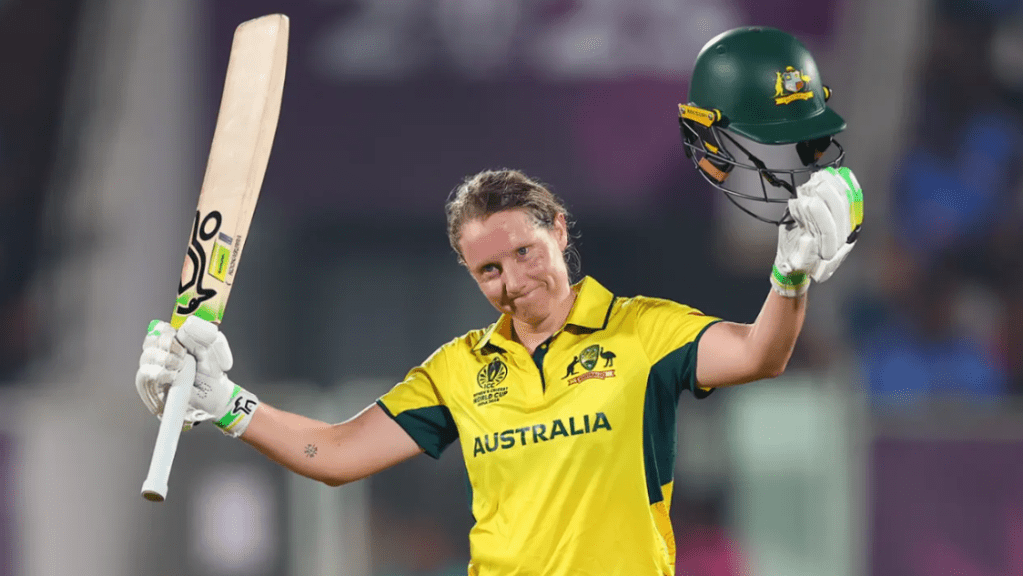
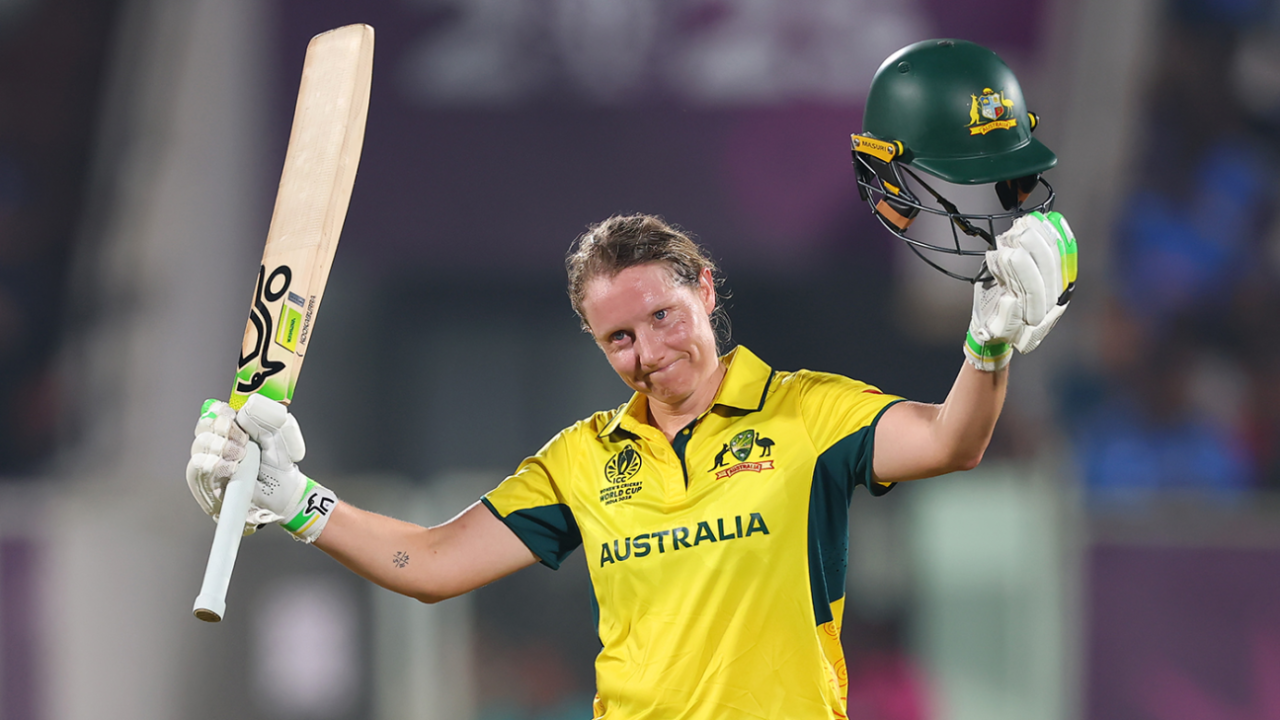
Alyssa after creating problems for India, as usual.7 📷: ESPN Cricinfo

And her numbers tell a story:1

FormatPeriod/ RoleMatchesRunsAverageStrike Rate
ODIMiddle Order (2010–2016)5283015.9685.0
ODIOpening (2017–2025)682,47035.40100.07
ODIAs Captain (2023–2025)2790033.3395.2
T20IMiddle Order (2010–2016)801,39517.44112.0
T20IOpening (2017–2025)821,66024.25127.60
T20IAs Captain (2023–2025)2560024.00125.00
TestMiddle Order (Early Career)620033.3345.0
TestOpening (Recent)428940.1460.5
TestAs Captain (2023–2025)415037.5055.0
Alyssa Healy’s stats as on 13.10.2025

So that’s 120 ODIs (3,303 runs at 97.90 strike rate), 162 T20Is (3,054 runs at 129.79 strike rate), and 10 Tests (489 runs).1 

The statistical contrast between Healy’s middle-order years and her opening career comes packaged with multiple record breaking innings: In 2019, her unbeaten 148 (off 61) against Sri Lanka set the world record for the highest individual score in women’s T20Is.3 In the 2020–21 Women’s Big Bash League, Healy struck 111 off 52 balls for the Sydney Sixers against the Melbourne Stars, featuring 14 fours and four sixes, then an unbeaten 100 in a chase of 176 in 2022.4

Her record in ICC finals is mind boggling:

  1. In the 2020 T20 World Cup final at the MCG, her 75 off 39 balls in front of 86,174 spectators was transformational for women’s cricket. The innings featured the fastest fifty in an ICC final by any player, male or female, achieved in just 30 balls with a strike rate of 192.30. This was the record across formats at the time, and she broke multiple Indians along the way for it- the record used to belong to Hardik Pandya before this display, and she scored the runs against us. Of course she did.5
  2. But big players routinely do big things. She then made 170 off 138 balls against England broke Adam Gilchrist’s record for the highest individual score in any World Cup final.6 This was also her return to form and her first century as captain.

And now, Healy’s 142 off 107 balls against India in the ongoing World Cup created history as Australia achieved the highest successful chase in women’s ODI history at 331 runs. I’d ask why us, but really, it’s all her.7

She also holds the record for most dismissals by any wicketkeeper in T20I cricket, with 92 dismissals (42 catches and 50 stumpings, MS Dhoni has the most for men, 918). So far, she’s kept in 99 T20Is, the most for any cricketer, male or female.1

Indian cricket fans know world cup heart break a little too well, mostly thanks to Australians like Healy, so we can appreciate how freaking clutch she is. But it extends beyond her individual performances- she’s also a pretty impressive captain: 43 wins from 56 matches across formats at 78.18%. In ODIs specifically, she stands at 84.61% wins, with 22 victories from 27 matches.9 Under her leadership, Australia has maintained their status as cricket’s most dominant team, and now has an extraordinary winning record: 12 consecutive World Cup wins since 2022.9

Her genius and resilience has fundamentally changed Australia’s approach, which means she is shaping cricket itself. As usual, Alyssa Healy is the difference.

Sources

  1. Alyssa Healy – Cricket Player Australia
  2. Pressure for spots helping Healy thrive | cricket.com.au
  3. Healy plunders T20I world record with 148
  4. Alyssa Healy powers Sixers to easy win in WBBL opener
  5. ESPNcricinfo Awards 2020 Women’s batting winner
  6. Alyssa Healy breaks Adam Gilchrist’s world record with 170-run knock
  7. Australia v India Women’s World Cup report, scores, highlights
  8. Alyssa Healy breaks MS Dhoni’s record of most dismissals by wicket keeper in T20Is
  9. Alyssa Healy Captaincy Record in ODI, T20I, Test & WPL

The joys of Jasprit

India has had many reliable cricketers, but rarely someone so… Reliably lethal.

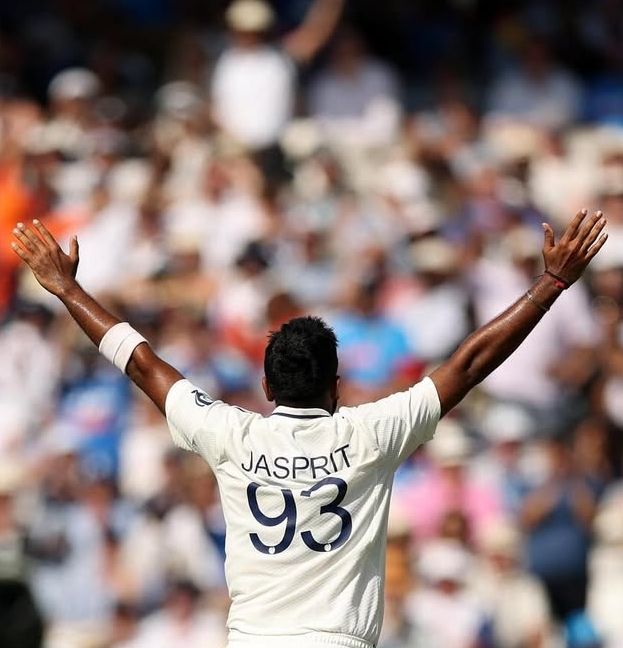
Jasprit Bumrah. 📷 A screenshot from @jaspritb1 on Instagram.

There are so many things to love about the man. The Magnus Effect caused by his whipping arm that makes his deliveries sing through the air,12 swinging either side of the batter. His ability to bowl nearly 43%34 of his deliveries on a good line and length while targeting the stumps more frequently than any other bowler at his pace. The proficiency at all stages of the game. His format agnosticism. The brain behind it all.

But really, it’s his undeniable dependability that gets me.

Bumrah’s transcendent 2024 season, where he finished as the world’s leading Test wicket-taker with 71 wickets in just 13 matches at 30.1,567 was nevertheless crowned by the sheer inevitability of his match-turning six runs in two overs against South Africa in the T20 World Cup Final, when all South Africa needed were 30 runs from 30 balls.89

In 2024, he was the best bowler in all formats at the same time.10 In 2025, he’s working to return from the injuries that caused him. And yet. Even at 90–95 (93?)% of peak velocity, Bumrah’s toolkit remains anti-fragile. Seam, angle, release deception, and decision-late variation age well.

There are great fast bowlers whose brilliance feels like lightning. Bumrah feels like sunrise. The thrill is not surprise but assurance. A captain turns to him and the fan breathes differently. He does not hunt for miracles: he manufactures them, over by over, on any surface, in any light. And like the Sun, he’ll rise again soon.

Sources

  1. The magician’s wrist: how Bumrah does what he does
  2. IIT Kanpur professor decodes the science behind Indian bowler Jasprit Bumrah’s success
  3. Who are The Most Accurate Pace Bowlers in Test Cricket?
  4. Jasprit Bumrah uses money in the bank for Lord’s honours
  5. India bowling icon named ICC Men’s Test Cricketer of the Year
  6. Jasprit Bumrah’s Historic Year in 2024: A Statistical Masterpiece
  7. Bumrah’s phenomenal 2024: Redefining fast bowling excellence
  8. A genius of his craft: Reflecting on Jasprit Bumrah’s T20 World Cup 2024
  9. Bumrah and Hardik script stunning comeback to lead India to T20 World Cup glory
  10. Jasprit Bumrah Profile – Cricket Player India

A probability analysis of India’s men’s cricket coin toss losses

India has now lost 16 consecutive coin tosses across all formats, with the streak extending from January 31, 2025, to October 2, 2025 (the West Indies – India Test match in Ahmedabad that concluded today). Here’s the baffling list by chronology:

Coin Toss Loss No.DateMatchVenueCaptain
1Jan 31, 20254th T20I vs EnglandPuneSuryakumar Yadav
2Feb 02, 20255th T20I vs EnglandMumbai (Wankhede)Suryakumar Yadav
3Feb 06, 20251st ODI vs EnglandNagpurRohit Sharma
4Feb 09, 20252nd ODI vs EnglandCuttackRohit Sharma
5Feb 12, 20253rd ODI vs EnglandAhmedabadRohit Sharma
6Feb 20, 2025ODI vs BangladeshDubai (Champions Trophy)Rohit Sharma
7Feb 23, 2025ODI vs PakistanDubai (Champions Trophy)Rohit Sharma
8Mar 02, 2025ODI vs New ZealandDubai (Champions Trophy)Rohit Sharma
9Mar 04, 2025ODI vs AustraliaDubai (Champions Trophy Semi-final)Rohit Sharma
10Mar 09, 2025ODI vs New ZealandDubai (Champions Trophy Final)Rohit Sharma
11Jun 20, 20251st Test vs EnglandLeedsShubman Gill
12Jul 02, 20252nd Test vs EnglandBirminghamShubman Gill
13Jul 10, 20253rd Test vs EnglandLord’sShubman Gill
14Jul 23, 20254th Test vs EnglandManchesterShubman Gill
15Jul 31, 20255th Test vs EnglandThe OvalShubman Gill
16Oct 02, 20251st Test vs West IndiesAhmedabadShubman Gill
Indian Men’s toss losing streak

In mathematics, probability measures how likely an event is to occur, and it’s always expressed as a number between 0 (will never happen) and 1 (will definitely happen every time). For a standard fair coin toss, the probability of either heads or tails is exactly 0.5 (or 50%). This is because there are two possible and equally likely outcomes: the coin will either flip to heads or tails (not counting the vanishingly small number of times it may fall on its edge, in which case the toss will be repeated until a result is achieved anyway).

Every toss is also independent, which means that the result of one toss will have no impact on the result of any other toss. When events are independent, the probability of several events occurring in succession is the product (multiplication) of their individual probabilities. So, the probability of losing (or winning) two fair tosses in a row is: Probability of 2 losses = 0.5 × 0.5 = 0.25.

The probability of losing (or winning) 3 fair tosses in a row is therefore = 0.5 × 0.5 × 0.5, which is 0.125.

We’ve lost 16 consecutive tosses across formats, geographies, and captains. The probability of winning or losing a fair coin toss is 0.5 or 1/2. Which means the probability of losing 16 consecutive fair coin tosses is… (0.5)16, which equals 1 in 65,536, or ≈0.0000152588%.

Now, it really must be noted that a cricket coin toss is quite different from a simple game of coin toss between two people (though the mathematics remains exactly the same). The Indian skippers were not always the ones tossing the coin, neither were they always the ones calling heads or tails. In cricket, the standard procedure is that the host captain tosses while the visiting captain calls. However, at neutral venues where neither captain is the host, the procedure varies: a neutral party such as a match official or invited dignitary may toss the coin, or one of the captains may be chosen to toss, or tournament regulations may specify the exact protocol. This means India’s losing streak has transcended not just different formats, captains and venues, but also different toss procedures, making it an even weirder demonstration of statistical randomness.

I decided to investigate the mathematics of this absurdity.

0.0000152588%
How rare is a 0.0000152588% chance of any event happening? Well, more people are struck by lightning annually,1 but fewer people are likely to die by meteorite strike2.

Similar things have happened in cricket before- The Netherlands have previously lost 11 consecutive tosses, and and several teams have lost 9 in a row.3 Rohit Sharma himself has lost 12 consecutively (equalling Brian Lara).3

Independence and the Gambler’s Fallacy
The Gambler’s Fallacy is the (mistaken) belief that because India “lost so many times in a row,” they’re “due” for a win, but since each coin toss is independent and past outcomes have absolutely no impact on the next. Each toss remains a 50-50 chance, regardless of what’s happened before.

The Law of Large Numbers and the Nature of Streaks
The Law of Large Numbers states that if an independent act is performed enough times, the outcomes of this independent event (the coin toss in our case) will eventually (that is, in the long term, given a large number of coin tosses) match the predicted probable outcome of that event (that is, 50% of the times the coin will flip heads, and 50% of the times it will flip tails), but this will of course include every coin toss ever, and not restrict itself to India’s male cricket captains.

This simply means that though the average outcome will even out to about 50% wins and losses, streaks such as 16 losses in a row are still possible, just extremely unlikely. Given enough cricket matches played, even “impossible” events are destined to surface from time to time. Cricket tosses represent a relatively small sample size in the grand scheme of probability. Even if we consider all international cricket matches ever played, this would still represent a small enough sample size where unusual streaks can and will occur (to understand this, compare every cricket toss to every coin toss that has ever happened in history).

Information Theory
In Information Theory, the rarer an event is considered, the more surprising it is found to be. This means losing one toss is not surprising since there is a 50% chance of losing any one random fair toss. However, losing 16 tosses in a row must be considered very surprising because it involves the following outcomes:

Lose the first toss (50% probability), then lose the second toss (50% probability), then lose the third toss (50% probability), then lose the fourth toss (50% probability), then lose the fifth toss (50% probability)… then finally lose the 16th toss, also with a fifty percent probability that you could win it or lose it.

Which means that if nothing else, at least my bewilderment at the streak is justified.

Sources:

  1. What are the chances of being struck by lightning?
  2. What are the Odds a Meteorite Could Kill You?
  3. Most consecutive toss losses in ODIs, full list: India extend all-time world record

How does MRF decide whose bat to sponsor?

MRF, originally Madras Rubber Factory, started as a balloon manufacturer and grew into India’s largest tyre company. Over the years, the group diversified into sporting goods, with active involvement in cricket kits, bats, gloves, and a significant marketing footprint in Indian and, to a limited extent, global sporting culture.1 Over time their bat sponsorship has come to represent a potential enthronement, if not outright coronation of the Indian cricket’s next king. It’s fairly entertaining that MRF, once just a tyre company, now doubles as a premium sporting label—with 350+ retail outlets across India as of 2025.2

I’ve wondered about how MRF chooses, or chooses not to, sponsor someone’s bat, especially since their quick switch to sponsor Shubman Gill’s bat. And yet, the selection is not quite destiny: of the 11 players who have carried an MRF bat, 5 were asked to return it. That’s a 45% failure rate.

Also, two things: 1. The tables are pictures because I’m not mucking about with WordPress tables with this much data. It’s an absurdity. 2. I’ve done my best to check the age figures since it was relevant to this post, but I haven’t checked the cricket stats much.

The Cricketers
Sachin Tendulkar (India)
Brian Lara (WI),
Steve Waugh (Australia),
Gautam Gambhir (India)
Rohit Sharma (India)
Virat Kohli (India),
Sanju Samson (India),
Shikhar Dhawan (India),
AB de Villiers (SA),
Prithvi Shaw (India),
Mignon du Preez (SA),3
Shubman Gill (India)

The Logic
There is clearly a statistical basis for screening the candidates. Each of the cricketers finally offered the bat had a highly successful year 3 years before they got the sponsorship call. The first mottle appears two years before the sponsorship is offered, with Rohit Sharma not quite having a year to remember. One year before the sponsorship, performances from Rohit Sharma and Gautam Gambhir started fading. They were still offered sponsorships, though, so MRF was willing to bet they would pick up, and also be culturally relevant in the future.

Word on the cricketing streets is that MRF spots its talents early in their career, but the average age at the beginning of player sponsorships comes out to be 26.67, with Prithvi Shaw being the earliest pick at 17 (or 18) years old, and Steve Waugh the senior most at 36. Removing these outliers returns an average age of… 26.67 years, and removing anyone who was sponsored before 2010 makes for an average of 25.38 years.

Age of MRF bat sponsorees at the beginning and end of their tenures

It’s obvious that the original three foreign icons (Lara, Waugh, AB) were established greats when they got the MRF deal; the rest, especially Indian batters, were mostly in their 20s. Given that batters usually come into their own around 27-29 (my personal opinion), and can certainly be prodigious well into the 30s, this is consistent with MRF’s search for the next (Indian) batting legend. To be noted, all the averages tallied above fall around or before the age of 27.

These are the statistical inputs I’ve been able to spot for the champaigne:

  • Insatiability, 850–1,200+ runs/year in Tests or ODIs for at least one of the years before signing.
  • Consistent 100s in decisive or pressure games (World Cups, series deciders).
  • ICC event hundreds and being among top run scorers seems to be a trademark.
  • Youth milestones and early leadership (U19 or domestic tournament MVPs- Kohli, Dhawan, Gill, and Shaw were all U19 heroes)
  • Multi-format prowess, such as hundreds in all formats by 25.
  • Longevity (sustained form) or a steep climb in performance

The Magic
MRF’s track record of signing “the next big thing” is so consistent, it borders on magic:

  • They chose Tendulkar just before he ruled the 90s and 00s.
  • Bet on Virat as he broke records and changed Indian cricket’s mindset.
  • Handed Gill the baton right before a record-shattering run in 2025, including 4 consecutive Test hundreds and a string of 20→100 conversions unparalleled among peers, although this was an obvious signing with Virat retiring right before the series, and Gill now the heir apparent to the Indian No. 4 position, and the Test captain).
  • Timing is critical. MRF’s model aims to find the next star on the rise- locking in ambassadors just as they shift from prodigy to global icon (e.g., Sachin before he became Sachin, Kohli before captaincy explosion).

    MRF therefore seems to filter for improvement arcs, multi-format ability, and brand values- not just averages. But cricketing “auras” also matter- hence Kohli, Gill (not just Indian and prodigious, but also temperamentally dignified, in possession of impressive communication skills, the worlds best ODI batter and other top performances in his age cohort, and the Indian Test captain) over otherwise comparable international stars like Dravid (diluted the Indian audience, not a superstar when compared to Sachin), Kallis (not Indian, and not as popular in India as AB), Sangakkara (see Kallis), Laxman (same as Dravid, but also confined to Tests), MS Dhoni (Not an era defining batter), KL Rahul (beautiful, inconsistent), Yashaswi Jaiswal (incredible story but not as established as Shubman, has not yet shown all format ability, although watch out for this in the future), Rishabh Pant (Likely not considered an era defining batter, but is also Spidey, and that doesn’t fit the brand image), Abhishek Sharma (maybe soon?). Ambassadors are chosen not only for statistics, but also for embodying resilience (Tendulkar’s comebacks), toughness (Kohli’s chases), artistic mastery (Lara’s flair), performance (Dhawan’s ICC tournament performances), or next-gen inspiration (Shaw, Samson, Gill). Jaiswal and Pant’s exclusions highlight that charisma alone isn’t enough- they’re watching form across formats, market potential, and personality fit. Not sponsoring MS indicates they’re not too swayed by long term captaincy or intense fandom or even the number of trophies won as skipper- once again, it’s the batting output that matters.

The Business
MRF’s approach to selecting its bat ambassadors is a nuanced blend of data-driven business strategy, brand vision, and razor-sharp market positioning, refined over decades of cricketing association. India is MRF’s largest tyre and sporting market, and cricket is India’s premier sport. MRF therefore focuses on pan-Indian cricket icons as ambassadors to maximise its cultural and commercial return on investment. This also means that non Indians rarely get the MRF sticker.

A selection of players who were not MRF bat ambassadors, and why I think that was so

By not sponsoring too many players simultaneously- and never directly competing with its own ambassadors for limelight- MRF ensures its bat sticker is always exceptional, not generic. The sustained, highly visible association with generational talents strengthens brand recall far beyond the cricket field- from tyre showrooms to street cricket bats. So concerned is MRF with its bat’s legacy, the company has divided its brand into three- the Genius bat for the artists and prodigies (Tendulkar, Kohli, AB, Gill), the Conqueror bat for those known for their grit (Steve Waugh), and the Wizard bat for Brian Lara.

MRF is always looking a generation ahead. As one ambassador (Tendulkar, Kohli) nears twilight, MRF signs the next rising phenom (Gill over Jaiswal, as the latter had not yet ticked every box), displaying continuity and reducing sponsorship risk, while ensuring ongoing cultural presence, with each transition becoming a media/ marketing event in itself. The brand’s investment is offset by massive earned media (“free” advertising) via on-field heroics, social media virality, and generational recall—no other bat sticker is as instantly recognized in world cricket.

Note: This post earlier included Sir Hadlee, but I’ve not been able to find any credible sources for it, so I’ve removed any mention of him, and redone the calculations.

Sources
1. MRF Ltd. – Fortune India
2. MRF Sports
3. @mdpminx22 on Instagram

Goodbye my heart

Virat Kohli, after his final Test Century. Picture courtesy of Star Sports.

In a lifetime of loving cricket and its artists, Virat Kohli and Test cricket has been the most compelling love story, and a farewell that feels like bereavement.

Take care of yourself Virat. You’ve meant the world to me.

Measuring greatness in sport

Humans like to measure things, and we like to be right… we insist on both nearly all the time, in fact. We often also like sport. Yet, in the sports I follow, there is no one player who can unequivocally be named the Greatest of All Time (GOAT).

The GOAT debate is always engaging, since it paints more of a picture of the person or persons making their case, rather than the athlete or team they are advocating for.

To my mind, there’s no real way to find one athlete who is better than all others, because no athlete ever has the same journey. Why is this important? Because a girl playing sport will always have more barriers to performance than a boy of the same age, socioeconomic status, and innate talent. Kids starting off playing the same sport will have very different paths by being born in different countries- and I’m not even speaking of the differences between developed and not so developed nations – think of the difference in coaching availability for a young tennis player in Spain to one in, say, New Zealand.

Let’s talk about what makes an athlete good.

i. Win-loss % – The most important standard to determine whether an athlete is good or not. Clearly, athletes who play team sports have a disadvantage, and their personal records will determine whether they have contributed to the team’s cause through their career or not.

ii. Inherent Talent – How fast a person can run, how their body works, how they process the knowledge about sport and apply it through the filter of their own personality are all usually inbuilt, and very individual to any person.

iii. Coachability – Are they open to learning new skills?

So aside from exceptional results in the criteria discussed above, what makes me think of a player as a great, or even a GOAT aspirant? Here’s my (nominal) list:

● Biomechanics – How an athlete moves is imprinted in peoples minds. All athletes in a sport learn the same movements, but how those movements interact with any of their

● Motivation – The best of the best are self motivated, and much more so than the regular person. They constantly wish to improve, and they work to do it.

● Ambition – The more ambitious an athlete is, the higher up they climb.

● Focus – They have their eyes on the prize and nothing can distract them from it.

● Sportspersonship – They’re not nasty. They care enough about their sport that they understand their opponent’s effort. Also, they enjoy their opponents’ successes, at least purely from a love-of-their-sport point of view, even if it encumbers them with additional scoreboard pressure.

● Transcendence – Athletes who transcend their team, their sport, their nationality. They have fans across all lines.

● Provocating other fandoms – If you know, you know. Athletes have reached the pinnacle of their sport infuriate fans of other GOAT contenders in the same sport, especially if they play in overlapping timelines.

● Popularity – They bring new fans and new players to their sport.

● They transform their sport – they change how their sport is played. The way they approach the sport and play it is so transformative, their colleagues change how they play and coaches and think tanks have to alter their baselines and expectations from other players.

While all spoortspersons are (correctly) judged on results, there are some who get better results. My second list are the qualities that propel good athletes to great ones.

How would you measure fielding performance in cricket?

Cricket is a statistically oriented sport. Cricket fans are used to scrolling pages of statistics for their teams and players they wish to know more about. And yet, we don’t have reliable metrics for measuring and comparing fielding performances.

Fans know, of course, when we see a cohesive fielding performance, such as New Zealand’s against Pakistan during the inaugural Champions Trophy match in Karachi on Wednesday, 19 February 2025. We also know a sloppy one, such as India’s against Bangladesh the next day in Dubai. Greatness is always visible in the doing on a cricket field.

We fantasise about taking that perfect flying catch, or executing a a sharp run out when we play, but we still do not have a universally accepted set of metrics to really understand what a “perfect” catch is, or what makes a run out “sharp”. For a sport that’s managed to tame the nebulous Leg before Wicket dismissal into four measurable criteria (including the umpire’s decision), it sure is confusing why fielding continues to confound us so. Especially when cricket fans value it so.

I’ve wondered what it would take to build parametres that measured fielding performance, and asked different cricket writers about how they would go about it too. At the moment I think such a measurement must include the following:

1. Define the deconstructed components of fielding

    What are the parts that make the whole for fielding in cricket? I think we can break them down to getting in position, including speed and ball awareness; catching; throwing, with throwing itself divided into speed and accuracy; and field awareness.

    2. Decide how we value different types of catching

    Is slip catching the same as catching at point? Are they equivalent to a boundary catch? What about wicket keeping catches, with those padded cymbals for hands? And what happens when fields tag team a catch?

    3. Scoring

    Each fielder may be rated on the above, that is, scores for emplacement, for catching, and for throwing. Additionally, points can be deducted for errors and added for faultless execution, gymnastics-style.

    Now for expanding upon the four criteria I mentioned in the first point above.

    1. Emplacement- How a fielder gets into position.

      a. Ball Awareness

      A lack of ball awareness is most often evidenced in whether or not fielders are backing throws up. Overthrows are annoying, and often damaging. Dropped catches are also often about active attention, since players who expect the ball to come to them are also ready to field it, and ball awareness will allow us to gauge how attentive a player usually is.

      b. Speed

      Cricket already measures the amount of time a fielder had to react to an incoming catch, and we can certainly measure the distance the fielder is standing from the batter. Therefore, as middle school maths taught us, Speed = Distance/ Time. This will capture a fielder’s fitness and running ability, as well as their reaction time.

      2. Catching- Self explanatory

      Off the top of my head, I can count eight types of catches

      i. Tag-Teamed Catches- When two or more fielders are involved in completing the same catch. Here players must be especially aware of each other and cognizant of throwing the ball before they drop it, or braced to catch one coming at an odd angle from the first catcher. I believe points should be assigned to all the involved fielders.

      ii. Boundary Catches- Catches pouched so close to the boundary that the fielder must be aware of the ropes/ cushions.

      iii. Outfield Catches- Catches outside the 30 yard circle, but before the ball reaches the boundary fielders. It may involve either infielders or boundary fielders running to the catch.

      iv. Infield Catches- Catches at or within the 30 yard circle that do not include the ones detailed below.

      v. Slip Catches- You know the ones.

      vi. Keeper Catches- This is interesting because keepers have such a unique job. Of course they have the advantage of padding, but they often have to catch blind, and when diving can easily end up in front of first slip. They also must actively read the ball while it is being delivered, just like the batter.

      vii. Close Catches- Any variation on Silly Point, Silly Mid Off, Silly Mid On, and Forward Short Leg.

      viii. Caught and Bowled- When the bowler catches the ball during or soon after their follow through.

      3. Throwing- collecting and getting the ball back to the pitch.

      Throw Speed- easily measured.

      Throw Accuracy- also easily measured.

      4. Field Awareness

      Poor calling is exasperating to watch and dangerous for the fielders themselves, and fielders need to be aware of which end of the pitch they should throw to.

      So how will the scoring happen?

      One way to do it is simply begin each match at zero for each fielder, and add points as they field, or misfield, as the numerator, and the number of opportunity they had to field as the denominator. Each act of fielding can have a predetermined value, and at the end of the match, I propose we bring all the scores down to a scale of 10.

      A decision must be taken about whether each day in test cricket is rated separately, or whether performances are rated by innings, since both bring forth interesting insights into how different fielders manage sessions, innings, and days. A fifth continuous session of fielding is sure to differ from the first session in both execution, strategy, and energy.

      This kind of a rating scale will take into account how often a fielder comes into play, and will account for how good they already are, given that they are likely to be placed according to their previously demonstrated abilities.

      Of course, this will add to all the counting and mathematics we already do as cricket tragics, but as matches add up, we’ll have new stats to pour ourselves into and write articles about. I count that as a win.