
My Immortals

There are moments in life that are too difficult to put into words. Print isn’t enough to hold them. India’s women cricketers winning their ODI semi final against the mighty, seemingly invincible Australians was that moment for me.1 I knew we would win the world cup now. And I knew how much was about to change.

Later, on November 2, 2025, old heartbreaks from 2005 and 2017 had no place on the sofa with me as India walked out in blue, one more time, with one more chance not to be a beautiful tragedy. This time the World Cup was not in distant England or New Zealand; it was in our messy, noisy backyard, under floodlights that bounced off the Arabian Sea, and losing the toss was just par for the course now, not a death knell for dreams.2

Every fan carries a private pantheon. Let’s talk about some of mine: women who did not wait for the world to be ready for them.

Earlier
There is Mithali Raj, who spent two decades carrying Indian batting on her back, walking in that day not as a story in progress but as a living archive. She did not give speeches about revolution; she just kept showing up, year after year, with a straight drive that made time slow down: her 409 runs in 2017 stood as India’s World Cup record until Smriti broke it in 2025.3456 In my mind, she is the one who quietly set the table so that others could feast.​

There is Jhulan Goswami, the long run‑up that felt like a pilgrimage and the wrist that could still snap a ball past the best batters in the world. Watching her in 201778 was like watching a bridge between eras: one foot in the days when women’s cricket hardly existed on TV, the other in an era she would not fully get to enjoy but had made possible.​ In a 20-year international career she took a record 255 ODI wickets for India.910

Long ago
Shantha Rangaswamy captained India’s first women’s Test side in the 1970s,1112 scoring 613 Test fifties and a hundred while also opening the bowling (21 Test wickets),13 and later became the first woman to receive the Arjuna Award for cricket.11

Diana Edulji learned her craft bowling at boys in Badhwar Park,14 then became India’s slow left‑arm heartbeat for nearly two decades, captaining the side and taking 63 official Test wickets—still the most by any Indian woman—and 46 ODI wickets.15 She also fought equally hard off the field, using her long Railways career and later her role in the BCCI’s Committee of Administrators to push for jobs, contracts, and dignity for women cricketers.​161718

There are so many others who have built the spine of women’s cricket in this country vertebrate by vertebrate: Shubhangi Kulkarni, leg‑spinner and administrator, keeping the game alive in committee rooms;19 Sandhya Agarwal20 and Anju Jain,21 scoring in forgotten World Cups; Purnima Rau2223 and Neetu David,24 taking wickets and then quietly building the teams that would come after them; Anjum Chopra, captaining in the lean years and then talking women’s cricket into Indian living rooms.25

Now26272829
But this tournament had others now- Deepti, Smriti, Amanjot, Richa, Shafali, Pratika, Jemima.

If Deepti was the tournament’s quiet star with 215 runs and 22 wickets, Smriti was the metronome- India’s highest run getter with 434 and multiple catches. Both determinedly carrying this country, up the massive Everest of a home world cup.

Shafali made 199 in just the two matches she played, with that 87 in the final… but my favourite Shafali moment has to be how she was grinning already while anticipating Sune Luus’ catch.

Pratika’s 308 runs, the second‑highest tally for India constantly helped us open (hehe) doors into the match, and who knows how many the poor kid may have had if she hadn’t been injured right at the precipice of the Cup itself?

Jemi made 292 runs, including an unbeaten 127 in the semi‑final vs Australia… in many ways she’s the one who won us the tournament. Her self belief through that match, her bravery through the tournament and even in the press conferences, constantly belied by her jolly nature… Perhaps she’s opened another door for us: talking so openly about mental health in cricket, for cricketers.30

235 runs, with 12 sixes, the most by an Indian in the tournament: Richa Ghosh, keeper-bat par excellence.

Amanjot’s World Cup began with crisis. In the opener against Sri Lanka, India slid from 120 for 2 to 124 for 6, and a quiet stadium in Guwahati felt like it was reliving every old nightmare. On debut, she walked in next to Deepti and hit 57 off 56 – her maiden ODI fifty – in a 103‑run stand that yanked India to safety,3132 and later, in the final against SA, Wolvardt’s outrageous, tumbling catch that essentially won us the match and the Cup… you know the one.33 Those are what I remember.

Sneh’s most talked‑about spell came against Pakistan, in a game that could easily have become sticky. She bowled eight overs for just two wickets on paper, but the control was the real story: a chokehold that kept the chase at arm’s length.

Radha had to wait, watching the first six matches from the bench while everyone discussed India’s “settled XI”. When she finally got her chance against Bangladesh, she made it impossible to ignore her again: 3 for 30, plus a brilliant direct‑hit run‑out. That performance is what pushed her name back into the semi‑final conversation and reminded everyone that India’s spin depth now extends all the way to the dugout.​

Renuka’s World Cup was all about the early overs. Even when she went wicketless, like against Pakistan and England, she strangled the run rate – 2.9 an over in one match, 4.6 in another – so that chases never got to breathe. Her new‑ball spell against New Zealand, where she combined discipline with two top‑order wickets, set up the very platform from which Smriti and Pratika later tore the game away. 

Harleen, who once went viral for that impossible boundary catch in England,34 spent this World Cup doing the unglamorous versions of the same thing – sharp stops in the ring, calm hands on the rope, and those 20‑run cameos in the middle order that stop an innings from fraying.

Arundhati’s spells were often shorter, sharper: two‑ and three‑over bursts in the middle that changed the mood of an innings more than the scorecard, the kind of work you only notice when it’s missing. But her contribution often also came as that player who wasn’t in the XI, and still carried the team’s attitude. So brilliant.

Sree became one of those quiet tournament stories that suddenly erupts into view at the end. The 21‑year‑old left‑arm spinner from Kadapa took 14 wickets across the World Cup, leading India’s spin tally and being welcomed home to Andhra Pradesh like a local folk hero- as she should be.

Kranti’s World Cup became a small‑town fairy tale written in seam. Already known for a 6 for 52 against England earlier in the year,35 she arrived at the tournament as a young quick with raw menace and left it as one of India’s biggest match‑winners. Her 3 for 20 against Pakistan in the group stage, sharing the new ball with Renuka, smashed the chase early and earned her a Player‑of‑the‑Match award that felt like a coming‑of‑age ceremony.

While Yastika’s job this time, was mostly to wait – pads on, gloves ready, rehearsing every scenario in her head in case anything happened to Richa, Uma showed us what the future looks like. A galaxy of stars awaits.

Harmanpreet Kaur went into this tournament as the oldest player in our XI, one day younger than me, and carrying at least ten extra years of history. She had seen 2005 from afar, 2017 from the middle, and every year since then from inside the weight room, the nets, the press conferences where she was asked about the word “chokers” without anyone quite using it. When my girl lifted the trophy, with the Bhangra and her team waiting for her, It’s difficult to explain the joy. Sometimes things can just be felt.

After the world cup, what struck me most was how lightly they wore their victory. No chest-thumping, no proclamations of dominance. Just gratitude, relief, and a deep, unmistakable sense of togetherness. Even Australia, knocked out in the semi‑final absorbed the defeat like a bruise, not a scar. And South Africa, losing the most important match of their life, were still gracious enough to accept hugs.

Women’s cricket, at its best, feels like the game stripped back to its point: the joy of being allowed to play. The records matter. The trophies matter. But they feel like by‑products of something more important: the right to take up space on a cricket field.​

So when I call these women immortal, I don’t mean that highlights of Shafali’s 87 or Deepti’s 5 for 39 will live forever on some server farm in Dubai. I mean that a girl somewhere in the tiniest, dustiest, and possibly even the most gender-backward, village possible, balancing a taped tennis ball on her fingers, will one day hear these names and believe that the world will not need to be ready for her either.
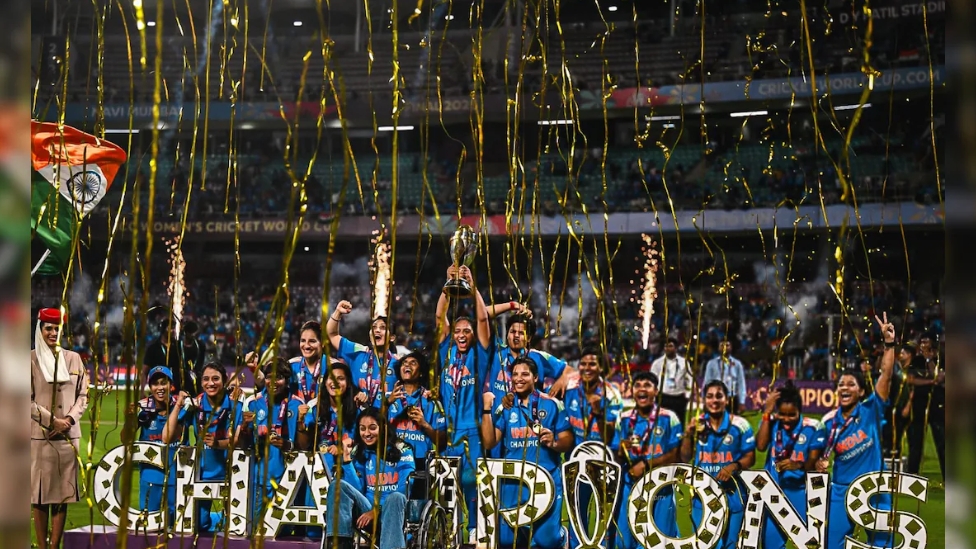
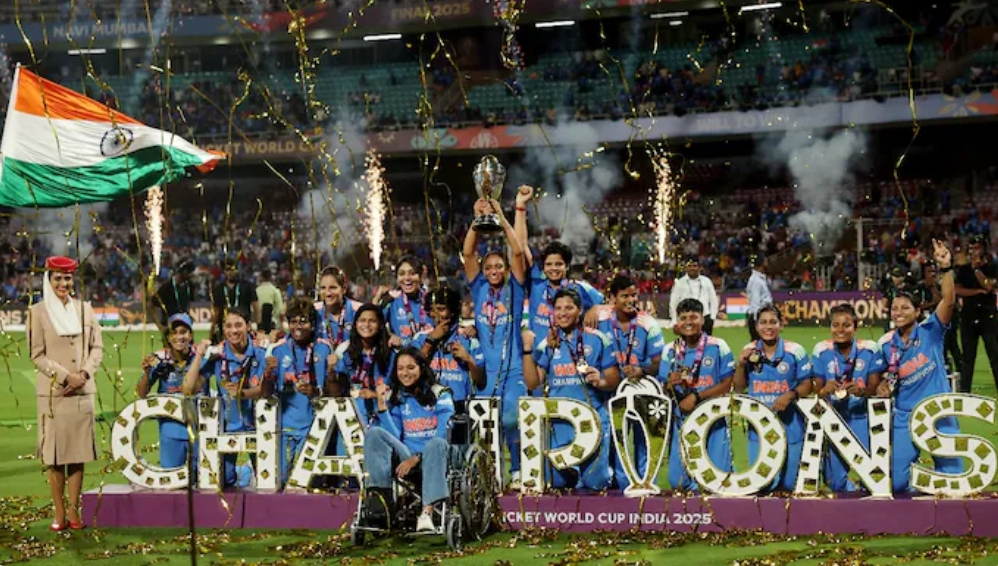
📷 Reuters

Sources

  1. Full Scorecard of India Women vs Australia Women, ICC Women’s World Cup 2025, 2nd Semi Final – ESPNcricinfo
  2. South Africa win toss in the big Final | CWC25 – ICC 
  3. Who is Mithali Raj? A trailblazer for Indian women’s cricket – Olympics.com
  4. Stats – Mithali Raj, the most prolific batter in women’s cricket – ESPNcricinfo
  5. Smriti Mandhana Scripts Massive Women’s World Cup Record, Overtakes India Legend Mithali Raj – NDTV Sports
  6. Women’s World Cup 2025: Smriti Mandhana Breaks Mithali Raj’s Record – India Today
  7. ICC Women’s World Cup 2017: ‘Marvellous job’ – Twitterati hail Jhulan Goswami’s performance – The Indian Express
  8. Jhulan Goswami: She broke world records and coached WPL champions – Femina
  9. Stats – Jhulan Goswami, the most prolific bowler of women’s cricket – ESPNcricinfo
  10. Jhulan Goswami: She broke world records and coached WPL champions – Femina
  11. ‘No one can take away the pride, we are the pioneers’ – Shantha Rangaswamy – RevSportz
  12. Who was the first captain of the Indian women’s cricket team? – Testbook
  13. Shantha Rangaswamy profile – ESPNcricinfo
  14. Diana Edulji: A true pioneer for India’s female cricketers – ICC
  15. Diana Edulji profile – ESPNcricinfo
  16. Diana Edulji: A true pioneer for India’s female cricketers / related profiles – ICC / The News Minute / NDTV Sports
  17. Meet Diana Edulji, the only cricketer and lone woman on SC‑appointed panel to run BCCI – The News Minute
  18. BCCI Administrators: Profile of Diana Edulji – NDTV Sports
  19. Shubhangi Kulkarni: One of the pillars of women’s cricket in India – CricketCountry
  20. Women’s World Cup stats – India women, individual records (ESPN/ICC database page)
  21. India name team for Cricinfo Women’s World Cup 2000 – ESPNcricinfo
  22. Purnima Rau interview – YouTube
  23. P Rao (Purnima Rau) profile – ESPNcricinfo
  24. Neetu David profile – ESPNcricinfo
  25. Anjum Chopra profile – ESPNcricinfo
  26. ICC Women’s Cricket World Cup 2025 – Stats – ICC
  27. ICC Women’s World Cup 2025/26 – Tournament stats – ESPNcricinfo
  28. Women’s World Cup player stats – India Today
  29. Women’s ODI World Cup 2025 – Stats – NDTV Sports
  30. “I was crying every day”: Jemimah Rodrigues breaks down while revealing battle with anxiety – Times of India
  31. Women’s ODI World Cup 2025: India vs Sri Lanka match report – Olympics.com
  32. India Women vs Sri Lanka Women, 1st match, CWC 2025/26 – Match Report – ESPNcricinfo
  33. Amanjot Kaur’s magical catch that turned Women’s World Cup final in India’s favour – NDTV Sports
  34. Harleen Deol’s viral boundary catch – YouTube
  35. England Women vs India Women, 3rd ODI 2025 – Match Report – ESPNcricinfo

Fear and Bravery in (Cricket) Decision-Making

NB: Ishan made me do this.

Why did Ishan Kishan come out swinging at 6/2 chasing 209 instead of playing it safe? Why did Pat Cummins bowl first in the 2023 World Cup final despite everyone expecting him to bat? Why did Harmanpreet Kaur throw the ball to part-time bowler Shafali Verma in the 2025 Women’s World Cup final when India desperately needed wickets?

These aren’t random decisions. They follow patterns that psychologists and economists have studied for decades. Three frameworks help us understand these three cricket choices:

  1. Expected Utility Theory – How perfectly rational people should make decisions (decision making for robots)
  2. Prospect Theory – How people actually make decisions when facing risk, or when they feel like they are winning or losing
  3. Behavioral Economics – The mental shortcuts and biases that affect our choices

Expected Utility Theory1
Expected Utility Theory assumes people make decisions by calculating the average outcome of their choices. They think about the all the possible outcomes, try to understand how likely each outcome is, and how much they would like or dislike it if any of these outcomes happened. Then pick the option where this calculation works out best.

Expected Utility Theory assumes three things:

  • People can calculate probabilities accurately
  • They will pick the option with the best average outcome
  • They make decisions based on pure logic, not emotions

This theory is useful because it gives us a standard for what “rational” decision-making looks like. It’s like the baseline or the “correct answer” against which we can compare real human behavior.

But here’s the problem: people don’t actually follow this framework, because we are not always rational beings.

Prospect Theory2
Developed by Nobel Prize-winning psychologists Daniel Kahneman and Amos Tversky,3 Prospect Theory says that people behave in predictable but “irrational” ways. The central insight of the theory is that Losses hurt about twice as much as equivalent gains feel good,4 and that outcomes are evaluated based on the current position of the person evaluating them- not on absolute values of satisfaction.

Here are two examples:

Scenario 1: Gain Frame

  • Option A: You’re guaranteed to get $450
  • Option B: Flip a coin—50% chance you get $1,000, 50% chance you get nothing

Expected Utility Theory says: Both options have the same expected value ($500- the value you would get on average if the coin is flipped many times), so you should be indifferent.

But Prospect Theory predicts: Most people choose Option A (the guaranteed $450). Why? Because the certainty of a gain feels good, even if it’s smaller.

Scenario 2: Loss Frame

  • Option A: You’re guaranteed to lose $450
  • Option B: Flip a coin—50% chance you lose $1,000, 50% chance you lose nothing

Expected Utility Theory says: Both have the same average loss, so again you should be indifferent.

But Prospect Theory predicts: Most people choose Option B (the coin flip). Why? Because they’ll take a gamble to avoid a certain loss. The possibility of losing nothing appeals to them.

Behavioral Economics5
While Expected Utility Theory focuses on rationality and Prospect Theory focuses on how we evaluate gains vs. losses, Behavioral Economics is the broader field studying all the ways our brains take shortcuts that lead us astray. It’s the study of cognitive biases.

Here are some key behavioral biases:6

  1. Anchoring Bias: We get too attached to the first piece of information we hear, even if it’s wrong or irrelevant.
  2. Status Quo Bias: We prefer to keep things as they are, even if alternatives are better (“We’ve Always Done It This Way”).
  3. Confirmation Bias: We seek out information that confirms what we already believe, and ignore contradictory evidence.
  4. Availability heuristic: Overweighting recent memorable incidents while discounting regular events. A heuristic is a mental short cut, like a rule of thumb. For example, my dad just wears whatever my mom takes out for him to wear. If he has to make a decision, his heuristic is to wear whatever is at the top of the pile of clothes in his cupboard.
  5. Recency Bias: We overweight recent events when making decisions, ignoring longer-term patterns.
  6. Sunk Cost Bias: We make decisions based on money we’ve already spent, even though that money is gone and shouldn’t affect future decisions.

These biases often work together to distort decisions:

  • Anchoring + Confirmation bias = You anchor on an initial belief, then only see evidence confirming it
  • Recency bias + Availability heuristic = Recent vivid events feel more common than they are
  • Status quo bias + Sunk cost bias = You stick with current choices because of what you’ve already invested, even if better alternatives exist

Kishan7
Now back to cricket. Ishan Kishan walked in and launched an all-out assault—76 runs off just 32 balls at a strike rate of 237.5. He reached his fifty in 21 balls, the fastest by any Indian against New Zealand. Together with Suryakumar Yadav, he added 122 runs in just 49 balls. India won with 28 balls remaining.

Captain Suryakumar later said: “I’ve never seen anyone bat at 6/2 in that manner and still end the powerplay around 67 or 70”.8

From a pure Expected Utility perspective, when chasing very high totals in T20 cricket, the mathematics often favor immediate aggression because conservative batting creates an impossible required run rate in later overs.9 Studies using dynamic programming and, more recently, advanced machine learning techniques to analyse Twenty20 (T20) cricket suggest that, when facing high targets, chasing teams are often more successful when they adopt an aggressive approach from the beginning, which inherently requires accepting elevated risk.10

In Prospect Theory terms:

  • Reference point: The current losing position (6/2, massive target)
  • Frame: Loss domain (already behind, likely heading toward defeat)
  • Predicted behavior: Risk-seeking to escape the loss domain

​Research on sports shows11 that athletes in trailing positions consistently take more risks: higher shot volumes in basketball, more aggressive substitutions in football, elevated foul rates. Trailing teams recognise that maintaining the status quo (playing safe) guarantees defeat, so they escalate risk dramatically.

Kishan’s aggressive batting aligns perfectly with Prospect Theory’s prediction: when facing almost certain defeat through conventional cricket, players become willing to take massive risks for a chance at victory. The post-match quote captures this psychology: “I asked myself, can I do it again? I had a very clear answer”.8 This suggests Kishan mentally framed the situation as an opportunity (a chance to produce something extraordinary) rather than a threat (protecting his wicket).

The partnership transformed what looked like a losing position into a comfortable victory. India reached the target with 28 balls to spare. Kishan’s risk-seeking behavior in a loss frame achieved precisely what conservative cricket might not have done—a pathway to victory from an apparently losing position.


Cummins12
In the 2023 CWC final, Pat Cummins won the toss and chose to field. Conventional wisdom… indeed old Australian wisdom certainly suggested batting first and setting a target,13 but against an unbeaten India playing at home, his instincts were unfortunately proven correct (Cummins admitted he was “unsure right until the toss”14).

Cummins articulated this logic: “Not getting it right with the bat first would be fatal in a way not doing so with the ball wouldn’t”.14 This is sophisticated risk assessment—recognising that different choices carry different consequences even if probabilities are similar. Besides, research on toss decisions shows that in modern ODI cricket, there’s no consistent advantage to batting first.15 The decision was called “one of the bravest in Australian sport history”, because if it failed, criticism would be merciless.16 The “safe” choice (bat first) protects reputation even if suboptimal. Cummins accepted the reputational risk to make what he calculated as the statistically better decision. Rare leadership.

Abhishek Sharma, India’s incandescent T20 opener later spoke with his IPL team mate Travis Head to understand Head’s mindset during Australia’s chase. Abhishek says Head told him, “when I asked him about his mindset in the World Cup, he told me that we only had the batter’s meeting. And in the batter’s meeting, we only thought about how to make 400 today”.17

Now think from an Indian batter’s perspective. The pressure of playing a home world cup final in front of thousands of fans vociferously supporting your team… I would have thought it would let them express themselves openly, but the opposite happened.

Why did the pressure of a home World Cup final constrain Indian batters instead of liberating them? The answer might sit at the intersection of Prospect Theory, loss aversion, and reputational risk.

Prospect Theory tells us that people in a gain frame become risk-averse. After winning every match before the final and spreading true joy through the nation, every wicket that fell in the final may have felt like a loss from a guaranteed future, not a normal match event. Loss aversion might have kicked in hard here: the pain of being the one who throws it away may have felt far greater than the joy of being the hero. This is textbook loss aversion: the psychological weight of potential failure exceeded the psychological reward of potential glory.

So Indian batters subconsciously optimised for:

  • Minimising blame
  • Preserving wickets
  • Maintaining respectability

Not maximising runs.

Contrast this with Ishan Kishan whacking the skin off the cricket ball earlier this week… the contrast is clear, isn’t it? Note here that Kishan had earlier been dropped and treated poorly by the BCCI after making a double hundred,18 plus he had failed in the previous match. He still backed himself and chose the (objectively) riskiest option.

Elite cricket decisions are clearly less about skill or courage and more about how players psychologically locate themselves on the gain–loss spectrum. In all three moments—Kishan’s assault, Cummins’ toss call, and India’s batting freeze—the decisive factor wasn’t talent or tactics, but where each decision-maker placed their psychological reference point. None of these decisions become correct because they succeeded or failed. They become understandable because the theory predicts them before the outcome is known. Human beings behave differently under different frames—and elite sport amplifies those tendencies.

Kaur
And now to something joyful. Remember when Harmanpreet Kaur threw the ball in the final to Shafali Verma?19 Me too! Shafali is a specialist batter who had bowled only 14 overs in 30 ODIs with just 1 wicket.20 Shafali took 2 wickets in her first over (Sune Luus caught and bowled, Marizanne Kapp).19

From a rational Expected Utility perspective, Harmanpreet’s decision seems questionable. Pure EUT would favour specialist bowlers with known probabilities and track records over using an untested part-timer who could get whacked for a 30 run over on a bad day. But Shafali was having a good day, and Harman trusted that. Shafali’s ongoing frame of mind was of confidence. and Prospect Theory says people evaluate their options based on their current position. Shafali also represented an unexpected variation that South African batters hadn’t prepared for.

Harman successfully overcame several behavioural biases to toss the ball to Shafali that night:

  1. Status Quo Bias Overcome: The “safe” choice was continuing with regular bowlers—what teams typically do. Harman broke this pattern. Research shows captains typically exhibit strong status quo bias, especially in high-pressure situations. Harman went against this natural tendency.
  2. Sunk Cost Fallacy Avoided: Teams often persist with established bowlers because they’re “supposed to be” the specialists—they’ve been selected for this role, practiced extensively, etc. Harman didn’t fall into this trap. The fact that Shafali wasn’t a specialist shouldn’t matter if the situation calls for something different.
  3. Availability Heuristic Countered: The most “available” option mentally was the regular bowlers—they’re the specialists, they’ve bowled throughout the match. But Harman looked beyond the obvious choice.

She later explained, “When Laura and Sune were batting, they were looking really good, and I just saw Shafali standing there. The way she was batting today, I knew today’s her day. She was doing something special today, and I just thought I have to go with my gut feeling”.20 This represents what researchers call “recognition-primed decision making”—experienced decision-makers recognising patterns and trusting intuition developed through years of experience.21 MS Dhoni’s captaincy showed similar intuitive leaps: giving the last over to Joginder Sharma in the 2007 T20 World Cup final, promoting himself ahead of Yuvraj in 2011.22 Neither Kaur nor MS South African captain Laura Wolvaardt later admitted: “Shafali’s bowling was the surprise factor, frustrating that we didn’t expect it”.23

In all,

  • Ishan was risk-seeking because he perceived himself in a loss frame.
  • Indian batters became risk-averse because they perceived themselves in a gain frame.
  • Cummins accepted reputational risk to avoid catastrophic match risk.
  • Harman overrode status quo bias by compressing experience into instinct.

Ultimately, none of these choices were brave because they succeeded; they were brave because they resisted the gravitational pull of risk aversion, reputation, and habit. Under pressure, cricket strips decision-making down to its psychological core: how afraid are you? Elite sport doesn’t reward those who merely minimise mistakes. It rewards those who understand when the cost of caution is greater than the cost of failure — and who are willing to act accordingly. The moments we celebrate are not triumphs of bravery so much as triumphs over instinct—reminders that greatness often lives in decisions that feel unsafe.

Sources

  1. Expected Utility – Definition, Calculation, Examples (Corporate Finance Institute)
  2. The Sveriges Riksbank Prize in Economic Sciences in Memory of Alfred Nobel 2002 – Press Release (NobelPrize.org)
  3. Prospect Theory (The Decision Lab)
  4. Prospect Theory in Psychology: Loss Aversion Bias (Simply Psychology)
  5. Prospect Theory Overview & Examples (Statistics By Jim)
  6. 5 Everyday Examples of Behavioral Economics (The Chicago School)
  7. Anchoring Bias (The Decision Lab)
  8. The Sunk Cost Fallacy (The Decision Lab)
  9. IND vs NZ 2nd T20 2026: India ride on Ishan Kishan, Suryakumar Yadav show to beat New Zealand in Raipur (Olympics.com)
  10. Ishan Kishan 21-Ball Fifty vs New Zealand | IND vs NZ 2nd T20I 2026 (SportPreferred)
  11. Kishan and Suryakumar lay down marker in astonishing chase (ESPNcricinfo)
  12. ‘I asked myself…’: Kishan after his stunning 76 against NZ (NewsBytes)
  13. Optimal strategies in one-day cricket (Asia-Pacific Journal of Operational Research / World Scientific)
  14. Risk-taking, loss aversion, and performance feedback in professional sports (PMC / Frontiers)
  15. Cummins, and the ‘satisfying’ sound of silence (ESPNcricinfo)
  16. Cummins: An Aussie World Cup winning captain like no other (ESPN)
  17. Numbers Game: Is batting first such an advantage in Tests? (ESPNcricinfo)
  18. How Australia’s backstage orchestrators plotted India’s fall (Cricbuzz)
  19. Harmanpreet Kaur’s gut inspires call to let Shafali Verma bowl (ESPNcricinfo)
  20. Deepti, Shafali shine as India claim maiden World Cup title (ICC)
  21. Women’s World Cup 2025: Harmanpreet Kaur reveals ‘gut feeling’ led to Shafali Verma’s bowling decision in final (CricTracker)
  22. Recognition-Primed Decision Model (The Decision Lab)
  23. Dhoni, and Decision-Making – Learning from the Best (RevSportz)
  24. ‘Shafali’s bowling was the surprise factor, frustrating that we didn’t expect it’: SA captain Laura Wolvaardt (Times of India)