I’ve worked for a couple of projects on e-waste and e-waste recycling, and I wanted to revise that and see what’s going on in the space, so here is a series of posts about these topics.
In 2022, the world generated 62 million tonnes of electronic waste. Only 22.3% of that waste was properly recycled. By 2030, we’re on track to hit 82 million tonnes annually—while our recycling rate is projected to drop to 20%.12 The gap between what we’re throwing away and what we’re recovering isn’t just an environmental problem. It’s an economic disaster not even bothering to hide, and yet few pay attention. That 62 million tonnes of waste contains an estimated $62 billion worth of recoverable materials—gold, silver, copper, rare earth metals—currently rotting in landfills or being processed in unsafe conditions.2
EEE E-waste, according to the European Union’s WEEE (Waste Electrical and Electronic Equipment) Directive, is “equipment which is dependent on electric currents or electromagnetic fields in order to work properly”.3 India’s E-Waste Management Rules 2022 define it as “electrical and electronic equipment, whole or in part discarded as waste by the consumer or bulk consumer as well as rejects from manufacturing, refurbishment and repair processes”.4 The US Environmental Protection Agency divides e-waste into ten broad categories:5
Large household appliances: refrigerators, air conditioners, washing machines
Small household appliances: toasters, coffee makers, vacuum cleaners
IT equipment: computers, laptops, monitors, printers
Lamps and luminaires: LED bulbs, fluorescent tubes
Toys: electronic games, remote-controlled cars
Tools: power drills, electric saws
Medical devices: blood pressure monitors, glucose meters
Monitoring and control instruments: thermostats, smoke detectors
Automatic dispensers: vending machines, ATMs
And critically, this includes batteries of all types:6
Alkaline and zinc-carbon batteries: the everyday AA, AAA batteries we use in remotes and toys
Lithium-Ion batteries (Li-ion): found in smartphones, laptops, electric vehicles—these have high energy density and long life, but are highly reactive and flammable
Lead-acid batteries: used in vehicles and industrial applications—low cost but heavy and toxic
Nickel-cadmium batteries (NiCd): known for consistent performance but containing toxic cadmium
Why should we recycle e-waste? Why not? Electronics contain both valuable materials and dangerous ones, and throwing them away is economically silly and environmentally irresponsible. For one, recovering gold produces 80% less carbon emissions than primary mining.7 Recycling lithium-ion batteries instead of mining new metals reduces greenhouse gas emissions by 58-81%, water use by 72-88%, and energy consumption by 77-89%.8910 If we extend the lifespan of existing devices—through repair, reuse, and high-quality refurbishment—we drastically reduce the need to manufacture new ones.
Hazard Electronic devices are chemical cocktails. Circuit boards, batteries, and screens contain an array of hazardous substances:111213
Lead: damages the nervous system, kidneys, and reproductive system. Particularly harmful to children’s developing brains. Found in cathode ray tubes (those old bulky TVs and monitors) and soldering materials.
Mercury: a potent neurotoxin that accumulates in the body, causing neurological and developmental issues. Present in flat-screen displays, fluorescent lamps, and some batteries.
Cadmium: linked to kidney damage, lung cancer, and bone disease. Found in rechargeable NiCd batteries, old CRT screens, and printer drums.
Chromium (specifically hexavalent chromium): a recognized carcinogen that can cause lung cancer, respiratory issues, and skin irritation. Extremely soluble, so it easily contaminates groundwater.
Brominated flame retardants: used in plastic components to prevent fires, but they release toxic dioxins when burned or heated. These cause hormonal disorders.
Beryllium: found in power supply boxes. Exposure can cause chronic lung disease.
The World Health Organization has identified e-waste as one of the fastest-growing solid waste streams posing serious health risks.14 When e-waste is dumped in landfills, these toxic materials leach into soil and groundwater. When it’s burned—as happens in much of the informal recycling sector—they’re released into the air as poisonous gases. Studies in communities near informal e-waste recycling sites show elevated rates of respiratory illnesses, cardiovascular problems, neurological disorders, and cancers. Children and pregnant women are particularly vulnerable.1516
Urban Mining Electronics are concentrated sources of valuable materials—far more concentrated than their natural ore deposits:171819
Gold: one tonne of circuit boards contains approximately 350 grams of gold. To put that in perspective, the gold content in circuit boards is 800 times higher than in natural gold ore. Mining one tonne of gold ore might yield just 5 grams of gold; circuit boards yield 350 grams.
Silver: that same tonne contains about 2 kilograms of silver.
Copper: 120 kilograms per tonne of circuit boards.
Other precious metals: aluminum, platinum, cobalt, palladium, rare earth elements.
To make this concrete: recycling one million cell phones can yield approximately 35,000 pounds of copper, 772 pounds of silver, and 75 pounds of gold. The total value of recoverable materials from global e-waste in 2022 was estimated at $62 billion.19This is what researchers call “urban mining”—recovering valuable materials from discarded electronics rather than extracting them from the earth.20
If e-waste is valuable, dangerous, and growing, why is it still handled so badly? The answer isn’t technology or awareness. It’s incentives—and the policy instrument meant to fix this problem may be quietly making it worse. In the next post, I’ll unpack EPR (Extended Producer Responsibility) — the policy tool we’ve pinned our hopes on, and why it’s not delivering what it promises yet.
This is a quick post explaining the various common types of green finance mechanisms.
Financial Instruments123456 Before getting into specific instruments, it helps to see that every financial mechanism, at its core, answers the same small set of questions. Whether it is a bond, a guarantee, a carbon credit, or a crowdfunding campaign, the structure is really a way of formalising: who puts money in, who gets money out, under what conditions, over what time horizon, and with what risks attached.
The first design step is to be clear about purpose and users. A mechanism should specify: Who is this for? Is it aimed at sovereigns, cities, large corporates, project developers, households, or small farmers? And what is it trying to achieve—cheap long‑term capital for infrastructure, early‑stage risk capital for new technology, quick payouts after disasters, or a way for individuals to participate in small projects? The same high‑level tool (say, a bond) will look very different if it is structured for a G20 sovereign building a metro system versus a Small Island Developing State financing a mangrove restoration programme.
Then there is the cash‑flow logic: where the money comes from, and how it is repaid. Any mechanism should make transparent:
What is the return? This could be a fixed interest rate, a share of project revenues, a one‑off payout if a trigger event happens, or the sale of carbon credits over time, or any other means of return.
How is the return calculated? For a bond, it is a coupon (interest rate) on the face value; for a carbon project, it might be the number of verified tonnes of CO₂ times a contracted price; for a crowdfunding loan, it might be a fixed annual percentage of the amount invested.
Over what time horizon? Some mechanisms (like grants or one‑year parametric insurance contracts) are short‑term; others (like sovereign green bonds or infrastructure PPPs) can run 10–30 years. Matching the tenor of the finance to the underlying project is a key design choice.
Alongside cash flows, a good mechanism makes risk allocation explicit. Every contract should answer: What could go wrong, and who bears which risk? In climate projects, typical risks include:
Construction risk (the project is delayed or over budget),
Operating risk (it underperforms technically),
Market risk (power prices or carbon prices are lower than expected),
Policy risk (subsidies or regulations change), and, for some instruments,
Physical climate risk (storms, droughts, floods).
Different tools push these risks onto different shoulders: guarantees shift credit risk from banks to public guarantors; blended finance pushes first losses onto concessional funders; results‑based finance pushes performance risk onto the developer; parametric insurance transfers climate shock risk from farmers or governments to insurers. A “good” mechanism is not one where there is no risk (this does not exist), but one where risks are held by the actor best able to manage them.
Because these are contracts, not just concepts, they also need clear rules and triggers. This includes: what counts as success or failure; what data will be used to judge performance; who verifies it; what happens if targets are missed or events don’t unfold as expected (for example, does the interest rate step up, does a guarantee get called, does a results‑based payment simply not happen?). In climate finance, this is where measurement, reporting and verification (MRV) comes in: a mechanism that pays “per tonne of CO₂ avoided” or “per tonne removed” has to say exactly how those tonnes will be measured, by whom, and according to which standard.
Finally, every mechanism needs some thought on governance and alignment. Who decides which projects are eligible? How are conflicts of interest handled (for example, if the verifier is paid by the project developer)? How are environmental and social safeguards built in, so that climate finance does not create new harms? And how does the mechanism align with broader frameworks—national climate plans, sustainable finance taxonomies (A taxonomy is just a classification system: a structured way of deciding “what counts as what” and grouping things into clear categories. A sustainable finance taxonomy is a list of economic activities, with detailed criteria, that a country or region has decided will count as “environmentally sustainable” or “transition‑aligned”. The point is to give investors and regulators a common language so they can tell when an investment is genuinely green, and reduce greenwashing. The EU Taxonomy defines which activities (renewables, buildings, transport, etc.) are aligned with EU climate and environmental goals, and sets technical thresholds and “do no significant harm” rules)7, or net‑zero standards? Answering these questions up front helps determine whether the instrument will attract serious capital and be seen as credible.
Once you see these common building blocks—purpose and users, cash flows and returns, risk allocation, rules and triggers, and governance and alignment—the individual instruments in the table below become much easier to understand. Each one is simply a different way of arranging those elements to solve a particular climate finance problem.
A note:
Use‑of‑proceeds instruments (green, blue, transition bonds, green sukuk, most multilateral loans) = money must be spent on eligible activities.8
Performance‑linked instruments (SLBs, some RBCF and AMCs) = money can be used broadly, but cash flows change depending on whether measurable indicators are met.1
Here’s an explanation of typical green finance instruments:
First: what is a carbon credit? A carbon credit is a certificate that represents one tonne of CO₂ (or equivalent greenhouse gas) either not emitted or removed from the atmosphere. It’s like a “receipt” that a verified climate benefit has occurred somewhere.
How carbon credits work: A project (for example, a wind farm, a forest protection programme, or a direct‑air‑capture plant) is measured against a “baseline” of what emissions would have been without the project. The difference—verified by independent auditors—can be turned into credits. Each credit can be sold to a company or individual that wants to “offset” or compensate for their own emissions.
Two big families: 1) Avoidance/reduction credits – the project prevents emissions (e.g., replacing coal power with wind, distributing clean cookstoves, avoiding deforestation). 2) Removal credits – the project draws CO₂ out of the air and stores it (e.g., reforestation, biochar, direct air capture with geological storage).
Why it matters: Carbon credits turn climate outcomes into a tradable product. That creates a revenue stream for climate projects, which can unlock financing from banks and investors.
First: what is a bond? A bond is basically an IOU: an investor lends money to a government or company; in return, the issuer promises to pay regular interest and repay the principal at a fixed date. It’s like a structured loan that many investors can buy.
What is a green bond? A green bond is a regular bond where the money raised is earmarked for environmentally beneficial projects. The issuer commits that the proceeds will go only to qualifying “green” activities (renewable energy, energy efficiency, clean transport, green buildings, etc.), and usually reports on how the funds are used.
How it works in climate projects: Instead of financing “general corporate purposes”, a green bond might finance: a solar farm (emissions avoidance), a mass‑transit rail line (avoidance), or potentially large‑scale reforestation or wetland restoration (carbon removal). The bond itself doesn’t change financially—what makes it “green” is the use of proceeds and the issuer’s transparency and reporting.
First: what is a bond? A bond is essentially a tradable IOU. An investor lends money to a government, development bank, or company; in return, the issuer promises to pay regular interest and repay the principal at a set maturity date. It’s a way for issuers to raise large sums from many investors at once.
What is a blue bond in simple terms? A blue bond is a special type of green bond where the money raised is earmarked specifically for ocean and water‑related projects. In other words, it is a debt instrument issued to finance activities that protect or sustainably use marine and freshwater resources—things like healthy oceans, coasts, rivers, and water systems.
Blue bonds are bonds issued by governments, development banks, or other entities to raise funds from investors for marine and ocean‑based projects that generate positive environmental, economic, and climate benefits. They are a “subset” of green bonds, with a narrower focus on the “blue economy”—the part of the economy that depends on oceans and water (fisheries, shipping, tourism, coastal infrastructure, etc.).
What kinds of projects do blue bonds finance? Proceeds must go to clearly defined “blue” uses, for example:
Marine conservation: Expanding and managing marine protected areas, coral reef and mangrove restoration, protection of endangered marine species.
Sustainable fisheries and aquaculture: Transitioning fisheries to sustainable quotas, improving monitoring and enforcement, supporting low‑impact aquaculture that doesn’t destroy habitats.
Coastal resilience and adaptation: Restoring mangroves and wetlands to act as natural flood defences, reducing coastal erosion, protecting communities from storm surges and sea‑level rise.
Water and wastewater management: Improving urban water supply, wastewater treatment, and preventing sewage or nutrient pollution from entering rivers and seas.
Pollution reduction: Cutting plastic leakage into oceans, improving solid‑waste management, and cleaning up polluted waterways.
Sustainable “blue economy”: Supporting eco‑friendly coastal tourism, low‑carbon shipping, and offshore renewable energy (e.g., offshore wind).
Who issues blue bonds?
Sovereign blue bonds: Issued by national governments—Seychelles (2018) was the first, using a US$15 million sovereign blue bond to support sustainable fisheries and ocean conservation.
Development banks and IFIs: Institutions like the World Bank or IFC issue blue bonds or blue loans to finance portfolios of water/ocean projects.
Sub‑sovereigns and corporates: State‑owned utilities, port authorities, or private companies involved in shipping, water utilities, tourism, or fisheries can also issue blue bonds.
How are blue bonds structured financially? Financially, blue bonds work like normal bonds: investors receive periodic interest payments and principal at maturity. What makes them “blue” is: (1) the use‑of‑proceeds commitment to eligible blue projects, (2) adherence to blue/green bond guidelines, and (3) ongoing reporting on how funds are used and what environmental benefits they deliver. Often, multilateral banks or climate funds provide credit enhancements—like guarantees or concessional loans—to reduce risk and make the bond attractive. In the Seychelles case, the World Bank guarantee and GEF concessional funding cut the effective interest rate from about 6.5% to 2.8% for the issuer.
Blue bonds and debt‑for‑nature swaps: In some cases, blue bonds are combined with sovereign debt restructuring. For example, Belize and Seychelles used “blue bond + debt‑for‑nature swap” structures to reduce their overall debt burden while committing to long‑term marine conservation (note: not all blue bonds are tied to swaps—some are plain use‑of‑proceeds bonds with no debt restructuring component)12 Creditors accepted changes in the terms of existing debt in exchange for conservation commitments, while new blue bonds or blue loans financed marine protection. This hybrid model makes blue bonds especially attractive to small island and coastal developing states that are both ocean‑dependent and heavily indebted.
Why blue bonds matter in climate discussions: Healthy oceans and coasts are crucial for climate mitigation and adaptation: they absorb a large share of global CO₂, protect coasts from storms and sea‑level rise, and support livelihoods in many vulnerable countries. Yet “blue” sectors have historically received little climate finance compared to energy or land‑based projects. Blue bonds offer a way to channel large‑scale capital into the sustainable ocean economy, supporting: (a) mitigation via nature‑based solutions and low‑carbon maritime activities, and (b) adaptation via coastal resilience.
First: difference vs. green bonds. Green bonds restrict how the money is spent. Sustainability‑linked bonds do not; instead, they change the financial terms depending on performance.
What is an SLB? An SLB is a bond where the issuer (a company or government) promises to meet certain sustainability targets—for example, “reduce our greenhouse gas emissions by 40% by 2030.” If the issuer fails, the bond’s coupon (interest rate) usually steps up, meaning the issuer pays more to investors.
How it works in climate: The bond can finance anything (new factories, general operations, etc.), but the issuer is financially rewarded or penalised based on whether it hits climate‑related key performance indicators (KPIs). To reach these KPIs, the issuer might: invest in avoidance (efficiency, renewables, new processes) and/or removal (buying high‑quality carbon removals, investing in carbon capture). For investors, SLBs are a way of tying climate performance to money even when funds are not ring‑fenced.
First: what is “transition finance”? Transition finance is funding that helps high‑emitting companies or sectors move from “brown” to “green”, even if they’re not green yet. Think of steel, cement, aviation, oil and gas—industries that can’t decarbonise overnight.
What is a transition bond? A transition bond is similar to a green bond, but specifically aimed at financing credible transition activities in high‑emitting sectors—such as replacing old coal plants with much cleaner alternatives, upgrading industrial processes, or adding carbon capture equipment. The money must be used for projects that materially reduce emissions relative to business‑as‑usual. Climate Transition Bonds go a step further, following specific guidelines (e.g., by ICMA) requiring a science‑based transition plan and strong disclosure.
How it works in climate: Proceeds mainly support emissions avoidance (e.g., process efficiency, fuel switching), but can also finance removal‑enabling infrastructure, like CO₂ transport and storage hubs or BECCS/CCS installations on existing plants. The aim is to fund the journey from high emissions to low emissions in a transparent, Paris‑aligned way.
First: what problem is it solving? Many climate projects (especially in developing countries or new technologies like direct air capture) are too risky or unfamiliar for purely commercial investors. Their returns might be fine on paper, but perceived risks (country risk, technology risk, policy risk) scare capital away.
What is blended finance? Blended finance is a structure, not a single product. It combines “concessional” capital from public or philanthropic sources with commercial capital from private investors. The concessional portion takes on more risk or lower returns—through first‑loss tranches, subordinated debt, or guarantees—so that private investors feel safer coming in.
How it works in climate: Imagine a fund where a development bank provides a junior, low‑return tranche, and private investors provide a senior, market‑rate tranche. If things go wrong, the public tranche loses money first, protecting the private investors. This can make renewables in emerging markets, efficiency upgrades, or early‑stage CDR projects bankable. Blended finance is thus a risk‑sharing tool to crowd in private capital to projects that serve the public good but would otherwise be under‑financed.
First: what is results‑based finance? Instead of paying for inputs (like building a plant) or promises, results‑based finance pays only when measurable, verified outcomes are delivered—like “X MWh of clean electricity” or “Y tonnes of CO₂ reduced”.
What is RBCF in climate? In results‑based climate finance, a funder (often a government, climate fund, or development bank) agrees to pay a fixed amount per tonne of CO₂ reduced or removed, or per unit of a climate‑relevant result (e.g., number of clean cookstoves in regular use). Independent auditors verify the results; only then is money disbursed.
How it works in climate: For an avoidance project, payments might be made per tonne of emissions avoided by a renewable plant compared to a fossil baseline, or per hectare of forest not cut down. For a removal project, payments might be made per tonne of carbon actually stored in restored forests or wetlands. RBCF aligns finance with verified impacts, and can complement or substitute carbon credit revenues.
First: what is concessional finance? Concessional finance is money offered on softer terms than the market—for example, loans with below‑market interest rates, longer grace periods, longer maturities, or even outright grants that don’t have to be repaid. It is usually provided by governments, development banks, or climate funds.
Grants vs. concessional loans: A grant is money given with no expectation of repayment, often used for project preparation, technical assistance, or to cover parts of capital costs. A concessional loan must be repaid, but on easier terms than commercial loans (cheaper and slower).
How it works in climate: Concessional finance is used to: (a) make marginal projects (like rural solar mini‑grids, resilience infrastructure, or new removal technologies) financially viable; (b) absorb early‑stage risks; and (c) support countries or communities that cannot afford purely commercial debt. It can directly fund projects or be used inside blended‑finance structures to crowd in private capital.
First: what is a guarantee? A guarantee is a promise by a third party (the guarantor) to repay part or all of a loan if the borrower defaults. This third party can be a development bank, a government agency, or a specialised guarantee fund. Think of it as “credit insurance”: it doesn’t provide money up front, but it stands ready to cover losses if something goes wrong.
Types of risk covered: Guarantees can cover commercial risk (borrower can’t pay), political risk (expropriation, currency transfer restrictions), or even certain performance risks of a project.
How it works in climate: Suppose a bank is hesitant to lend to a wind project in a lower‑income country. If a multilateral bank guarantees, say, 50% of the loan, the bank’s risk is effectively halved. That means it is more likely to lend and at a better interest rate. Similarly, future CDR projects might be financed if a public entity guarantees minimum carbon price or offtake payments, making long‑term investments less risky. Guarantees are powerful because a small amount of guarantee capital can unlock a much larger volume of private lending.
First: what is a multilateral fund? A multilateral fund pools money from many countries (donor governments) and sometimes other contributors, and channels it into projects in developing countries. It is usually overseen by a board representing those countries, and implemented through development banks or UN agencies.
Examples: The Green Climate Fund (GCF), Global Environment Facility (GEF), Climate Investment Funds (CIF), and Adaptation Fund.
How they work in climate: These funds provide grants, concessional loans, equity, and guarantees to support mitigation (emission cuts), adaptation (climate resilience), and sometimes explicit carbon removal (e.g., forest restoration). Because they are backed by governments, they can take on more risk or accept lower returns than private investors. They often act as anchor funders in blended finance structures, or provide results‑based payments to governments and project developers. For many low‑income countries, multilateral funds are the primary external source of climate finance.
First: what is a “swap” in this context? In general finance, a “swap” is an agreement to exchange one set of cash‑flow obligations for another. In the sovereign context here, it’s more like a structured re‑negotiation of debt terms.
What is a debt‑for‑climate swap? A debt‑for‑climate (or debt‑for‑nature) swap is a deal where a country’s existing external debt is reduced, refinanced on better terms, or partially cancelled, in exchange for the government committing to invest in specific climate or conservation projects. Creditors might accept a discount on what they are owed, and the “savings” are ring‑fenced for climate activities.
How it works in climate: For a country heavily indebted and vulnerable to climate impacts, creditors might agree that US$X of debt is refinanced into a cheaper “blue bond” or climate bond, while the country commits to spend a portion of the freed‑up money on, say, coastal protection, forest conservation, or resilient agriculture. This simultaneously reduces debt stress and increases climate investment. Most current swaps focus on adaptation and conservation (i.e., resilience and avoided emissions), but in principle they could also fund large‑scale ecosystem restoration (a form of carbon removal).
First: what is carbon pricing? Carbon pricing means putting a price on greenhouse gas emissions through either: (1) a carbon tax (pay a fee per tonne of CO₂ emitted), or (2) an emissions trading system (ETS), where companies must hold tradable “allowances” for every tonne they emit. If they emit less, they can sell spare allowances; if more, they must buy extra.
How this creates finance: Carbon pricing changes behaviour (by making pollution more expensive) and raises revenue for governments. Those revenues can be used to fund climate projects—grants, concessional loans, results‑based schemes, or subsidies for clean technologies.
What is CBAM? CBAM stands for Carbon Border Adjustment Mechanism. It is essentially a system (pioneered by the EU) that charges imports for the carbon embedded in them, so that foreign producers face a similar carbon cost as domestic producers subject to carbon pricing. The idea is to avoid “carbon leakage” (moving dirty production abroad).
CBAM‑linked flows: The money collected through CBAM can, in principle, be channelled back into climate finance—for example, supporting decarbonisation in poorer exporting countries, or buying high‑quality credits. Depending on design, this can steer finance towards both avoidance (clean production) and removal (credit purchases or CDR investments).
First: what is CDR? CDR stands for Carbon Dioxide Removal—any process that actively takes CO₂ out of the atmosphere and stores it for long periods. This includes natural methods (reforestation, restoring peatlands, mangroves) and engineered methods (direct air capture, BECCS, enhanced weathering, biochar, etc.).
What is an AMC? An Advance Market Commitment (AMC) is a pledge by buyers—often governments or large companies—to purchase a certain amount of a product in the future at a pre‑agreed price, if that product can be delivered with agreed‑upon standards. AMCs were used successfully to accelerate vaccine development: companies invested in R&D and capacity knowing that a market would exist.
What are AMCs for CDR? AMCs for CDR are long‑term purchase commitments for future carbon removals. Buyers say: “If you can remove and durably store CO₂ to standard X, we promise to buy Y tonnes at price Z over the next decade.” This gives CDR developers the revenue certainty needed to secure financing for expensive plants. Without AMCs, many CDR businesses are stuck in the “valley of death” where costs are high and markets uncertain. AMCs therefore are a demand‑side tool to de‑risk investment in new removal technologies.
First: what is insurance in general? Traditional insurance compensates you for actual losses incurred: you prove your loss (e.g., damage from a storm), and the insurer reimburses you up to your policy limit, after assessment. This can be slow and administratively heavy.
What is parametric insurance? Parametric insurance pays out automatically when a specified event happens, based on a measurable parameter—such as wind speed above X, rainfall below Y, or an earthquake of magnitude Z or more. Payout is triggered by the parameter, not by proof of actual loss.
How it works in climate: For climate‑related risks (hurricanes, droughts, floods), parametric insurance can provide very fast, predictable payouts to governments, utilities, or farmers. For example, a country might get a pre‑agreed payout if a hurricane stronger than Category 4 passes within a certain distance. A solar farm might receive payments if cloud cover or wind speeds deviate too far from the norm. While this doesn’t directly reduce or remove emissions, it improves climate resilience, protects revenue streams for renewable projects, and makes banks more willing to finance assets in climate‑vulnerable regions.
First: what is a sukuk? In Islamic finance, charging or paying interest in the conventional sense is prohibited. A sukuk is a Shariah‑compliant financial instrument that is often described as an “Islamic bond”, but technically it represents ownership in an underlying asset or project, and returns are generated via profit‑sharing or lease‑like structures, not explicit interest.
What is a green sukuk? A green sukuk is a sukuk where the underlying assets or projects are environmentally beneficial—for example, a solar farm, a wind park, or a water treatment plant. It must satisfy both: (1) Shariah requirements (no prohibited activities, asset backing, fair risk‑sharing), and (2) green criteria (as defined by taxonomies or standards).
How it works in climate: Governments and companies in Muslim‑majority countries can issue green sukuk to finance renewable energy, clean transport, efficient buildings, or even nature‑based climate projects. Investors receive periodic distributions from project revenues (e.g., electricity sales), not interest, and gain exposure to both financial and environmental returns. Islamic green sukuk expand the pool of climate capital by tapping investors who prefer or require Shariah‑compliant instruments.
First: what is crowdfunding? Crowdfunding is when many individuals each contribute relatively small sums of money, usually via an online platform, to fund a project, business, or cause. In return, they might get rewards, interest, profit‑sharing, or simply the satisfaction of supporting something they believe in.
What are climate/green crowdfunding platforms? These are specialised platforms that allow people to directly invest in or donate to renewable energy, energy‑efficiency, conservation, or climate‑tech projects. Minimum investments can be very low (e.g., €10 or INR25), making participation broadly accessible.
How it works in climate: A developer might list a community solar project on a platform; hundreds of individuals fund part of the project and receive a fixed interest payment or share of revenues over time. This model is particularly well‑suited to small‑scale, local avoidance projects—like rooftop solar, community wind turbines, building retrofits—where community buy‑in is crucial. It is less suited (for now) to capital‑intensive, highly technical removal projects, but it plays a powerful role in democratising climate finance and building public support for the transition.
While most countries are trying for “net zero” status (the point at which their greenhouse gas emissions are balanced by removals), there are some that are currently carbon negative: they remove more carbon dioxide from the atmosphere than they emit.
Three nations have achieved this status: Bhutan, Suriname, and Panama.1
Bhutan, the world’s first officially carbon-negative country, absorbs approximately six tonnes of carbon dioxide per capita through its vast forests, while emitting two tonnes per capita (the nation’s constitution mandates that at least 60 percent of its land remain forested “for all time,” a commitment it reaffirmed at COP15 in Copenhagen in 2009 and again at COP21 in 2016).23 Suriname, the most forested country on Earth with 97 percent forest cover, absorbs roughly 8.8 million tons of carbon annually while emitting 7 million tons.4 Panama achieved carbon-negative status through a combination of bold energy sector transitions and conservation measures, with 65 percent of its territory covered in forest.5
But how do we know how much carbon they emit and how much they remove from the atmosphere? The answer is carbon accounting.
Carbon Accounting Carbon accounting (also called greenhouse gas accounting) is the systematic method of measuring, recording, and reporting the greenhouse gas emissions generated by activities at the individual, organisational, or national level.
You can read more about it here, here, and also here (this is a technical post) in that order.
Understanding Carbon Negativity In climate work, experts distinguish between production-based emissions and consumption-based emissions. This distinction can alter whether an entity appears to be carbon positive, neutral, or negative.6
Production-based emissions represent what’s emitted physically within a country’s borders. This is the usual approach taken by national greenhouse gas inventories following UNFCCC (United Nations Framework Convention on Climate Change) guidelines. This accounting is relatively straightforward: it estimates emissions from all the oil, coal, and gas consumed within a country by private households, industrial production, and electricity generation.7
Consumption-based emissions, are “all the greenhouse gas emissions needed, globally, to satisfy the final demand of residents of this country”. This approach acknowledges that occur in one location to produce goods and services consumed elsewhere.8
The standard formula for consumption-based emissions is:910
Consumption-based emissions = Production-based emissions + emissions from imports − emissions from exports
Consider the implications: if the United Kingdom closes its domestic steel industry and begins importing steel from China, UK production-based emissions fall while Chinese production-based emissions rise. Yet from a consumption perspective, those emissions still relate to UK-based consumption—the steel is still being used in Britain, regardless of where it was produced.
The difference between these two accounting methods can be substantial. When accounting for emissions on a consumption basis rather than territorial (production) level, United States emissions increase by 10.9 percent,11 while China’s emissions would decrease by substantially.11 For large European economies, net imported emissions represent 20–50% of consumption emissions;11 in Japan, they account for 17.8 percent, and in the United States, 10.8 percent.11
Accounting methods matter: whether a nation appears carbon negative may depend not just on physical realities but on how boundaries are drawn, what emissions are counted, and how carbon sinks are calculated.
The Macroeconomic perspective From a macroeconomic perspective, production-based emissions align with a nation’s Gross Domestic Product (GDP). The national income identity expresses GDP as:12
GDP = C + I + G + (X − M)
where:
C = household (private) consumption
I = investment
G = government spending
X = exports
M = imports
Production‑based emissions follow the same logic as GDP: they count what is produced within a country’s borders, regardless of where those goods are ultimately consumed. In that sense, a country can run not only a financial trade surplus or deficit, but also a carbon trade surplus or deficit.
This concept is often framed through the Pollution Haven Hypothesis, which suggests that carbon-intensive production tends to migrate to jurisdictions with looser environmental regulations or lower energy costs (often developing nations), while cleaner, service-oriented economies (often developed nations) import the resulting goods.13
We can visualize this by mapping carbon flows against the standard macroeconomic identity for the trade balance (X – M):
The Carbon Exporter (Trade Surplus X > M): Countries like China or Russia often function as the world’s “smokestacks.” They run trade surpluses in manufactured goods, meaning their Production-Based Emissions are significantly higher than their Consumption-Based Emissions. They are effectively exporting the “embodied carbon” of steel, cement, and electronics to the rest of the world.14
The Carbon Importer (Trade Deficit X < M): Service-oriented economies like the UK or US often run trade deficits in goods. Their domestic factories are cleaner (or closed), lowering their territorial emissions. However, their consumption demands are met by imports, creating a “carbon trade deficit”: they consume far more emissions than they produce physically within their borders.15
This dynamic creates a “Carbon Loophole.” If the UK closes a steel mill to meet a “Net Zero” target but immediately starts importing steel from China, global atmospheric emissions haven’t changed—they have simply moved across a border. This leakage is the primary economic argument for policies like the European Union’s Carbon Border Adjustment Mechanism (CBAM), which attempts to tax the “embodied carbon” in imports, effectively reconciling the difference between production and consumption accounting at the border.1617
Consumption-Based Emissions Consumption-based emissions take a fundamentally different approach. They represent “all the greenhouse gas emissions needed, globally, to satisfy the final demand of residents of this country”.11
The standard formula for consumption-based emissions is:18
Consumption-based emissions = Production-based emissions + emissions from imports − emissions from exports
More specifically:
Production-based emissions: what’s emitted within the country’s borders (the usual UNFCCC inventory)
Emissions from imports: emissions that happened abroad while producing goods and services that residents import and consume
Emissions from exports: emissions that happened domestically to produce goods that are consumed abroad; these are subtracted because they “belong” to foreign consumers in this method
Consumption-based accounting takes care of the problem that CO₂ emissions are mobile internationally through trade. A decrease in one country’s production-based emissions may be more or less directly related to an increase in another country’s emissions if production has simply shifted locations.19
Implications for Climate Policy and Carbon Negativity The choice between production-based and consumption-based accounting has profound implications for assessing climate responsibility, setting reduction targets, and understanding whether a nation is truly carbon negative.
Consider again our carbon-negative exemplars: Bhutan, Suriname, and Panama. These countries achieve carbon-negative status through their vast forest cover, which acts as carbon sinks absorbing more CO₂ than their economies emit.
Using production-based accounting, these assessments are straightforward:
Bhutan emits 2 tonnes CO₂ per capita while its forests absorb 6 tonnes per capita
Suriname’s forests absorb 8.8 million tons annually while national production-based emissions are 7 million tons
Panama’s forests and conservation reserves create net carbon sequestration exceeding territorial emissions
But what if we applied consumption-based accounting? These nations, like all countries, import goods and services that embody emissions from production elsewhere.
The question essentially is, while the nation is carbon negative, are its citizens?
This question reveals the complexity of carbon accounting at the national level. A nation might be a net carbon sink based on territorial emissions and removals, yet still contribute to global emissions through its consumption patterns. Conversely, a nation with high production-based emissions might argue that much of its emissions serve to produce goods consumed elsewhere.
Which Accounting Method Should Prevail? There is ongoing debate among climate policy experts about whether consumption-based or production-based accounting should be the primary basis for climate policy.
Arguments for production-based accounting:
It’s simpler to measure and verify
It aligns with territorial sovereignty and national control
Countries have direct policy leverage over production within their borders
It’s the basis for UNFCCC inventories and the Paris Agreement commitments
Arguments for consumption-based accounting:
It better reflects true climate responsibility
It prevents “carbon leakage” where emissions are simply offshored
It accounts for the full lifecycle of consumption patterns
It can inform more comprehensive climate policies including consumption measures and border adjustments
In practice, most climate policy continues to be based on production-based accounting through UNFCCC inventories, but consumption-based approaches are increasingly used to complement this picture and inform policy discussions about trade, consumption, and global equity.
The Path Forward For nations aspiring to carbon neutrality or carbon negativity, the journey requires:
Comprehensive measurement following standards like ISO 14064-1 to understand the full scope of emissions across all categories, including often-overlooked indirect emissions.
Clear baseline establishment with robust base year policies and recalculation procedures to enable meaningful tracking of progress over time.
Strategic mitigation through a combination of emissions reduction (shifting to renewable energy, improving efficiency, transforming industrial processes) and removal enhancement (protecting and expanding forests, implementing carbon capture, restoring degraded lands).
Project-level quantification using frameworks like ISO 14064-2 to measure the specific impact of mitigation initiatives, with conservative assumptions and comprehensive accounting of all affected sources, sinks, and reservoirs.
Independent verification following ISO 14064-3 to provide credible assurance to domestic and international stakeholders that reported emissions, removals, and reduction claims are accurate.
Transparent reporting that discloses methodologies, boundaries, assumptions, data sources, and uncertainties, enabling users to understand and evaluate climate claims.
Consistent application over time, with clear documentation of any methodological changes and appropriate recalculations to maintain comparability.
Carbon negativity represents a climate milestone that reflects a fundamental restructuring of an economy’s relationship with atmospheric carbon. Understanding how these countries achieve carbon negativity, helps us understand both, how climate responsibility is allocated in a globally interconnected economy, and what nations must do to achieve carbon negativity.
A 40-year-old non-smoker in Delhi faces a measurable probability of dying in the next year. If the 40 year old is a woman, she will have a slightly better chance at life than a male counterpart. If she lives in a wealthy area, her chances are once again better than another woman living in a less privileged location.123
How do we know this? We know this because actuaries work with mortality and health data from millions of people, and build tables that segment risk by age, gender, smoking status, income, and even geography, to price policies accurately.4
Types of risk Over time, experts have classified risk into different types. Here’s a table about the different types of risk:
The possibility of loss from natural events or accidents. The oldest, most intuitive kind of risk.
• Unintended—nobody wants them • Objective frequency data—insurers have centuries of records • Insurable—probability and consequence can be estimated from historical data • Cannot create profit—only causes loss
• Fire and property damage • Windstorms and hail • Theft and burglary • Flooding • Liability from personal injury
The risk that your business’s internal machinery breaks down. Unlike hazard risk, it’s inherent to doing business—you can’t eliminate it, only manage it. Also cannot be diversified away. Defined by Basel II as: “Risk of loss from inadequate or failed internal processes, people and systems, or external events.”
• Inherent to operations—impossible to eliminate • Non-diversifiable—all firms in an industry face similar operational risks • Hard to quantify—driven by control quality and governance, which are difficult to measure • Multiple sources—spans people, processes, systems, and external events
Process Failures: Accountant enters data incorrectly, leading to wrong financial statements; Wrong calculation of tax liabilities
Human Error: Surgeon operates on wrong patient; Employee sends confidential email to wrong recipient; Trader executes wrong order
System Failures: Bank’s payment system crashes; Company’s website goes down during peak shopping season; Database corruption losing customer data
Risk from changes in financial variables: credit defaults, price movements, or inability to access funds. Encompasses three subcategories.
• Market-driven—determined by supply and demand in public markets • Observable prices—interest rates, bond spreads, stock prices are public • High correlation—multiple financial risks often move together during crises
Credit Risk: Borrower fails to repay loan; Bank faces default
Market Risk (Interest Rate, Equity, Currency, Commodity): Interest rates rise, bond portfolio value falls; Stock prices decline; Rupee weakens against dollar; Oil prices spike increasing business costs
Liquidity Risk (Asset & Funding): Cannot sell asset when needed (asset liquidity); Cannot raise cash when obligations due (funding liquidity)
Risk that your business strategy is wrong. Risk from strategic decisions and competitive threats that can derail long-term objectives. Highest impact, but low frequency.
• High impact, low frequency—rare but potentially catastrophic • Long-term consequences—effects persist for years • Cross-functional impact—affects entire organization • Forward-looking—requires anticipating future changes • Not quantifiable—each situation is somewhat unique
Poor Strategy Decisions: Entering unviable new markets; Expanding too quickly into new industries; Pricing strategy that’s unprofitable
Competitive Threats: New disruptive competitor; Competitor’s aggressive pricing; Merger of competitors
Technological Disruption: Emerging technology makes business model obsolete (e.g., ride-sharing disrupting taxis); Failed innovation or delayed product launches
Resource Misalignment: Allocating resources to declining products instead of growth opportunities
Market/Industry Changes: Shift in customer needs and expectations; Regulatory changes forcing business model changes
The risk that you violate laws, regulations, or internal policies, resulting in fines, legal action, or reputational damage. The regulatory environment is constantly changing.
• Pervasive—affects all areas of organization • Constantly evolving—new regulations, changing requirements • Penalties escalating—fines and enforcement becoming more severe • Jurisdiction-dependent—different rules in different countries • Partly controllable—you can strengthen controls, but regulatory changes are external
Financial Crimes: Money laundering violations; Bribery and corruption; Sanctions violations
Data & Privacy: GDPR violations (Europe); CCPA violations (California); HIPAA violations (healthcare); Customer data breaches
The risk that negative publicity damages your brand, eroding customer trust, investor confidence, investor perception, or ability to attract talent. One of the hardest risks to quantify.
• Hidden until it happens—not visible in normal operations • Disproportionate impact—market values reputation more than the direct financial loss • Self-inflicted worse than external—fraud damages reputation 2x more than accidents • Long recovery time—trust takes years to rebuild • Interconnected—affects customer base, employees, investors, partners simultaneously
Product/Service Failures: Volkswagen emissions scandal (2015): $30B+ in losses, brand destroyed, took years to recover; Boeing 737 MAX crashes: customer confidence shattered; Product recalls damaging trust
Ethical/Fraud Issues: Wells Fargo account scandal: reputation destroyed despite being largest bank; Facebook/Meta privacy scandals: customer trust eroded
The risk of losses from disruption or failure of IT systems, data breaches, ransomware attacks, or technology obsolescence. Increasingly distinct from general operational risk.
• Rapidly evolving threat landscape—new attack vectors constantly emerge • Control-dependent—pricing based on current security posture, not history • Insurance available—unlike most strategic risks, cyber can be insured • Industry-dependent—high-risk sectors (finance, healthcare) pay more • Improving controls reduce premiums—strong incentive alignment
Data Breaches: Hackers steal customer information; Personal data of millions exposed; Regulatory fines and lawsuits follow
Ransomware Attacks: Criminals lock you out of systems; Demand payment to restore access; Business operations halt
System Failures: Software bugs or aging infrastructure cause crashes; Website goes down; Payment systems fail
DDoS Attacks: Website flooded with traffic, becomes inaccessible; Business loses revenue during attack
The possibility of loss from natural events or accidents. The oldest, most intuitive kind of risk.
Relatively straightforward to price because: Historical data is abundant and reliable Frequency and severity are stable over time
Easiest to price. Insurers have vast datasets spanning centuries showing how often fires, floods, and accidents occur. This precision makes hazard risk the most competitively priced and cheapest form of risk insurance.
The risk that your business’s internal machinery breaks down. Unlike hazard risk, it’s inherent to doing business—you can’t eliminate it, only manage it. Also cannot be diversified away. Defined by Basel II as: “Risk of loss from inadequate or failed internal processes, people and systems, or external events.”
• Real drivers (control quality, governance, employee skill) are hard to measure • Cannot use simple historical formulas • Basel II uses crude proxy: operational risk capital = percentage of gross income • Limited historical data compared to hazard risk • Outcomes are correlated across firms during crises
Cannot diversify away. When 100 banks all face the same operational risk (say, a payment system cyberattack), they all suffer simultaneously. This systemic nature makes operational risk expensive to accept and pricing it requires judgment, not just formulas.
Risk from changes in financial variables: credit defaults, price movements, or inability to access funds. Encompasses three subcategories.
• Models based on historical data miss tail risk (rare catastrophic events) • Correlation assumptions break during crises (2008 showed this) • Pricing assumes future resembles past • Volatile and difficult to predict
Impossible to price accurately at extremes. Financial risk is driven by market sentiment, which can shift suddenly. Models work 99% of the time but fail catastrophically in the 1% (like 2008), when many risks materialize simultaneously.
Risk that your business strategy is wrong. Risk from strategic decisions and competitive threats that can derail long-term objectives. Highest impact, but low frequency.
• No historical data for “probability that our strategy fails” • Each strategic decision is somewhat unique • Cannot use formulas or actuarial tables • Outcomes depend on management judgment and execution • Extremely difficult to quantify in advance
Cannot be insured. Strategic risk is almost entirely uninsurable because each company’s strategy is unique. CEOs and boards must accept this risk as part of doing business. Pricing relies on scenario analysis and management judgment, not hard data.
The risk that you violate laws, regulations, or internal policies, resulting in fines, legal action, or reputational damage. The regulatory environment is constantly changing.
• Probability of enforcement depends on regulator priorities (which change) • Penalties are often discretionary and unpredictable • New regulations create retroactive compliance challenges • Conflicting guidance from different regulators • Costs increase with regulatory tightening
Costs are rising fast. Regulators are increasingly aggressive, penalties are larger, and reputational consequences are severe. Organizations must continuously invest in compliance infrastructure (legal teams, compliance officers, audits) as a cost of doing business.
The risk that negative publicity damages your brand, eroding customer trust, investor confidence, investor perception, or ability to attract talent. One of the hardest risks to quantify.
• Stock price falls MORE than announced loss (2x for fraud, 1x for accidents) • 26% of company value is directly attributable to reputation (one study) • No standard pricing model • Very difficult to quantify until it happens • Historical data limited
Stock market values reputation more than we can measure. When a company announces a $1B fraud loss, stock price might fall 5% ($5B loss in value). The extra $4B is “reputational loss”—the market’s judgment that the company is now riskier. Yet most companies can’t quantify or insure this risk.
The risk of losses from disruption or failure of IT systems, data breaches, ransomware attacks, or technology obsolescence. Increasingly distinct from general operational risk.
• Unlike hazard risk (stable data over decades), cyber threats evolve rapidly • Historical data is unreliable—new attack types didn’t exist 5 years ago • Pricing focuses on current security posture not past incidents • Rapidly changing insurance market (premiums spiked 80% in 2021-2022) • Standardization emerging (ISO 27001, NIST)
Pricing is behavior-based. Unlike traditional insurance (fixed premium regardless of actions), cyber insurance prices based on your current controls. Companies with firewalls, multi-factor authentication, and ISO 27001 certification pay ₹80,000/year. Those with weak security might pay ₹3,00,000 or be denied coverage. This creates powerful incentives to improve security.
Therefore, risk can technically be transferred from one person to another. And this can be offered as a business service, for a price.
Now, before we go into this further, please understand that some risks can never be transferred- just that the effect of their impact can be mitigated. People will die, that is life. But by buying term insurance, we can ensure our families don’t suffer financial loss as well as the loss of our love and support. Similarly, living beings get sick- by purchasing health insurance we can just make sure we don’t face financial difficulties if we ourselves get sick in a way that costs a lot of money to fix. We are not transferring the death and decay, we are transferring the financial cost of these events.
1. The Formula2021 With that out of the way, when someone asks you to bear their risk, you charge them a price. That price is made up of several components:
Price of Risk = Expected Loss + Administrative Costs + Risk Loading + Profit Margin
Where:
Expected Loss is simply: Probability × Consequence. If there’s a 2% chance of a ₹100,000 loss, the expected loss is ₹2,000.
Administrative Costs are the cost of doing business. For an insurer, this includes underwriting (reviewing your application), policy servicing (managing your account), claims processing, and marketing. For a bank, it includes loan documentation, monitoring your creditworthiness, and collecting payments if you default.
Risk Loading is the “insurance premium on the insurance premium.” It’s an extra charge you demand to accept the fact that reality might differ from your expectations. This is where variance becomes critical.22
Profit Margin is what you keep as profit.
2. Variance
Variance is uncertainty about whether actual outcomes will match expected outcomes. As risk increases, variance often increases faster. Why? This happens because most people will fall closer to the middle of the normal distribution (discussed in the post linked at the beginning of the paragraph), but as risk increases, the number of people who are either that risky or are willing to take that risk are fewer and fewer (few will skydive, more will bungee jump, most will fly commercial). The fewer the number of people to whom a risk applies, greater the chances of variance (because the insurer has fewer people over whom to spread the risk). In other words, the law of large numbers works less effectively with small groups. With 1 million people, outcomes average out predictably, so let’s say you get the same or very similar number of claims every year. With 50 people, you might get zero claims one year and three claims the next—massive volatility.
I just want to be sure this is clear, so here is another example. Suppose two people pool their money every month, and decide that if one of them gets sick, the sick person can to use a certain percentage of the total money pooled (collected) by both of them to pay for the treatment. It is possible that for many years no one gets sick, but it is also possible that one (50%) of the total contributors or both (100% of the total contributors) get sick one day. On the other hand, in a pooled health insurance which has many contributors, say 1 million contributors, if 1 person gets sick, they are 1/1,000,000 of the total number of contributors (or 0.0001% of the pool- much, much less than 50%, right?).
Secondly, higher-risk individuals have more uncertain outcomes—meaning it’s harder to predict exactly what will happen. A skydiver faces multiple possible outcomes with varying probabilities: they could live unharmed, break bones, die from equipment failure, die from a heart attack mid-jump, or face other unpredictable complications. Each outcome has a different probability, making the overall risk calculation more complex. In contrast, a person simply walking on the ground faces far fewer potential causes of serious injury or death, so the range of possible outcomes (variance) is much narrower. Another way of looking at this is that a 30 year old healthy non smoker likely has fewer known causes of death historically than a 70 year old smoker.
This is why insurance premiums for risky people increase disproportionately:
The insurer must hold more capital to protect against bad luck.
A 30-year-old non-smoker with a 0.05% probability of death in a year might have a premium of ₹3,000.
A 60-year-old smoker with a 1% probability of death (20x higher) doesn’t pay 20x the premium (₹60,000). They pay 50x+ the premium (₹1,50,000 or more) because:
The absolute expected loss is 20x higher.
The variance around that expected loss is also much higher (more uncertainty about outcomes).
Insurers also worry about correlation—the risk that many claims happen simultaneously. A life insurer pricing individual deaths assumes they’re independent. But if a pandemic strikes, many policyholders might die at once. This correlation risk requires extra capital, adding to the risk loading.2324
Uncertainty When an insurer lacks information about a particular risk, they will charge more for it, because they do not know how potent the risk is, or how frequently it occurs.2526
Suppose a bank is deciding whether to lend to two borrowers, both with self-reported income of ₹10 lakhs per year.
Borrower A: A salaried employee with 10 years of bank statements, tax returns, and employer verification. The bank has rich information about their actual, consistent income.
Borrower B: A self-employed consultant with only 2 years of tax returns. Income has varied between ₹5 lakhs and ₹15 lakhs per year. The bank’s uncertainty about their true ability to repay is high.
Both might have estimated default probabilities of, say, 2% based on available data. But the bank will charge Borrower B a higher interest rate, not because their actual default probability is higher, but because the bank’s uncertainty about that probability is higher.
This principle explains all of the following:
Businesses in developed countries with strong financial reporting get cheaper capital than those in developing countries with weak disclosure.2728
Companies listed on stock exchanges get better rates than private companies (more transparency).29
Established firms in regulated industries get better rates than startups in emerging sectors.30
Therefore, the more standardised and measurable a risk, the cheaper it is to price and the lower the price demanded. Insurance for hazard risk (with centuries of actuarial data) is cheaper relative to coverage than climate insurance (with only decades of data).31 VaR models for market risk are widely accepted because market prices are observable. But there’s no standard model for reputational risk, so it’s not widely insured.32
This creates a system where:
Predictable, measurable, insurable risks get priced accurately and competitively.
Unpredictable, hard-to-measure risks are either:
Not insured at all (like most strategic risk).
Priced with huge margins because of the uncertainty (like reputational risk).
This is a profound source of inefficiency in capital allocation. Risks that are easiest to measure and quantify get the cheapest pricing and most capital. Risks that are hardest to measure—sometimes the ones that matter most—get starved of capital or don’t get priced at all.
A problem that has emerged from this is that historical models can simply not price tail risks (risks at the corners of normal distributions). An area this affects is climate risk, and its pricing.3334 A different example many of us lived through was the 2008-09 subprime financial crisis. In 2008, banks had calculated that simultaneous mortgage defaults across their portfolio should happen once every few thousand years. Yet it happened in 2007-2008. Why?35
The models went with historical data and assumed:
Housing prices wouldn’t decline nationwide (they always went up historically).36
Unemployment wouldn’t spike across industries simultaneously.37
But all three happened together, creating a “perfect storm” that the models had assigned nearly zero probability. The tail risk was real; the pricing was wrong. Financial institutions now conduct stress testing—asking, “What if housing prices fell 30%? What if unemployment doubled? What if credit markets froze?“—precisely because historical models miss these scenarios.
Thus, if a financial advisor saying “stocks haven’t crashed in 50 years, so the probability is very low” is engaging in tail risk underpricing, and yet, we do still use the method to price some kinds of risk. The next section talks about this and other methods of risk pricing.
Pricing different risks
Methodology 1: The Actuarial Approach (Hazard Risk)4 Insurance companies maintain vast databases of historical claims. For life insurance, they track millions of deaths by age, gender, health status, and lifestyle. For home insurance, they track fire and weather damage claims by location and property type. For auto insurance, they track accidents by driver age, vehicle type, and location. From this data, actuaries calculate frequency (how often does the event occur?) and severity (how much damage when it does?). The math relies on:
Having huge sample sizes (law of large numbers).
Accurate historical data (actuarial tables updated constantly).
Stable risk—the probability of death doesn’t change dramatically over time.
Why this works: Hazard risk has all these properties. Insurers have massive datasets, deaths are well-documented, and the probability of death doesn’t swing wildly year to year.
Why it fails: When underlying assumptions break, actuarial models fail. During COVID-19, mortality rates spiked unexpectedly, and life insurers faced massive losses. The historical tables became temporarily unreliable.
Methodology 2: The Credit Approach (Financial Risk)383940 Banks estimate the Probability of Default (PD) of a borrower. This comes from:
Credit ratings (developed from historical default rates of companies with similar characteristics).
Loan characteristics (collateral, loan-to-value ratio, term length).
They also estimate Loss Given Default (LGD)—how much money the bank recovers if the borrower defaults. If a borrower defaults on a ₹100 lakh loan backed by ₹60 lakhs of collateral, the LGD is 40%.
The interest rate spread (the premium above the risk-free rate) is then set approximately as:
Compensation for the risk that a government blocks or restricts cross-border payments, even if the borrower wants to pay
Different types of risk premiums that may be charged by banks on loans
Why this works: Credit markets are large and competitive. Banks have decades of default data. Collateral can be valued. PD and LGD can be estimated with reasonable accuracy.
Why it fails: When credit conditions change suddenly (as in 2008), the relationship between PD and actual defaults breaks. A borrower who seemed safe (PD 1%) might suddenly have a 20% probability of default if the economy collapses. This is called “correlation risk”—risks that seemed independent are actually correlated, and they all materialize simultaneously.
Suppose you hold a portfolio of Indian stocks worth ₹1 crore. You want to know your VaR at 95% confidence for one day.
Here’s how you calculate it:
Gather historical data: Look at how much your portfolio’s value changed each day over the past 5 years (roughly 1,250 trading days).
Calculate daily returns: On some days, your portfolio gained 2%. On others, it lost 3%. Most days, changes were small (±0.5%).
Rank all the losses: Sort all the daily changes from worst to best.
Worst day: -10% (₹10 lakh loss)
95% of days: losses were less than -7%
Typical days: ±1%
Identify the 95th percentile: Find the loss that was exceeded on only 5% of days (the worst 5% of outcomes). Let’s say this was -7%.
Your VaR is ₹7 lakhs.
What this means in plain English: “Based on historical patterns, we are 95% confident that on any given day, we won’t lose more than ₹7 lakhs. But on 1 out of every 20 days (5% of the time), we might lose more than this—possibly much more.”
How Banks Use VaR:
Banks use VaR for three main purposes:
Setting risk limits: “No trader can hold a position with VaR greater than ₹50 lakhs.”
Allocating capital: “This trading desk’s portfolio has VaR of ₹2 crore, so we must set aside ₹2 crore in capital to cover potential losses.”
Pricing risk: “We need to earn at least 10% return on our ₹2 crore capital (₹20 lakhs per year), so the portfolio must generate returns higher than the risk-free rate by at least this amount.”
Why this works: Market prices are observable and historical data is abundant. VaR is simple to calculate and widely understood.
Why it fails spectacularly: VaR assumes the future resembles the past. When it doesn’t—when a “tail risk” event occurs that’s much worse than historical data suggested—VaR provides false confidence. Black swan events—outliers far beyond historical norms—happen more often in real markets than VaR predicts. This is why sophisticated risk managers now conduct stress tests: “What if housing fell 30%? What if correlation across assets went to 1.0 (everything moves together)?” These scenarios often have probabilities that can’t be estimated from historical data.
Methodology 4: Reputational Risk Quantification16175556 Reputational risk is one of the hardest to price because reputation damage is:
Yet we know reputation has enormous value because research shows that roughly 26% of a company’s market value is directly attributable to its reputation.57 So how do we price something intangible?
The Stock Price Method: When a company announces a major negative event (fraud, scandal, product failure), the stock price falls. But often, the stock price falls more than the announced financial loss. The difference is the market’s estimate of reputational damage.
Reputation Risk Quantification Models that try to systematically price reputation risk:
Identify reputation threats: Product recalls, scandals, poor earnings, social media backlash
Estimate frequency: How often does each type of event happen in this industry?
Model financial impact: Customer loss, revenue decline, employee turnover costs
Quantify total effect: Project impact on profits over 3-5 years
However, unlike life insurance (centuries of death data) or credit risk (decades of default data), reputation damage is:
Context-dependent: The same scandal might destroy one company but barely hurt another
Hard to predict: Social media can amplify or diminish reputational harm unpredictably
Self-reinforcing: Initial reputation damage can trigger customer flight, making things worse
This is why most companies don’t buy reputation risk insurance:
Insurers can’t agree on how to price it
Coverage is extremely expensive when available
Policies have many exclusions
So reputation risk remains largely self-insured—companies must manage it through strong governance, ethical culture, and crisis response planning, but they can’t transfer it to an insurer the way they can with fire risk or credit risk.
Methodology 5: The Security Audit Approach (Cyber Risk)585960 Historically treated as operational risk, cyber risk is now often priced separately. Unlike traditional hazard risk (based on decades of historical data), cyber insurance prices risk based on current security posture. Insurers conduct security audits assessing:
Business context: Industry (finance = higher risk), revenue size, number of employees, data sensitivity.
Unlike traditional insurance (where you pay a fixed premium regardless of your actions), cyber insurance creates incentive alignment. Companies are rewarded for improving security. This is why cyber premiums vary so widely—from ₹80,000 to ₹3,00,000 for similar coverage, depending on security posture, so if the insured company becomes better prepared, its insurance premium can go down. The industry is evolving rapidly. As cyber threats evolve, pricing models are updated. Premiums spiked 80% in 2021-2022 (due to ransomware explosion) but have stabilized as companies improved controls and insurers refined models.
Methodology 6: Scenario Analysis (Strategic Risk)6162 Strategic risk is fundamentally different because:
Can’t be insured—no insurer will cover “your strategy might be wrong”
No historical data exists for “probability our specific strategy fails”
Each decision is unique—your market entry isn’t comparable to another company’s
Outcomes depend on management judgment, execution capability, and competitor actions
Instead of formulas, companies use scenario analysis—imagining multiple possible futures and testing strategy robustness across them.
The Process:
Step 1: Define the Current Strategy: Example: An e-commerce company currently selling books and electronics is considering expanding into furniture delivery.
Step 2: Imagine Alternative Futures (Scenarios): Scenario planning typically develops 3-5 scenarios representing different ways the future might unfold. Assign probabilities to different scenarios and how much loss your company would bear, for example, a company may have a scenario that
Step 3: Calculate Expected Value (With Huge Caveats).
Example:
Scenario A: “Competitive Onslaught”
3 major competitors enter within 18 months
Price war erupts, margins drop 20%
Company loses ₹50 crore over 3 years
Probability: 60%
Scenario B: “Logistics Nightmare”
Delivery complexity exceeds expectations
High return rates (15%)
Company loses ₹30 crore
Probability: 40%
Scenario C: “Weak Demand”
Market adoption slower than projected
Company loses ₹80 crore
Probability: 30%
Scenario D: “Success”
Market responds positively
Company gains ₹150 crore
Probability: 20%
Note: Probabilities don’t need to sum to 100% because scenarios aren’t mutually exclusive—multiple scenarios could occur simultaneously (e.g., you could face both competitive pressure AND logistics challenges).
Expected Outcome = (Probability of Scenario × Impact)
Why this works: Strategic risk isn’t insurable. There’s no historical data on “furniture market entry outcomes” for this specific company. Each strategic decision is somewhat unique. Organizations can’t buy insurance for strategic risk; they must manage it through planning, contingency analysis, and management judgment.
Why it fails: Scenarios often miss the most important surprises. In 2020, COVID-19 wasn’t in most companies’ scenarios. When reality diverges from scenarios, organizations must adapt on the fly. This is why CEOs, not risk managers, bear ultimate responsibility for strategic risk.
Note: I know this is quite technical, but it’s about accounting, so that’s natural. Financial accounting tends to be technical too, right?
The ISO 14064 series is a family of international standards by the International Organization for Standardization (ISO) for quantification, monitoring, reporting, and verification of GHG emissions. They were developed by Technical Committee ISO/TC 207 on Environmental Management, Subcommittee SC 7 on Greenhouse Gas Management, can be adopted across different sectors, regions, and organisational types.
The ISO 14064 series currently comprises four main parts:
ISO 14064-1:2018 – “Greenhouse gases – Part 1: Specification with guidance at the organisation level for quantification and reporting of greenhouse gas emissions and removals.” This standard enables organisations to measure and report their total greenhouse gas emissions and removals.
ISO 14064-2:2019 – “Greenhouse gases – Part 2: Specification with guidance at the project level for quantification, monitoring and reporting of greenhouse gas emission reductions or removal enhancements.” This standard applies to specific projects designed to reduce emissions or enhance carbon removals, such as renewable energy installations, energy efficiency retrofits, reforestation programs, or methane capture projects.
ISO 14064-3:2019 – “Greenhouse gases – Part 3: Specification with guidance for the verification and validation of greenhouse gas statements.” This standard provides the framework for independent third-party verification and validation of GHG claims. It is the assurance mechanism that gives stakeholders confidence in reported emissions data.
ISO/TS 14064-4:2025 – “Greenhouse gases – Part 4: Guidance for the application of ISO 14064-1.” This newest addition, published in November 2025, is a Technical Specification that provides practical, step-by-step guidance for implementing ISO 14064-1. It bridges the gap between the normative requirements of the standard and real-world application, with detailed examples and case studies for different organisational types and sectors.
Additionally, the broader ISO 14060 family includes ISO 14065:2020 (requirements for bodies validating and verifying GHG statements), ISO 14066:2023 (competence requirements for verifiers and validators), and ISO 14067:2018 (carbon footprint of products).
This ecosystem of standards creates a framework:
Organisations use ISO 14064-1 and 14064-4 to calculate their emissions;
Project developers use ISO 14064-2 to quantify project benefits;
Independent verifiers use ISO 14064-3 to audit these claims; and a
Accreditation bodies use ISO 14065 and 14066 to ensure the competence and impartiality of the verifiers themselves.
The Five Core Principles
Relevance: Select the GHG sources, GHG sinks, GHG reservoirs, data and methodologies appropriate to the needs of the intended user.
Completeness: Include all relevant GHG emissions and removals.
Consistency: Enable meaningful comparisons in GHG-related information.
Accuracy: Reduce bias and uncertainties as far as is practical.
Transparency: Disclose sufficient and appropriate GHG-related information to allow intended users to make decisions with reasonable confidence.
As stated explicitly in ISO 14064-1, “The application of principles is fundamental to ensure that GHG-related information is a true and fair account. The principles are the basis for, and will guide the application of, the requirements in this document”.
Relevance: Appropriateness to User Needs This principle recognises that GHG inventories and reports serve specific purposes and must be designed to meet the needs of those who will rely on the information to make decisions.
Relevance begins with clearly identifying the intended users of the GHG inventory and understanding their information needs. Intended users may include the organisation’s own management, investors, lenders, customers, regulators, GHG programme administrators, or other stakeholders. Different users may have different information needs. For example, investors may focus primarily on climate-related financial risks and opportunities, while regulators may require specific emissions data for compliance purposes.
The relevance principle requires organisations to make appropriate boundary decisions (determining which operations, facilities, and emissions sources to include in the inventory based on what is material and meaningful to intended users): an inventory that excludes significant emission sources or includes irrelevant information fails to serve user needs effectively.
In practice, applying the relevance principle means that organisations must engage with their stakeholders to understand what information they need and why, design inventory boundaries and methodologies to provide this information, focus effort on quantifying the most significant emissions sources, and regularly reassess whether the inventory continues to meet user needs as circumstances change.
Completeness: Including All Relevant Emissions The completeness principle requires organisations to include all relevant GHG emissions and removals within the chosen inventory boundaries. This principle ensures that GHG inventories provide a comprehensive picture of an organisation’s climate impact rather than selectively reporting only favorable information.
Completeness operates at multiple levels. At the broadest level, it requires that organisations establish appropriate organisational and reporting boundaries and then include all sources and sinks within those boundaries. For organisational-level inventories under ISO 14064-1, this means accounting for all facilities and operations that fall within the defined organisational boundary, whether based on control or equity share. It also means including both direct emissions from sources owned or controlled by the organisation and indirect emissions that are consequences of organisational activities.
The 2018 revision fundamentally changed how organizations handle indirect emissions. Instead of treating “Scope 3” as a monolithic category, ISO now requires systematic evaluation across six specific categories. This shift reflects reality: a manufacturer’s supply chain emissions (Category 4) and product use-phase emissions (Category 5) are fundamentally different and require different strategies. Organisations must systematically identify potential sources of indirect emissions throughout their value chains and include those that are determined to be significant based on magnitude, influence, risk, and stakeholder concerns. The real problem here is data availability: an organisation might know its own production emissions precisely, but will struggle to get Scope 3 data from thousands of distributors, and this makes implementation messy and imprecise.
An important aspect of completeness is the treatment of exclusions. If specific emissions sources or greenhouse gases are excluded from the inventory, ISO 14064-1 requires organisations to disclose and justify these exclusions. Justifications must be based on legitimate reasons such as immateriality, lack of influence, or technical measurement challenges, not simply on a desire to report lower emissions.
For GHG projects under ISO 14064-2, completeness requires identifying and quantifying emissions and removals from all relevant sources, sinks, and reservoirs affected by the project, including controlled, related, and affected SSRs. Failure to account for emission increases from affected sources (often called leakage) would result in overstatement of project benefits.
Consistency: Enabling Meaningful Comparisons The consistency principle requires that organisations enable meaningful comparisons in GHG-related information over time and, where relevant, across organisations. Consistency is essential for tracking progress toward emission reduction targets, assessing the effectiveness of mitigation initiatives, and enabling external stakeholders to compare performance across organisations or sectors.
Consistency has several dimensions. It requires using consistent methodologies, boundaries, and assumptions over time when quantifying and reporting emissions. When an organisation measures its emissions in one year using specific methodologies and emission factors, it should apply the same approaches in subsequent years to enable valid comparisons.
It is important to note that consistency does not mean organisations can never improve their methodologies or expand their boundaries. Organisations may and should refine their approaches over time to improve accuracy, expand scope, or respond to changing circumstances. However, when such changes occur, consistency requires transparent documentation of what changed and why, recalculation of prior years where necessary to maintain comparability, and clear explanation in reports so users understand the nature and impact of changes.
Case in point, the base year concept embodied in ISO 14064-1 is central to applying the consistency principle. Organisations select a specific historical period as their base year against which future emissions are compared. The base year serves as the reference point for measuring progress toward reduction targets. ISO 14064-1 requires organisations to establish policies for recalculating base year emissions when significant changes occur to organisational structure, boundaries, methodologies, or discovered errors. These recalculation policies ensure that year-over-year comparisons remain valid even as organisations evolve.
The recalculation policy is most commonly triggered by three types of organisational change. First, structural changes: acquisitions, divestitures, or mergers that materially alter the scope of operations. ISO 14064-1 and the GHG Protocol typically define “material” as changes exceeding 5% of Scope 1 and Scope 2 emissions in the base year. For example, if a retail company acquires a logistics provider representing an additional 6% of historical emissions, the base year must be recalculated to include that logistics provider, enabling fair year-on-year comparison. Second, methodology improvements: when an organisation discovers better data or more appropriate emission factors. If a facility previously used regional electricity emission factors but gains access to grid-specific data, or if a company previously estimated employee commuting emissions using averages but now collects actual commute data, these improvements warrant recalculation. The driver is not change for its own sake, but the principle that prior years should benefit from improved accuracy just as current years do. Third, discovered errors: when an organisation identifies that prior-year calculations were systematically wrong—either over or understating emissions—recalculation is not optional; it is mandatory. Transparency requires disclosing both the error and its magnitude, then correcting the historical record. Organisations often establish a threshold (commonly 5%) below which minor corrections do not trigger full recalculation; instead, they are noted as adjustments in the current year.
Accuracy: Reducing Bias and Uncertainty Accuracy involves reducing systematic bias and reducing uncertainty.
Systematic bias occurs when quantification methods consistently overstate or understate actual emissions. For example, using an emission factor that is inappropriately high or low for the specific activity being quantified would introduce bias. The accuracy principle requires ensuring that quantification approaches are systematically neither over nor under actual emissions, as far as can be judged.
Uncertainty refers to the range of possible values that could be reasonably attributed to a quantified amount. All emission estimates involve some degree of uncertainty arising from measurement imprecision, estimation methods, sampling approaches, lack of complete data, or natural variability. The accuracy principle requires reducing these uncertainties as far as is practical through using high-quality data, appropriate methodologies, and robust measurement and calculation procedures. ISO 14064-1 requires organisations to assess uncertainty in their GHG inventories, providing both quantitative estimates of the likely range of values and qualitative descriptions of the causes of uncertainty. This assessment helps organisations identify where improvements in data quality or methodology could most effectively reduce overall inventory uncertainty.
Achieving accuracy begins with selecting appropriate quantification approaches. ISO 14064-1 recognises multiple approaches to quantification, including direct measurement of emissions, mass balance calculations, and activity-based calculations using emission factors. The most accurate approach depends on the specific source, data availability, and the significance of the emission source.
Organisations should also prioritise primary data (data obtained from direct measurement or calculation based on direct measurements) over secondary data from generic databases. Site-specific data obtained within the organisational boundary is preferable to industry-average or regional data. However, the accuracy principle also recognises practical constraints—perfect accuracy is often unachievable and unnecessary, particularly for minor emission sources.
The requirement to separately report biogenic CO₂ from fossil fuel CO₂ in Category 1 may seem like a technical distinction, but it reflects a fundamental policy divergence emerging globally. Biogenic emissions arise from the combustion of biomass (wood, agricultural waste, biogas) and are considered part of the natural carbon cycle—the carbon released was recently absorbed by growing plants or waste decomposition. Fossil emissions, by contrast, release carbon that has been sequestered for millions of years. Regulatory frameworks increasingly treat these differently. The European Union’s Emissions Trading System (EU ETS) has updated its carbon accounting rules multiple times to refine biogenic CO₂ treatment; the GHG Protocol has issued separate guidance; and emerging carbon credit schemes apply different rules depending on biogenic versus fossil origin. An organisation that reports these separately today is insulated from tomorrow’s regulatory changes. If a company bundles biogenic and fossil emissions together, it cannot easily disaggregate them later without recalculating historical data. Practically, this means a biomass energy facility, a wastewater treatment plant using anaerobic digestion, or a manufacturer using wood waste for process heat must track biogenic emissions in their systems from the outset.
Transparency: Disclosing Sufficient Information The transparency principle requires that organisations disclose sufficient and appropriate GHG-related information to allow intended users to make decisions with reasonable confidence. Transparency is fundamental to building trust and credibility in GHG reporting—it enables users to understand what was measured, how it was measured, and what limitations exist in the reported information.
Transparency requires that organisations address all relevant issues in a factual and coherent manner, based on a clear audit trail. This means documenting the assumptions, methodologies, data sources, and calculations used to quantify emissions such that an independent party could understand and reproduce the results.
The transparency principle requires that a reader—whether a regulator, investor, or internal stakeholder—could theoretically follow the same calculation path and reach the same answer. This demands more than good intentions; it requires structural discipline in documentation. In practice, an effective audit trail captures the decision journey, not just the numbers. It documents: which emissions sources were identified as material (and why), which were excluded (and why), what data was collected and from which sources, which assumptions were necessary (e.g., assumed product lifespans, allocation methods for shared facilities), what methodologies were applied, and crucially, where uncertainty remains. For example, a beverage manufacturer’s Scope 3 inventory might document that it obtained actual emissions data from 60% of direct suppliers (by volume) but relied on industry-average factors for the remaining 40%. That gap is not hidden; it is documented as a source of uncertainty in the overall inventory. This approach serves two audiences simultaneously. Internal management gains confidence that the number is defensible. External verifiers and stakeholders understand the methodology’s strengths and limitations, enabling better-informed decisions.
A clear audit trail is essential to transparency. Organisations should maintain robust documentation that traces emissions from source data through calculations to final reported totals. This documentation should include:
descriptions of organisational and reporting boundaries;
lists of emission sources and sinks included in the inventory;
methodologies and emission factors used for each source category;
activity data, sources of data, and data collection procedures;
calculations and any assumptions made; and
any exclusions and the justifications for excluding specific sources.
Transparency requires disclosing not only the final emission totals but also the information needed to understand and evaluate those totals. ISO 14064-1 specifies extensive requirements for what must be included in GHG reports, including both mandatory and recommended disclosures. These disclosures cover methodological choices, data quality, uncertainty, significant changes from previous years, verification status, and other information relevant to interpreting the reported emissions.
The transparency principle also requires acknowledging limitations and uncertainties in the reported information. Rather than implying false precision, organisations should clearly communicate where significant uncertainties exist, what assumptions were necessary, and what information was unavailable or excluded. This honest acknowledgment of limitations enhances rather than diminishes credibility, as it demonstrates rigorous and objective assessment.
Establishing Organisational Boundaries The first step in developing a GHG inventory is determining organisational boundaries, which means that the organisation should define what operations, facilities, and entities are included in the inventory based on the organisation’s relationship to them.
ISO 14064-1 allows organisations to choose from two primary consolidation approaches:
Equity share approach: The organisation accounts for its proportional share of GHG emissions and removals from facilities based on its ownership percentage. The equity share reflects economic interest, which is the extent of rights a company has to the risks and rewards flowing from an operation. Typically, the share of economic risks and rewards in an operation is aligned with the company’s percentage ownership of that operation, and equity share will normally be the same as the ownership percentage. Where this is not the case, the economic substance of the relationship the company has with the operation always overrides the legal ownership form to ensure that equity share reflects the percentage of economic interest.
Control approach (financial or operational): The organisation accounts for 100% of GHG emissions and removals from facilities over which it has financial or operational control, and 0% from facilities it does not control.
Under the operational control approach, an organisation has operational control over a facility if the organisation or one of its subsidiaries has the authority to introduce and implement its operating policies at the facility. This is the most common approach, as it typically aligns best with what an organisation feels it is responsible for and often leads to the most comprehensive inclusion of assets in the inventory.
Under the financial control approach, an organisation has financial control over a facility if the organisation has the ability to direct the financial and operating policies of the facility with a view to gaining economic benefits from its activities. Industries with complex ownership structures may be more likely to follow the equity share approach to align the reporting boundary with stakeholder interests.
The choice of consolidation approach should be consistent with the intended use of the inventory and ideally align with how the organisation consolidates financial information. For example, an organisation that consolidates its financial statements based on operational control should typically use operational control for GHG inventory boundaries as well.
Boundary Consistency with Financial Reporting: Why It Matters The ISO standard recommends (and increasingly, regulators require) that the consolidation approach used for GHG accounting align with the approach used for financial reporting. This is more than administrative convenience. When a company consolidates financial statements using operational control, its financial stakeholders are accustomed to seeing 100% of controlled operations reflected in results. If the GHG inventory uses a different boundary—say, equity share for a joint venture while the finance team uses operational control—the GHG data will seem inconsistent and raise credibility questions. More importantly, alignment simplifies assurance. An auditor examining both financial and GHG statements does not have to reconcile conflicting boundary interpretations. A company that uses control for finance but equity share for emissions is signalling (intentionally or not) that its GHG report is using a narrower or broader lens than its financial results, inviting scrutiny about whether the difference is justified or opportunistic. Alignment also supports integrated reporting. Increasingly, investors want to see how GHG emissions correlate with financial performance—emissions intensity (tonnes CO₂e per unit of revenue, per unit of asset, per FTE), carbon risk premium, or abatement costs. These correlations only make sense if the boundary is consistent.
Defining Reporting Boundaries: The Six-Category Structure Once organisational boundaries are established, organisations must define their reporting boundaries—what types of emissions and removals are quantified and reported within the organisational boundary.
The 2018 revision of ISO 14064-1 introduced a significant innovation: a six-category structure for classifying emissions and removals. This structure evolved from and builds upon the GHG Protocol’s three-scope approach (Scope 1 for direct emissions, Scope 2 for energy indirect emissions, Scope 3 for all other indirect emissions). The ISO categories provide more granular classification of indirect emissions, facilitating identification and management of specific emission sources throughout the value chain.
Category 1: Direct GHG emissions and removals: Direct GHG emissions are emissions from GHG sources owned or controlled by the organisation. These are emissions that occur from operations under the organisation’s direct control—for example, emissions from combustion of fuels in company-owned vehicles or boilers, emissions from industrial processes at company facilities, or fugitive emissions from refrigeration equipment owned by the company. Organisations must quantify direct GHG emissions separately for CO₂, CH₄, N₂O, NF₃, SF₆, and other fluorinated gases. Additionally, ISO 14064-1 requires organisations to report biogenic CO₂ emissions separately from fossil fuel CO₂ emissions in Category 1. This separate reporting recognises that biogenic emissions may have different policy treatments, impacts, and implications than fossil emissions.
Category 2: Indirect GHG emissions from imported energy: This category includes indirect emissions from the generation of imported electricity, steam, heat, or cooling consumed by the organisation. When an organisation purchases electricity, the emissions from generating that electricity occur at the power plant (not owned by the organisation), but they are a consequence of the organisation’s decision to purchase and consume electricity. ISO 14064-1 requires organisations to report all Category 2 emissions, making this a mandatory category alongside Category 1.
Category 3: Indirect GHG emissions from transportation: This category includes emissions from transportation services used by the organisation but operated by third parties. Examples include emissions from business travel on commercial airlines, shipping of products by third-party logistics providers, and employee commuting.
Category 4: Indirect GHG emissions from products used by the organisation: This category includes emissions that occur during the production, transportation, and disposal of goods purchased by the organisation. Examples include emissions from the manufacturing of products the organisation buys, emissions from transporting materials used to make those products, and emissions from disposing of waste created by using those products. The boundary for Category 4 is “cradle-to-gate” from the supplier’s perspective—all emissions associated with producing and delivering products to the organisation.
Category 5: Indirect GHG emissions associated with the use of products from the organisation: This category includes emissions generated by the use and end-of-life treatment of the organisation’s products after their sale. When certain data on products’ final destination is not available, organisations develop plausible scenarios for each product. This category is particularly significant for manufacturers, as use-phase emissions from products often exceed emissions from manufacturing. For example, the emissions from operating a vehicle over its lifetime typically far exceed the emissions from manufacturing it.
For many product-based companies, Category 5 is the elephant in the room. An automotive manufacturer might account for 15–20% of its footprint in manufacturing emissions (Category 1) and another 10% in supply chain emissions (Category 4), but 50%+ in the use phase (Category 5). A household appliance manufacturer faces a similar dynamic—the electricity consumed by an appliance over its 15-year lifespan vastly exceeds the emissions from manufacturing. This creates strategic tension. The organisation has direct control over manufacturing efficiency—it can redesign processes, source renewable energy, or substitute materials. But use-phase emissions depend on the consumer’s electricity grid (which it does not control) and user behaviour (how often and how long the appliance runs). Yet ISO 14064-1 requires organisations to quantify these use-phase emissions and report them transparently, because stakeholders—particularly investors and policymakers—need to understand the full climate footprint of the products being sold. When data on product final destination is unavailable (e.g., a smartphone manufacturer doesn’t know where each unit is sold, or how long consumers keep it), ISO 14064-1 allows organisations to develop “plausible scenarios”—reasonable assumptions about usage patterns, product lifetime, and grid composition. These scenarios must be documented and justified, and they should be reassessed as more data becomes available or as circumstances change (e.g., grid decarbonisation).
Category 6: Indirect GHG emissions from other sources: This category captures any indirect emissions that do not fall into Categories 2-5. It serves as a catch-all to ensure completeness while avoiding double-counting. Organisations must be careful not to count the same emissions in multiple categories—for example, if emissions from a vehicle are included in Category 3 (transportation), they should not also be included in Category 4 (products) if the vehicle was used to transport a product.
Quantifying Emissions: Global Warming Potential and CO₂ Equivalent
GWP values are periodically updated by the IPCC based on improved scientific understanding. Different Assessment Reports have published different GWP values for the same gases. Organisations using ISO 14064 must select which GWP values to use (typically the most recent IPCC values or values specified by applicable GHG programmes) and apply them consistently over time.
ISO 14064-1 requires organisations to report total GHG emissions and removals in tonnes of CO₂e and to document which GWP values are used. This ensures transparency and enables users of the information to understand how totals were calculated.
ISO 14064-1 helps transform scattered information into decision-useful climate information that stakeholders can trust. For organisations beginning their GHG accounting journey, the five principles and boundary-setting framework provide both a philosophy and a roadmap. They clarify that accurate climate disclosure is not primarily a technical problem to be solved by better software, but a governance challenge for setting up a recurring system that works under regular work-stress.
However, the standard’s greatest implementation challenge is operational, not conceptual. While Category 1 and 2 emissions (direct operations and purchased energy) are typically quantifiable using utility bills and fuel receipts, Category 4 and 5 emissions (purchased goods and product use-phase) often represent 70-90% of an organisation’s footprint yet rely on supplier data that is unavailable, forcing reliance on spend-based estimates or industry averages. ISO 14064-1 requires transparency about these limitations but doesn’t eliminate them. Expect your first inventory to expose data gaps; continuous improvement means systematically upgrading from generic to supplier-specific data over successive reporting cycles. In a later post I do plan to look at operational challenges.
Note: I know this is quite technical, but it’s about accounting, so that’s natural. Financial accounting tends to be technical too, right?
The ISO 14064 series is a family of international standards by the International Organization for Standardization (ISO) for quantification, monitoring, reporting, and verification of GHG emissions. They were developed by Technical Committee ISO/TC 207 on Environmental Management, Subcommittee SC 7 on Greenhouse Gas Management, can be adopted across different sectors, regions, and organisational types.
The ISO 14064 series currently comprises four main parts:
ISO 14064-1:2018 – “Greenhouse gases – Part 1: Specification with guidance at the organisation level for quantification and reporting of greenhouse gas emissions and removals.” This standard enables organisations to measure and report their total greenhouse gas emissions and removals.
ISO 14064-2:2019 – “Greenhouse gases – Part 2: Specification with guidance at the project level for quantification, monitoring and reporting of greenhouse gas emission reductions or removal enhancements.” This standard applies to specific projects designed to reduce emissions or enhance carbon removals, such as renewable energy installations, energy efficiency retrofits, reforestation programs, or methane capture projects.
ISO 14064-3:2019 – “Greenhouse gases – Part 3: Specification with guidance for the verification and validation of greenhouse gas statements.” This standard provides the framework for independent third-party verification and validation of GHG claims. It is the assurance mechanism that gives stakeholders confidence in reported emissions data.
ISO/TS 14064-4:2025 – “Greenhouse gases – Part 4: Guidance for the application of ISO 14064-1.” This newest addition, published in November 2025, is a Technical Specification that provides practical, step-by-step guidance for implementing ISO 14064-1. It bridges the gap between the normative requirements of the standard and real-world application, with detailed examples and case studies for different organisational types and sectors.
Additionally, the broader ISO 14060 family includes ISO 14065:2020 (requirements for bodies validating and verifying GHG statements), ISO 14066:2023 (competence requirements for verifiers and validators), and ISO 14067:2018 (carbon footprint of products).
This ecosystem of standards creates a framework:
Organisations use ISO 14064-1 and 14064-4 to calculate their emissions;
Project developers use ISO 14064-2 to quantify project benefits;
Independent verifiers use ISO 14064-3 to audit these claims; and a
Accreditation bodies use ISO 14065 and 14066 to ensure the competence and impartiality of the verifiers themselves.
The Five Core Principles
Relevance: Select the GHG sources, GHG sinks, GHG reservoirs, data and methodologies appropriate to the needs of the intended user.
Completeness: Include all relevant GHG emissions and removals.
Consistency: Enable meaningful comparisons in GHG-related information.
Accuracy: Reduce bias and uncertainties as far as is practical.
Transparency: Disclose sufficient and appropriate GHG-related information to allow intended users to make decisions with reasonable confidence.
As stated explicitly in ISO 14064-1, “The application of principles is fundamental to ensure that GHG-related information is a true and fair account. The principles are the basis for, and will guide the application of, the requirements in this document”.
Relevance: Appropriateness to User Needs This principle recognises that GHG inventories and reports serve specific purposes and must be designed to meet the needs of those who will rely on the information to make decisions.
Relevance begins with clearly identifying the intended users of the GHG inventory and understanding their information needs. Intended users may include the organisation’s own management, investors, lenders, customers, regulators, GHG programme administrators, or other stakeholders. Different users may have different information needs. For example, investors may focus primarily on climate-related financial risks and opportunities, while regulators may require specific emissions data for compliance purposes.
The relevance principle requires organisations to make appropriate boundary decisions (determining which operations, facilities, and emissions sources to include in the inventory based on what is material and meaningful to intended users): an inventory that excludes significant emission sources or includes irrelevant information fails to serve user needs effectively.
In practice, applying the relevance principle means that organisations must engage with their stakeholders to understand what information they need and why, design inventory boundaries and methodologies to provide this information, focus effort on quantifying the most significant emissions sources, and regularly reassess whether the inventory continues to meet user needs as circumstances change.
Completeness: Including All Relevant Emissions The completeness principle requires organisations to include all relevant GHG emissions and removals within the chosen inventory boundaries. This principle ensures that GHG inventories provide a comprehensive picture of an organisation’s climate impact rather than selectively reporting only favorable information.
Completeness operates at multiple levels. At the broadest level, it requires that organisations establish appropriate organisational and reporting boundaries and then include all sources and sinks within those boundaries. For organisational-level inventories under ISO 14064-1, this means accounting for all facilities and operations that fall within the defined organisational boundary, whether based on control or equity share. It also means including both direct emissions from sources owned or controlled by the organisation and indirect emissions that are consequences of organisational activities.
The 2018 revision fundamentally changed how organizations handle indirect emissions. Instead of treating “Scope 3” as a monolithic category, ISO now requires systematic evaluation across six specific categories. This shift reflects reality: a manufacturer’s supply chain emissions (Category 4) and product use-phase emissions (Category 5) are fundamentally different and require different strategies. Organisations must systematically identify potential sources of indirect emissions throughout their value chains and include those that are determined to be significant based on magnitude, influence, risk, and stakeholder concerns. The real problem here is data availability: an organisation might know its own production emissions precisely, but will struggle to get Scope 3 data from thousands of distributors, and this makes implementation messy and imprecise.
An important aspect of completeness is the treatment of exclusions. If specific emissions sources or greenhouse gases are excluded from the inventory, ISO 14064-1 requires organisations to disclose and justify these exclusions. Justifications must be based on legitimate reasons such as immateriality, lack of influence, or technical measurement challenges, not simply on a desire to report lower emissions.
For GHG projects under ISO 14064-2, completeness requires identifying and quantifying emissions and removals from all relevant sources, sinks, and reservoirs affected by the project, including controlled, related, and affected SSRs. Failure to account for emission increases from affected sources (often called leakage) would result in overstatement of project benefits.
Consistency: Enabling Meaningful Comparisons The consistency principle requires that organisations enable meaningful comparisons in GHG-related information over time and, where relevant, across organisations. Consistency is essential for tracking progress toward emission reduction targets, assessing the effectiveness of mitigation initiatives, and enabling external stakeholders to compare performance across organisations or sectors.
Consistency has several dimensions. It requires using consistent methodologies, boundaries, and assumptions over time when quantifying and reporting emissions. When an organisation measures its emissions in one year using specific methodologies and emission factors, it should apply the same approaches in subsequent years to enable valid comparisons.
It is important to note that consistency does not mean organisations can never improve their methodologies or expand their boundaries. Organisations may and should refine their approaches over time to improve accuracy, expand scope, or respond to changing circumstances. However, when such changes occur, consistency requires transparent documentation of what changed and why, recalculation of prior years where necessary to maintain comparability, and clear explanation in reports so users understand the nature and impact of changes.
Case in point, the base year concept embodied in ISO 14064-1 is central to applying the consistency principle. Organisations select a specific historical period as their base year against which future emissions are compared. The base year serves as the reference point for measuring progress toward reduction targets. ISO 14064-1 requires organisations to establish policies for recalculating base year emissions when significant changes occur to organisational structure, boundaries, methodologies, or discovered errors. These recalculation policies ensure that year-over-year comparisons remain valid even as organisations evolve.
The recalculation policy is most commonly triggered by three types of organisational change. First, structural changes: acquisitions, divestitures, or mergers that materially alter the scope of operations. ISO 14064-1 and the GHG Protocol typically define “material” as changes exceeding 5% of Scope 1 and Scope 2 emissions in the base year. For example, if a retail company acquires a logistics provider representing an additional 6% of historical emissions, the base year must be recalculated to include that logistics provider, enabling fair year-on-year comparison. Second, methodology improvements: when an organisation discovers better data or more appropriate emission factors. If a facility previously used regional electricity emission factors but gains access to grid-specific data, or if a company previously estimated employee commuting emissions using averages but now collects actual commute data, these improvements warrant recalculation. The driver is not change for its own sake, but the principle that prior years should benefit from improved accuracy just as current years do. Third, discovered errors: when an organisation identifies that prior-year calculations were systematically wrong—either over or understating emissions—recalculation is not optional; it is mandatory. Transparency requires disclosing both the error and its magnitude, then correcting the historical record. Organisations often establish a threshold (commonly 5%) below which minor corrections do not trigger full recalculation; instead, they are noted as adjustments in the current year.
Accuracy: Reducing Bias and Uncertainty Accuracy involves reducing systematic bias and reducing uncertainty.
Systematic bias occurs when quantification methods consistently overstate or understate actual emissions. For example, using an emission factor that is inappropriately high or low for the specific activity being quantified would introduce bias. The accuracy principle requires ensuring that quantification approaches are systematically neither over nor under actual emissions, as far as can be judged.
Uncertainty refers to the range of possible values that could be reasonably attributed to a quantified amount. All emission estimates involve some degree of uncertainty arising from measurement imprecision, estimation methods, sampling approaches, lack of complete data, or natural variability. The accuracy principle requires reducing these uncertainties as far as is practical through using high-quality data, appropriate methodologies, and robust measurement and calculation procedures. ISO 14064-1 requires organisations to assess uncertainty in their GHG inventories, providing both quantitative estimates of the likely range of values and qualitative descriptions of the causes of uncertainty. This assessment helps organisations identify where improvements in data quality or methodology could most effectively reduce overall inventory uncertainty.
Achieving accuracy begins with selecting appropriate quantification approaches. ISO 14064-1 recognises multiple approaches to quantification, including direct measurement of emissions, mass balance calculations, and activity-based calculations using emission factors. The most accurate approach depends on the specific source, data availability, and the significance of the emission source.
Organisations should also prioritise primary data (data obtained from direct measurement or calculation based on direct measurements) over secondary data from generic databases. Site-specific data obtained within the organisational boundary is preferable to industry-average or regional data. However, the accuracy principle also recognises practical constraints—perfect accuracy is often unachievable and unnecessary, particularly for minor emission sources.
The requirement to separately report biogenic CO₂ from fossil fuel CO₂ in Category 1 may seem like a technical distinction, but it reflects a fundamental policy divergence emerging globally. Biogenic emissions arise from the combustion of biomass (wood, agricultural waste, biogas) and are considered part of the natural carbon cycle—the carbon released was recently absorbed by growing plants or waste decomposition. Fossil emissions, by contrast, release carbon that has been sequestered for millions of years. Regulatory frameworks increasingly treat these differently. The European Union’s Emissions Trading System (EU ETS) has updated its carbon accounting rules multiple times to refine biogenic CO₂ treatment; the GHG Protocol has issued separate guidance; and emerging carbon credit schemes apply different rules depending on biogenic versus fossil origin. An organisation that reports these separately today is insulated from tomorrow’s regulatory changes. If a company bundles biogenic and fossil emissions together, it cannot easily disaggregate them later without recalculating historical data. Practically, this means a biomass energy facility, a wastewater treatment plant using anaerobic digestion, or a manufacturer using wood waste for process heat must track biogenic emissions in their systems from the outset.
Transparency: Disclosing Sufficient Information The transparency principle requires that organisations disclose sufficient and appropriate GHG-related information to allow intended users to make decisions with reasonable confidence. Transparency is fundamental to building trust and credibility in GHG reporting—it enables users to understand what was measured, how it was measured, and what limitations exist in the reported information.
Transparency requires that organisations address all relevant issues in a factual and coherent manner, based on a clear audit trail. This means documenting the assumptions, methodologies, data sources, and calculations used to quantify emissions such that an independent party could understand and reproduce the results.
The transparency principle requires that a reader—whether a regulator, investor, or internal stakeholder—could theoretically follow the same calculation path and reach the same answer. This demands more than good intentions; it requires structural discipline in documentation. In practice, an effective audit trail captures the decision journey, not just the numbers. It documents: which emissions sources were identified as material (and why), which were excluded (and why), what data was collected and from which sources, which assumptions were necessary (e.g., assumed product lifespans, allocation methods for shared facilities), what methodologies were applied, and crucially, where uncertainty remains. For example, a beverage manufacturer’s Scope 3 inventory might document that it obtained actual emissions data from 60% of direct suppliers (by volume) but relied on industry-average factors for the remaining 40%. That gap is not hidden; it is documented as a source of uncertainty in the overall inventory. This approach serves two audiences simultaneously. Internal management gains confidence that the number is defensible. External verifiers and stakeholders understand the methodology’s strengths and limitations, enabling better-informed decisions.
A clear audit trail is essential to transparency. Organisations should maintain robust documentation that traces emissions from source data through calculations to final reported totals. This documentation should include:
descriptions of organisational and reporting boundaries;
lists of emission sources and sinks included in the inventory;
methodologies and emission factors used for each source category;
activity data, sources of data, and data collection procedures;
calculations and any assumptions made; and
any exclusions and the justifications for excluding specific sources.
Transparency requires disclosing not only the final emission totals but also the information needed to understand and evaluate those totals. ISO 14064-1 specifies extensive requirements for what must be included in GHG reports, including both mandatory and recommended disclosures. These disclosures cover methodological choices, data quality, uncertainty, significant changes from previous years, verification status, and other information relevant to interpreting the reported emissions.
The transparency principle also requires acknowledging limitations and uncertainties in the reported information. Rather than implying false precision, organisations should clearly communicate where significant uncertainties exist, what assumptions were necessary, and what information was unavailable or excluded. This honest acknowledgment of limitations enhances rather than diminishes credibility, as it demonstrates rigorous and objective assessment.
Establishing Organisational Boundaries The first step in developing a GHG inventory is determining organisational boundaries, which means that the organisation should define what operations, facilities, and entities are included in the inventory based on the organisation’s relationship to them.
ISO 14064-1 allows organisations to choose from two primary consolidation approaches:
Equity share approach: The organisation accounts for its proportional share of GHG emissions and removals from facilities based on its ownership percentage. The equity share reflects economic interest, which is the extent of rights a company has to the risks and rewards flowing from an operation. Typically, the share of economic risks and rewards in an operation is aligned with the company’s percentage ownership of that operation, and equity share will normally be the same as the ownership percentage. Where this is not the case, the economic substance of the relationship the company has with the operation always overrides the legal ownership form to ensure that equity share reflects the percentage of economic interest.
Control approach (financial or operational): The organisation accounts for 100% of GHG emissions and removals from facilities over which it has financial or operational control, and 0% from facilities it does not control.
Under the operational control approach, an organisation has operational control over a facility if the organisation or one of its subsidiaries has the authority to introduce and implement its operating policies at the facility. This is the most common approach, as it typically aligns best with what an organisation feels it is responsible for and often leads to the most comprehensive inclusion of assets in the inventory.
Under the financial control approach, an organisation has financial control over a facility if the organisation has the ability to direct the financial and operating policies of the facility with a view to gaining economic benefits from its activities. Industries with complex ownership structures may be more likely to follow the equity share approach to align the reporting boundary with stakeholder interests.
The choice of consolidation approach should be consistent with the intended use of the inventory and ideally align with how the organisation consolidates financial information. For example, an organisation that consolidates its financial statements based on operational control should typically use operational control for GHG inventory boundaries as well.
Boundary Consistency with Financial Reporting: Why It Matters The ISO standard recommends (and increasingly, regulators require) that the consolidation approach used for GHG accounting align with the approach used for financial reporting. This is more than administrative convenience. When a company consolidates financial statements using operational control, its financial stakeholders are accustomed to seeing 100% of controlled operations reflected in results. If the GHG inventory uses a different boundary—say, equity share for a joint venture while the finance team uses operational control—the GHG data will seem inconsistent and raise credibility questions. More importantly, alignment simplifies assurance. An auditor examining both financial and GHG statements does not have to reconcile conflicting boundary interpretations. A company that uses control for finance but equity share for emissions is signalling (intentionally or not) that its GHG report is using a narrower or broader lens than its financial results, inviting scrutiny about whether the difference is justified or opportunistic. Alignment also supports integrated reporting. Increasingly, investors want to see how GHG emissions correlate with financial performance—emissions intensity (tonnes CO₂e per unit of revenue, per unit of asset, per FTE), carbon risk premium, or abatement costs. These correlations only make sense if the boundary is consistent.
Defining Reporting Boundaries: The Six-Category Structure Once organisational boundaries are established, organisations must define their reporting boundaries—what types of emissions and removals are quantified and reported within the organisational boundary.
The 2018 revision of ISO 14064-1 introduced a significant innovation: a six-category structure for classifying emissions and removals. This structure evolved from and builds upon the GHG Protocol’s three-scope approach (Scope 1 for direct emissions, Scope 2 for energy indirect emissions, Scope 3 for all other indirect emissions). The ISO categories provide more granular classification of indirect emissions, facilitating identification and management of specific emission sources throughout the value chain.
Category 1: Direct GHG emissions and removals: Direct GHG emissions are emissions from GHG sources owned or controlled by the organisation. These are emissions that occur from operations under the organisation’s direct control—for example, emissions from combustion of fuels in company-owned vehicles or boilers, emissions from industrial processes at company facilities, or fugitive emissions from refrigeration equipment owned by the company. Organisations must quantify direct GHG emissions separately for CO₂, CH₄, N₂O, NF₃, SF₆, and other fluorinated gases. Additionally, ISO 14064-1 requires organisations to report biogenic CO₂ emissions separately from fossil fuel CO₂ emissions in Category 1. This separate reporting recognises that biogenic emissions may have different policy treatments, impacts, and implications than fossil emissions.
Category 2: Indirect GHG emissions from imported energy: This category includes indirect emissions from the generation of imported electricity, steam, heat, or cooling consumed by the organisation. When an organisation purchases electricity, the emissions from generating that electricity occur at the power plant (not owned by the organisation), but they are a consequence of the organisation’s decision to purchase and consume electricity. ISO 14064-1 requires organisations to report all Category 2 emissions, making this a mandatory category alongside Category 1.
Category 3: Indirect GHG emissions from transportation: This category includes emissions from transportation services used by the organisation but operated by third parties. Examples include emissions from business travel on commercial airlines, shipping of products by third-party logistics providers, and employee commuting.
Category 4: Indirect GHG emissions from products used by the organisation: This category includes emissions that occur during the production, transportation, and disposal of goods purchased by the organisation. Examples include emissions from the manufacturing of products the organisation buys, emissions from transporting materials used to make those products, and emissions from disposing of waste created by using those products. The boundary for Category 4 is “cradle-to-gate” from the supplier’s perspective—all emissions associated with producing and delivering products to the organisation.
Category 5: Indirect GHG emissions associated with the use of products from the organisation: This category includes emissions generated by the use and end-of-life treatment of the organisation’s products after their sale. When certain data on products’ final destination is not available, organisations develop plausible scenarios for each product. This category is particularly significant for manufacturers, as use-phase emissions from products often exceed emissions from manufacturing. For example, the emissions from operating a vehicle over its lifetime typically far exceed the emissions from manufacturing it.
For many product-based companies, Category 5 is the elephant in the room. An automotive manufacturer might account for 15–20% of its footprint in manufacturing emissions (Category 1) and another 10% in supply chain emissions (Category 4), but 50%+ in the use phase (Category 5). A household appliance manufacturer faces a similar dynamic—the electricity consumed by an appliance over its 15-year lifespan vastly exceeds the emissions from manufacturing. This creates strategic tension. The organisation has direct control over manufacturing efficiency—it can redesign processes, source renewable energy, or substitute materials. But use-phase emissions depend on the consumer’s electricity grid (which it does not control) and user behaviour (how often and how long the appliance runs). Yet ISO 14064-1 requires organisations to quantify these use-phase emissions and report them transparently, because stakeholders—particularly investors and policymakers—need to understand the full climate footprint of the products being sold. When data on product final destination is unavailable (e.g., a smartphone manufacturer doesn’t know where each unit is sold, or how long consumers keep it), ISO 14064-1 allows organisations to develop “plausible scenarios”—reasonable assumptions about usage patterns, product lifetime, and grid composition. These scenarios must be documented and justified, and they should be reassessed as more data becomes available or as circumstances change (e.g., grid decarbonisation).
Category 6: Indirect GHG emissions from other sources: This category captures any indirect emissions that do not fall into Categories 2-5. It serves as a catch-all to ensure completeness while avoiding double-counting. Organisations must be careful not to count the same emissions in multiple categories—for example, if emissions from a vehicle are included in Category 3 (transportation), they should not also be included in Category 4 (products) if the vehicle was used to transport a product.
Quantifying Emissions: Global Warming Potential and CO₂ Equivalent
GWP values are periodically updated by the IPCC based on improved scientific understanding. Different Assessment Reports have published different GWP values for the same gases. Organisations using ISO 14064 must select which GWP values to use (typically the most recent IPCC values or values specified by applicable GHG programmes) and apply them consistently over time.
ISO 14064-1 requires organisations to report total GHG emissions and removals in tonnes of CO₂e and to document which GWP values are used. This ensures transparency and enables users of the information to understand how totals were calculated.
ISO 14064-1 helps transform scattered information into decision-useful climate information that stakeholders can trust. For organisations beginning their GHG accounting journey, the five principles and boundary-setting framework provide both a philosophy and a roadmap. They clarify that accurate climate disclosure is not primarily a technical problem to be solved by better software, but a governance challenge for setting up a recurring system that works under regular work-stress.
However, the standard’s greatest implementation challenge is operational, not conceptual. While Category 1 and 2 emissions (direct operations and purchased energy) are typically quantifiable using utility bills and fuel receipts, Category 4 and 5 emissions (purchased goods and product use-phase) often represent 70-90% of an organisation’s footprint yet rely on supplier data that is unavailable, forcing reliance on spend-based estimates or industry averages. ISO 14064-1 requires transparency about these limitations but doesn’t eliminate them. Expect your first inventory to expose data gaps; continuous improvement means systematically upgrading from generic to supplier-specific data over successive reporting cycles. In a later post I do plan to look at operational challenges.
A note before we begin: All scientific numbers here are estimates based on assessments available as of early 2025. They rely on complex climate modelling and come with uncertainty ranges.
Carbon accounting provides organisations with a systematic framework to measure, track, and report their greenhouse gas emissions. This helps both the organisation and external stakeholders understand environmental impact, set reduction targets, track progress, and make informed decisions about where to focus climate efforts.1
Carbon accounting isn’t just an academic exercise—it’s become essential for several interconnected reasons:2
First, it addresses social responsibility concerns and meets legal requirements that are rapidly expanding worldwide. Many governments now require various forms of emissions reporting, and there’s evidence that programs requiring greenhouse gas accounting actually help lower emissions.
Second, carbon accounting enables investors to better understand the climate risks of companies they invest in. As climate change increasingly affects business operations—from supply chain disruptions to regulatory changes—understanding a company’s carbon footprint becomes crucial for financial due diligence.
Third, it supports the net zero emission goals that corporations, cities, and entire nations are adopting. Without accurate measurement, there’s no way to know if reduction efforts are working or where improvements are most needed.
Carbon Budgets A carbon budget represents the maximum amount of carbon dioxide that humanity can emit while still limiting global warming to a specific temperature threshold, such as 1.5°C or 2°C above pre-industrial levels.3
Carbon budget calculations rely on a scientific concept called Transient Climate Response to Cumulative Emissions (TCRE)—the relationship between cumulative of CO₂ emissions and the resulting temperature increase. Scientists have discovered that global temperature rise is roughly proportional to cumulative carbon emissions. This near-linear relationship is what makes the carbon budget concept possible.45
The IPCC assesses TCRE as likely falling between 0.8 and 2.5°C per 1,000 petagrams of carbon (roughly 0.0004 to 0.0007°C per gigatonne of CO₂). This means that for every 1,000 billion tonnes of CO₂ we emit, we can expect the planet to warm by somewhere in that range.5
To calculate a carbon budget for a specific temperature target, scientists work backward: they determine how much cumulative warming can occur (the temperature target minus warming that has already happened), then divide by the TCRE to get the remaining emissions allowance.56 However, this calculation must also account for non-CO₂ greenhouse gases like methane and nitrous oxide, which complicate the picture. This is done by equating the atmospheric warming provided by non-CO₂ greenhouse gases to that done by CO₂. This and other related concepts are explained in greater detail here.
As of early 2025, the remaining carbon budget to limit warming to 1.5°C with a 50% probability is approximately 130 billion tonnes of CO₂. At current emission rates of roughly 42 gigatonnes of CO₂ per year, this budget will be exhausted in just over three years.78 For context, that’s faster than most infrastructure projects take to complete.
For a slightly higher temperature limit of 1.7°C, the remaining budget is about 525 gigatonnes (roughly 12 years at current rates), and for 2°C, it’s approximately 1,055 gigatonnes (about 25 years at current emission levels).9
Carbon budgets translate into concrete timelines and targets. The roadmaps for achieving these targets are called emissions pathways, which are scenarios showing how greenhouse gas emissions might evolve over time, from today to some point in the future (typically 2030, 2050, or 2100).1011 These pathways are not predictions.12 Rather, they are scenarios showing what could happen under different assumptions, such as policy choices, technological change, behavioural shifts, and socio-economic developments. Our current business-as-usual pathway leads to approximately 2.6°C by 2100 of warming.10 To stay within the 1.5°C budget, global CO₂ emissions would need to reach net zero by around 2050.13 This requires cutting emissions by roughly 50% by 2030 compared to 2019 levels.14 These benchmarks form the basis for actual climate action in the form of national climate commitments (Nationally Determined Contributions or NDCs), corporate emissions reduction targets, and sector-specific goals like phasing out coal or transitioning to electric vehicles.
Scope 1, 2, and 3151617 Since we wish to reduce emissions, once we know which gases to count, the next step is to find out who is responsible for the emissions (since emissions happen at every stage of production and consumption). To understand this, scientists have organised them into three types of emissions based on where they occur in the supply chain of a product that is produced and then consumed.
In short:
Scope 1: What you emit with your own engines and factories
Scope 2: What you cause others to emit by buying power/ electricity from them
Scope 3: What happens because your product exists. This is typically the largest segment of emissions because the same physical emissions are intentionally counted from different points in the value chain—it’s a deliberate feature that allocates responsibility across the value chain rather than assigning blame to a single actor, because Scope 3 captures emissions in proportion with demand.
Now here are the detailed explanations:
Scope 1 covers direct greenhouse gas emissions from sources that an organization owns or controls. These are emissions you create directly through your operations. Examples include:
Combustion in owned or controlled boilers, furnaces, and vehicles (like company cars or delivery trucks)
Emissions from chemical production in owned or controlled process equipment
Fugitive emissions from leaks in equipment or infrastructure (such as refrigerant leaking from air conditioning systems)
Scope 2 includes indirect emissions from the generation of purchased energy—specifically electricity, steam, heating, and cooling consumed by the organization. While you don’t directly create these emissions, you’re indirectly responsible because you’re using the energy that required burning fossil fuels somewhere else.
For example, when you turn on the lights in your office, a power plant might burn coal to generate that electricity. The emissions from the power plant are your Scope 2 emissions. This careful definition of Scope 2 ensures that the power plant reports those emissions as their Scope 1, while you report them as your Scope 2, which avoids double counting at the organisational level.
Scope 3 emissions are the most complex- both to count and to counter. Scope 3 includes all other indirect emissions that occur in an organization’s value chain- both upstream (before your operations) and downstream (after your operations). For most organisations, Scope 3 represents the largest portion of their carbon footprint, often accounting for more than 85% of total emissions.
The Greenhouse Gas Protocol breaks Scope 3 into 15 distinct categories to provide structure and avoid double counting. These categories are divided into upstream and downstream activities:
Upstream Scope 3 Categories (occurring before your operations):1819
Purchased Goods and Services: Emissions from producing everything you buy—from raw materials to office supplies
Capital Goods: Emissions from manufacturing physical assets like buildings, machinery, and equipment
Fuel and Energy-Related Activities: Energy-related emissions not included in Scope 1 or 2, such as transmission losses or extraction of fuels
Upstream Transportation and Distribution: Emissions from transporting purchased products to you
Waste Generated in Operations: Emissions from treating and disposing of waste from your operations
Business Travel: Emissions from employee travel in vehicles not owned by the company
Employee Commuting: Emissions from employees traveling between home and work
Upstream Leased Assets: Emissions from operating assets you lease (like leased vehicles or buildings)
Downstream Scope 3 Categories (occurring after your operations):1819
Investments: Emissions associated with investments, loans, and financial services (particularly relevant for financial institutions)
Downstream Transportation and Distribution: Emissions from transporting and distributing sold products
Processing of Sold Products: Emissions from further processing of your intermediate products by others
Use of Sold Products: Emissions created when customers use your products (huge for industries like automobiles or appliances)
End-of-Life Treatment of Sold Products: Emissions from disposing of your products after customers are done with them
Downstream Leased Assets: Emissions from assets you own but lease to others
Franchises: Emissions from franchise operations (for franchisors)
The Scope 3 Problem Why do we Count Scope 3 at all? Why not just Scope 1 and 2? The answer is simple: if only Scope 1 and 2 are counted, only a fraction of the true climate impact is being measured. For most organisations, the majority of their greenhouse gas emissions and cost reduction opportunities occur outside their direct operations, because On average across companies, Scope 3 emissions are approximately 26 times larger than Scope 1 and 2 emissions combined:20 no single company can really tell us the magnitude of consumption it supports if only S1 and S2 are counted. For many industries, the disproportion is even more extreme:
High Tech industry: Scope 3 emissions are 24 times greater than Scope 1 emissions and 13 times greater than Scope 2 emissions.21
Manufacturing: A manufacturing company analyzed their emissions and found steel procurement alone generated 125,000 metric tonnes of CO₂e annually, with transportation of sold products adding another 45,000 tonnes—these are all Scope 3.22
Think of a product you wish to purchase. It can be anything- a garment, a mobile phone, a table, or a service. If you decide to not buy it, does that product cease to exist? No. But if multiple people decide to not buy that product, the demand for it drops and over time it will not be produced any longer. This is why Scope 3 is attributed to the product being produced.
Other than measuring consumption, counting Scope 3 also serves critical business and accountability purposes:2324
Identifying Hotspots: You can’t reduce emissions in areas you haven’t measured. Scope 3 analysis reveals where the biggest opportunities lie—perhaps discovering that your transportation partner uses older, inefficient vehicles, or your primary supplier has no renewable energy strategy. Without this visibility, you’re flying blind.
Supplier Performance Differentiation: Scope 3 measurement lets you distinguish between suppliers who are climate leaders and those who are laggards in sustainability performance. This enables procurement decisions that reward sustainable practice and drive supply chain transformation.
Regulatory Compliance: Regulations like the EU’s Corporate Sustainability Reporting Directive (CSRD) now mandate Scope 3 disclosure. Ignoring Scope 3 isn’t optional anymore—it’s legally required in many jurisdictions, with non-compliance risking fines and reputational damage.
Risk Mitigation: Supply chain disruptions, supplier insolvency, and climate-related impacts to suppliers threaten your business. Understanding Scope 3 helps identify and manage these risks.
Greenwashing Prevention: Companies that claim carbon neutrality while ignoring Scope 3 are engaged in greenwashing—making false environmental claims. Since Scope 3 often represents the majority of footprint, offsetting only Scopes 1 and 2 while ignoring the bulk of emissions is simply “addressing a fraction of actual environmental impact” while pretending to be carbon neutral.
Science-Based Targets Initiative (SBTi) now requires that any company whose Scope 3 emissions represent 40% or more of their total footprint (which is the vast majority of companies) must include Scope 3 in their net-zero commitments. Without this requirement, companies could take credit for reduction efforts that don’t touch the bulk of their emissions—fundamentally undermining climate goals.25
There are distinct and well made arguments against tallying Scope 3 emissions:
My personal objection is that Scope 3 needs to be restructured to better reflect consumer demand, rather than being presented in a nebulous way that makes it appear primarily as a production issue. Currently, individual customer emissions are only counted as Scope 3, Category 11 (“Use of Sold Products”) in any organisation’s inventory. They are not counted in Scope 1 or Scope 2 anywhere because S1, S2, and S3 emissions are designed to be calculated only for organisations, and not for individuals. This means that all user emissions will still not be captured in S1 and S2 measurement. However, the majority of global emissions are ultimately driven by individual consumption, not pure B2B organisational activity. Instead of counting and recounting emissions as S3, a metric focused on industry-level emissions output would be less confusing, require fewer justifications, and more clearly reveal who is producing and who is consuming what, making it easier to identify where we must make reductions.
Another reason Scope 3 numbers are so large is because they include lifetime emissions from products (like all the fuel a car will burn over its 15-year life), while Scope 1 and 2 are counted only for a single year. This mixing of annual and lifetime emissions inflates Scope 3 numbers.26
Let’s look at an example:
Imagine a company makes refrigerators and washing machines. What emissions are created when it buys steel, transports parts, and when customers actually use those fridges? The table below shows how far beyond direct emissions the real impact goes:
SCOPE
CATEGORY
EMISSION SOURCE
SPECIFIC EXAMPLES
SCOPE 1
Direct Emissions
Company-owned vehicle fleet
– Delivery trucks burning diesel to transport finished appliances to retailers – Forklifts in factory warehouse using propane
On-site fuel combustion
– Natural gas burned in factory heating systems – Backup diesel generators at manufacturing facility
Refrigerant leaks
– Fugitive emissions from refrigerants leaking during manufacturing and testing of refrigerators – HFC leaks from factory air conditioning
SCOPE 2
Indirect Energy Emissions
Purchased electricity
– Electricity to power assembly line machinery and robotic equipment – Factory lighting and HVAC systems – Office building computers, servers, and air conditioning
Purchased heating/cooling
– District heating purchased for office complex – Chilled water purchased for manufacturing cooling processes
SCOPE 3 UPSTREAM
Category 1: Purchased Goods & Services
Raw materials and components
– Steel for refrigerator cabinets and washing machine drums – Plastic for control panels and interior components – Electronic circuit boards and control systems – Insulation foam for refrigerators – Motors and compressors purchased from suppliers – Packaging materials (cardboard, foam, plastic wrap)
Services
– Legal, accounting, and consulting services – Marketing and advertising agencies – Cleaning and facilities management – IT software and cloud services
Category 2: Capital Goods
Manufacturing equipment
– Production machinery (stamping presses, welding robots) – Factory buildings and warehouses – Office furniture and equipment
Category 3: Fuel & Energy Related Activities (not in Scope 1 or 2)
Upstream energy emissions
– Extraction and refining of fuels the company purchases – Transmission and distribution (T&D) losses from electricity grid – Production of purchased electricity (upstream of generation)
Category 4: Upstream Transportation & Distribution
Inbound logistics
– Third-party trucks transporting steel from supplier to factory – Ships bringing electronic components from overseas – Warehousing of components before manufacturing
Category 5: Waste Generated in Operations
Manufacturing waste
– Disposal of scrap metal and plastic from manufacturing – Packaging waste from incoming components – Hazardous waste (solvents, oils) disposal
Category 6: Business Travel
Employee travel
– Flights for sales team and executives – Hotel stays during business trips – Rental cars at destination
Category 7: Employee Commuting
Daily commutes
– Employees driving personal cars to factory and offices – Public transit use by employees – Remote work avoided commutes (negative emissions)
Category 8: Upstream Leased Assets
Leased facilities/equipment
– Emissions from operating leased warehouse space – Leased delivery vehicles (if applicable)
SCOPE 3 DOWNSTREAM
Category 9: Downstream Transportation & Distribution
Outbound logistics
– Third-party trucks transporting finished appliances from factory to retail stores – Storage in third-party distribution centers – “Last mile” delivery to customer homes
Category 10: Processing of Sold Products
Further processing
– (Not applicable for finished consumer appliances – only relevant if selling intermediate products)
Category 11: Use of Sold Products
REFRIGERATORS: Lifetime electricity consumption
– Refrigerator runs 24/7 for 12-15 year lifespan – Estimated 500 kWh/year consumption2728 × 12 years × 50,000 units sold = 300 million kWh – At 0.5 kg CO₂/kWh = 150,000 tonnes CO₂e
Also includes: Refrigerant leakage during use phase (slow release of HFCs over product lifetime)
– Washing machine used ~250 cycles/year for 10-12 year lifespan – Estimated 1.3 kWh per cycle (assuming warm water)2930 × 250 cycles/year3132 × 11 years × 50,000 units = 179 million kWh – At 0.5 kg CO₂/kWh = 89,500 tonnes CO₂e
Also includes (optional): Hot water heating if machine uses hot water
Customer type doesn’t matter: Emissions counted identically whether customer is: – Individual consumer using refrigerator at home – Hotel using 50 refrigerators in rooms – Laundromat using 20 commercial washing machines
Category 12: End-of-Life Treatment of Sold Products
Disposal of products
– Landfilling of plastic components (produces methane) – Incineration of products (combustion emissions) – Energy recovery from incineration (avoided emissions)
Recycling processes
– Energy used in dismantling and recycling steel, plastic, electronics – Metal smelting and reprocessing – Note: Recycling typically reduces emissions vs. landfill/incineration
Refrigerant recovery/disposal
– Emissions from recovering and destroying refrigerants at disposal – Accidental releases if refrigerants not properly recovered
Customer type doesn’t matter: Same disposal emissions whether disposed by: – Individual homeowner – Commercial hotel replacing room refrigerators
Category 13: Downstream Leased Assets
Leased-out assets
– If company owns showrooms or warehouses leased to retailers (emissions from their operations)
Category 14: Franchises
Franchise operations
– Not applicable (only relevant if company operates franchise business model)
Category 15: Investments
Investment portfolio
– Emissions from companies the manufacturer has invested in – Relevant mainly for financial institutions
Emissions calculations for a company that makes refrigerators and washing machines
So the same physical emissions appear multiple times across different inventories—and that’s intentional.33 However, for products with essentially nil Category 11 and 12 emissions, the GHG protocol explicitly states that there is no requirement to consider them, and says that “Companies should account for and report on the Scope 3 categories that are relevant to their business.” A scope 3 category is relevant if it contributes significantly to the company’s total anticipated scope 3 emissions.”34 While materiality thresholds are industry- specific, these are typically used:34
Focus should be on categories representing ≥80% of estimated Scope 3;
Categories contributing <1% of total Scope 3 can often be excluded as immaterial
Categories contributing <5% of total footprint may be deprioritized
National Pathways The global carbon budget gets divided among countries through their Nationally Determined Contributions (NDCs), which is each country’s climate pledge under the Paris Agreement. Countries outline their post-2020 climate actions, setting targets for emission reductions aligned with their circumstances and capabilities.35
Every five years, countries must submit new NDCs reflecting progressively higher ambition. The Paris Agreement includes transparency provisions requiring countries to track and report progress toward their NDCs through Biennial Transparency Reports and national greenhouse gas inventories.3637
These national commitments translate into sector-specific pathways showing how different parts of the economy—energy, transportation, industry, buildings, agriculture—must evolve to meet overall targets.38 For example, India’s 2030 targets include achieving 500 GW of renewable energy capacity and meeting 50% of energy requirements from renewables.39
Unfortunately, current national commitments fall well short of what’s needed to stay within safe temperature limits. Even if all countries fully implemented their NDCs, we would still far exceed the 1.5°C carbon budget and likely breach the 2°C threshold as well. This shortfall—called the “emissions gap”—represents the difference between where current policies will take us and where we need to be.8
To stay within the 1.5°C budget, global CO₂ emissions must reach net zero (where removals equal emissions) by around 2050.13 For all greenhouse gases (including methane and others), net zero must occur in the second half of the century.40 Reaching net zero requires dramatic transformations: phasing out unabated fossil fuel consumption, scaling up renewable energy, electrifying transportation and industry, halting deforestation, and deploying carbon removal technologies.41 The pace of change needed is extraordinary—cutting emissions by nearly 6 gigatonnes per year (6 gigatonnes = 6 billion tonnes = 6,000,000,000 tonnes of CO₂: Average car emissions: ~4.6 tonnes CO₂/year of a typical petrol car driven ~20,000 km/year,42 6 gigatonnes = 1.3 billion cars’ worth of annual emissions, OR one homemade cake baked in an oven: ~0.5 kg CO₂,43 so 6 gigatonnes = 12 trillion cakes, which is 1,500 cakes per person on Earth) starting immediately.8
This cumulative relationship is what makes carbon budgets meaningful.45 Each year of current emissions consumes our remaining budget, bringing us closer to temperature thresholds.9 The remaining budget for 1.5°C shrinks annually, and at current emission rates of about 42 gigatonnes per year, it dwindles rapidly.9
So here’s the Scope 3 Problem: most emissions are driven by what we collectively choose to produce and consume, not just how efficiently we run factories or power offices. Improving Scope 1 and 2 emissions is essential and non-negotiable. But even a fully electrified, renewable-powered industrial system will still emit too much if it continues to produce ever-growing volumes of energy- and material-intensive goods. This is ultimately why Scope 3 emissions matter so much, despite their accounting complexity. A product’s emissions are not inevitable facts of nature: they are contingent on demand. Understanding Scope 3 emissions exposes collective consumption—not just operational efficiency—as the core challenge driving climate change.
From an economic point of view, pollution is an inefficiency, a “misplaced resource” that has been discarded because it has no market value.1
The Linear Economy, which operates on a “Take-Make-Waste” principle. Raw materials are extracted, transformed into products, used briefly, and discarded. The fatal flaw is that the “Waste” component almost always represents an externality invisible to market prices.2 The linear model generates massive environmental consequences. Resource extraction creates habitat destruction and biodiversity loss. Manufacturing produces pollution across air, water, and soil. The disposal phase concentrates waste in particular locations, often in low-income communities. The model also concentrates wealth and opportunity in few hands, increasing social inequality. Plastic costs appear cheap only because the price tag excludes 500 years of cleanup costs.3
Currently:
At the current rate, there will be more plastic in the oceans than fish by 2050.4
Over 100 billion tonnes of raw materials are extracted globally every year.5
More than 91% of it is wasted after a single use.6
Approximately 30% of all plastics ever produced are not collected by any waste management system and end up as litter in rivers, oceans, and land.7
This economic blindness began to crack in the 1960s. Environmental economics emerged in response to visible environmental damage documented by works like Rachel Carson’s Silent Spring. Rather than viewing environmental problems as side effects of economic activity as in traditional economics, it treats them as central questions about how we value nature, why markets fail to protect it, and what policies can correct those failures.8
Environmental economics asks three fundamental questions:910
What policies can correct those failures?
How do we value nature in economic terms?
Why do markets fail to protect the environment?
Invisible Costs111213 In economics, this invisible cost of pollution is called an externality.
An externality is a cost or benefit imposed on a third party who did not choose to incur it and for which the responsible party does not pay. When a factory pollutes a river, the operation generates profits for the owner, but downstream communities bear the costs through health impacts, cleanup expenses, and biodiversity loss. The market price of the factory’s product is artificially low because it fails to reflect these environmental damages, the benefits of which are private while the costs are external, invisible to market actors.
Positive externalities occur when an activity benefits others without compensation. For example, when more people adopt public transportation, road congestion decreases for all drivers, creating a spillover benefit that the road users don’t pay for. Negative externalities, such as pollution, habitat destruction, or resource depletion, are far more prevalent in discussions of environmental economics because they represent genuine welfare losses for society that the price system ignores.
While early economists like Arthur Pigou identified externalities in the 1920s, it wasn’t until the mid-20th century that the field formalised the study of how shared resources are managed, or mismanaged. Over time, the field grew and various other theories were added to the discipline, for example:
Public goods or Common-Pool Resources are non-excludable (you cannot prevent people from using them) and non-rivalrous (one person’s use doesn’t reduce availability for others). Climate stability exemplifies this problem: no single company owns a stable climate, so no single company has a financial incentive to protect it.14
The Tragedy of the Commons describes what happens when individual users, acting in their own self-interest, deplete a shared resource even though this outcome harms everyone in the long term. The atmosphere and oceans are classic examples. Each polluter has a private incentive to externalise their waste, but the aggregate effect of millions of such decisions degrades the resource for all.15
Can We Replace Nature?1617 A central debate in environmental economics is whether natural capital (forests, minerals, clean water) can be substituted by human-made capital (machines, technology, infrastructure). The substitutability view (weak sustainability) assumes technology can replace nature. The complementarity view (strong sustainability) argues natural capital and human capital must work together:
Substitutability / Weak Sustainability: An approach to sustainability that assumes different types of capital (natural capital like forests and metals, human-made capital like machines and buildings, human capital like knowledge and skills) are interchangeable. Under weak sustainability, losing a natural forest can be considered sustainable if the economic value generated (through agriculture or development) equals or exceeds the value of lost biodiversity. Weak sustainability assumes technological substitution—we can replace nature with machines.
Complementarity / Strong Sustainability: An approach that treats certain natural capital assets as incommensurable, meaning they cannot and should not be substituted by human-made alternatives. Strong sustainability recognises that some natural systems have critical ecological functions that cannot be replaced. A natural forest cut down and replanted elsewhere is not sustainably managed under this view because the biodiversity loss and wider ecological disruptions cannot be measured or offset.
The debate over sustainability was fundamentally altered in 2009, when a group of scientists led by Johan Rockström at the Stockholm Resilience Centre introduced the concept of Planetary Boundaries. They argued that Earth has quantitative limits, or “safe operating spaces”, that humanity must not cross.18
Planetary Boundaries1920 Planetary Boundaries represent a framework identifying nine critical Earth system processes (climate change, biodiversity loss, ocean acidification, land system change, freshwater use, biogeochemical flows, ocean oxygen depletion, atmospheric aerosol loading, and chemical pollution) that regulate planetary stability. Crossing these boundaries increases risks of large-scale, abrupt, or irreversible environmental changes. The current status of the nine Planetary Boundaries is depicted in this visualisation by the Potsdam Institute for Climate Impact Research:
Planetary Boundaries visualised (this is the version for colour blind people)21
To understand why externalities pose existential threats, we must recognise that the Earth operates as a closed thermodynamic system. We receive energy from the sun, but practically no matter enters or leaves. The water, carbon, and minerals present today are the same atoms that existed millions of years ago. While companies test asteroid mining and space-based resource extraction, commercial operations remain infeasible. We are not going anywhere else, and neither is anything else any time soon.
Traditional economics assumes an implicit model of an open system where waste can vanish into a void without damaging the planet and new resources are in unlimited supply.2223 Due to this, in traditional economics, environmental externalities don’t matter.22 In reality, extraction depletes stocks, and waste accumulates until organisms recycle it or it decomposes into usable molecules. This closed-loop reality means that all environmental externalities eventually cycle back, imposing costs on the system that produces them.
Ecosystems provide services worth far more than human-created capital. The real economic value of ecosystem services includes provisioning services (food, water), regulating services (carbon storage, water purification, disease control), supporting services (nutrient cycling, pollination), and cultural services (aesthetic, recreational, spiritual value). These services are valued at over $150 trillion annually, which is approximately twice global GDP, yet most remain invisible to the financial market.24
When ecosystems collapse from pollution or overexploitation, the cascading effects are severe. Freshwater species populations have declined by 83%25 in fifty years. Research demonstrates that losing 40% of key species can trigger collapse of 40% of remaining species throughout the system: ecosystems don’t gradually decline but flip to new, often irreversibly degraded states.2627 These ecological transformations represent enormous negative externalities that the economic system counts at no cost for the polluter.
Regime Shifts When a planetary boundary is crossed, the Earth system risks undergoing a regime shift—an irreversible transition to a new, less hospitable state.
Systemic Financial Risk: These physical risks are becoming material financial risks. Current projections suggest that unmitigated boundary breaches could cause profit losses of 5-25% by 2050 for unprepared sectors. More dangerously, the “tipping point” in nature creates a “tipping point” in the economy, where insurance markets fail because risks become uninsurable (e.g., no one will insure property in a zone of permanent wildfire).28
Non-Linear Damages: Traditional Cost-Benefit Analysis (CBA) struggles here because it assumes linear damages (e.g., 2 degrees of warming is twice as bad as 1 degree). However, crossing a tipping point (like the collapse of the Amazon rainforest or the West Antarctic Ice Sheet) causes damages to spike asymptotically to infinity, representing an existential threat rather than a marginal cost.29
The efficiency trap3031 In 1865, economist William Stanley Jevons observed a counter-intuitive trend in his book The Coal Question: James Watt had introduced a vastly more efficient steam engine that required less coal to do the same amount of work. Logic suggested that coal consumption would drop. Instead, it skyrocketed.
This is the Jevons Paradox: Because the new engine made energy cheaper, making it profitable to use steam power in thousands of new applications where it was previously too expensive. Increases in efficiency often lead to increases in overall consumption, rather than decreases.
Circularity If Earth is a closed system, our economy must become one too. The circular economy is a fundamentally different way of thinking about production and consumption. Instead of extracting → making → disposing, the circular model aims for continuous circulation.
The Ellen MacArthur Foundation, which pioneered much of the circular economy theory, defines it as follows: “A circular economy is an economic model aimed at minimising waste and maximising resource efficiency. It focuses on reusing, repairing, refurbishing, and recycling existing materials and products to create a closed-loop system that reduces impact on the environment.”32
At its core, the circular economy operates on a radical premise: there is no such thing as waste. Circularity isn’t just about recycling more; it’s about redesigning civilisation so that the concept of “waste” becomes obsolete. It mimics biological cycles where the waste of one species becomes food for another.
The more traditional concept of the circular economy rests on three complementary principles, often called the “Three Rs”:3334
Reduce: The most fundamental principle. Use less. Design products that require fewer materials. Choose quality over quantity. The environmental benefit of not using a material in the first place is greater than the benefit of recycling it later.
Reuse: Keep products in use for their original purpose as long as possible. A bottle is reused for storage. Clothing is worn by multiple people across time. Furniture is repaired and maintained rather than discarded when fashion changes. Reuse requires durability—products must be built to last.
Recycle: When a product reaches the end of its useful life, its materials are recovered and transformed into new products. But recycling is the least preferred option in the circular model, coming only after reduction and reuse. Why? Because recycling requires energy, and recycled materials often degrade in quality (a process called “downcycling”).
Repair: To repair is to fix something that is broken and return it to working condition, and it extends products’ lives.
Refurbish: Refurbishment is the professional process of restoring a used product to like-new condition through cleaning, testing, repair of worn components, and quality assurance.
Remanufacture: Remanufacturing is the industrial process of returning end-of-life products to like-new condition, often exceeding new product quality. Unlike refurbishment (which typically involves minor repairs and cosmetic restoration), remanufacturing involves complete disassembly, assessment of every component, replacement of worn parts, cleaning, reassembly, and testing.
Recover: Resource recovery is the process of extracting materials from used products and waste, converting waste into valuable inputs for manufacturing new products. Instead of garbage going to landfills, its materials are recovered and re-entered into production cycles.
Regenerate: Regeneration is the final and highest aspiration of circular economy: not just reducing harm, but actively improving ecosystems, building natural capital, and leaving the world richer than you found it.
Circular principles include design for durability and repairability to extend product lifespans, material selection to enable recycling, take-back programs where manufacturers manage end-of-life, and remanufacturing to extract value from used products.38
Industrial ecology formalises this concept by analysing material and energy flows through industrial systems. The goal is to create industrial ecosystems where output from one facility becomes input to another, mimicking natural food webs where energy and matter cycle through trophic levels. Successful industrial ecology requires partnerships among industries to exchange byproducts and shared infrastructure for waste processing.39
The transition from linear to circular creates fundamental business model changes. Instead of maximising production volume, circular firms optimise product lifespan, material recovery, and service delivery. Instead of profit from disposal, revenue comes from extended use and material recapture.38
From an environmental economics perspective, the circular economy represents internalising all externalities by forcing companies to account for their entire product lifecycle. When manufacturers know they’ll eventually manage end-of-life—or when cost of future pollution regulations is incorporated into today’s decisions—they’re incentivised to eliminate waste at design stage rather than manage it at disposal stage.
Pricing Nature To fix the market failure, we first need to measure the damage. Forcing the market to account for costs previously external-to-firm decision-making by making polluters pay for environmental damage, market prices finally reflect true social costs. This can occur through multiple mechanisms: taxes, regulations, cap-and-trade systems, liability rules, or disclosure requirements. When externalities are internalised, the price of polluting goods rises to reflect their true cost.40
The foundational principle that whoever causes pollution or environmental damage must bear the cost of preventing, mitigating, and repairing that damage is called the Polluter Pays Principle (PPP). Formally articulated by the OECD in 1972 and incorporated into the Rio Declaration in 1992, PPP creates economic incentives for polluters to reduce their damage. It shifts responsibility from the public (who would otherwise pay cleanup costs) to the private parties who profit from pollution.41 For this, we first need to be able to find the monetary value in question:
Replacement Cost Method:42 A valuation approach that estimates the value of an ecosystem service by calculating what it would cost to replace that service with human-made technology. For example, if replacing a wetland’s filtration service with a treatment plant costs $2 million, the ecosystem service is valued at $2 million.
Direct Valuation:43 A method that estimates environmental value by asking people how much they would be willing to pay for environmental improvements (like cleaner water) or willing to accept as compensation for environmental losses. For example, surveys can estimate how much people value a protected forest by asking their willingness to pay for conservation. This captures existence value—what people value simply knowing something exists, even if they never use it.
Hedonic Pricing (Indirect Valuation):43 A method that estimates the value of environmental attributes (clean air, clean water, scenic views) by analysing how they affect market prices. For example, homes near clean lakes or parks sell for more; the price difference reflects the value of the environmental amenity.
Travel Cost Method (Indirect Valuation):44 A method that estimates the value of environmental amenities (national parks, beaches, forests) by analysing how much people spend to visit them. The travel costs (fuel, lodging, time) are used as a proxy for environmental value.
Avoided Cost Method:45 A cost-based valuation approach that estimates ecosystem service value by calculating the costs that would be incurred if those services were lost. For example, the value of wetlands for flood protection can be estimated by calculating the property damage that would occur without the wetland’s protection.
Internalisation After we’ve found the cost of pollution, the next step (once politically convenient) is to internalise the costs to those who pollute. This part of the post discusses some accepted measures.
1. Tax-Based Instruments464748 Pigouvian taxes, named after the previously-mentioned economist Arthur Pigou, are a direct approach to internalisation. A Pigouvian tax sets a fee equal to the marginal (in economics, marginal means additional) external damage at the socially optimal output level. For example, a carbon tax places a cost on CO2 emissions equivalent to climate damages. This transforms polluters’ incentives: with the tax in place, reducing emissions becomes cheaper than paying the tax, so firms invest in efficiency and cleaner technologies.49
The advantage of Pigouvian taxes lies in flexibility. Rather than mandating specific pollution control technology, taxes allow firms to find the most cost-effective way to reduce emissions, whether through process changes, technology adoption, or output reduction.
However, implementing Pigouvian taxes presents challenges. Accurately estimating the monetary value of marginal external costs proves extremely difficult, particularly for long-term, diffuse environmental impacts like climate change. Additionally, poorly designed taxes can be regressive, disproportionately affecting low-income households. Well-designed tax systems can mitigate this through revenue recycling (using tax revenue to fund renewable energy research, reduce other distortionary taxes, or provide carbon dividends to citizens).
The double-dividend hypothesis suggests that revenue-neutral substitution of environmental taxes for income taxes yields two benefits: a better environment (the first dividend) and a more efficient tax system by reducing distortionary income taxation (the second dividend).5051 While theoretically appealing, empirical evidence shows mixed results depending on multiple economic and policy factors.5051
2. Cap-and-Trade Systems48525354 Cap-and-trade (also called Emissions Trading Schemes or ETS) represents an alternative market-based approach to internalisation. Regulators set a total cap on allowable emissions and distribute permits to polluters either for free or through auction. Firms must either reduce pollution or buy additional permits from other firms. Crucially, the cap declines over time, forcing progressively stricter emissions reductions.
The trading mechanism generates a two-fold benefit. First, companies that can reduce emissions cheaply have financial incentive to do so, then sell surplus permits to polluters facing higher abatement costs. This ensures that emissions reductions occur where they’re cheapest—society achieves the environmental target at minimum economic cost. Second, as the cap tightens, permit scarcity increases, creating financial pressure for innovation and investment in clean technologies.
Comparing cap-and-trade to carbon taxes reveals important trade-offs. Cap-and-trade provides environmental certainty—the government guarantees a specific pollution level through the cap—but costs fluctuate with market conditions. Carbon taxes provide cost certainty—polluters know exactly what they’ll pay per unit—but environmental outcomes depend on market responses. Under uncertainty about abatement costs, taxes work better when marginal benefits are relatively flat; cap-and-trade works better when they’re steep.
Cap-and-trade faces political and practical challenges. It requires sophisticated bureaucratic capacity to determine which companies get covered and how many permits to allocate. The system struggles to cover small polluters as only large facilities typically participate while taxes apply at the emission source (fuel) and thus reach both small and large users. Additionally, international trading risks creating environmental “hot spots” where permits concentrate pollution in particular locations, raising environmental justice concerns.55
India’s approach offers a developing-country model. India’s Carbon Credit Trading Scheme, notified in 2024-2025, uses an intensity-based baseline-and-credit system covering nine energy-intensive industrial sectors. Entities that overachieve their emissions intensity targets earn Carbon Credit Certificates; those falling short must purchase or surrender certificates. The scheme also includes a voluntary domestic crediting mechanism allowing non-covered entities to register emission reduction projects.
3. Extended Producer Responsibility56575859 Extended Producer Responsibility (EPR) shifts waste management liability from governments to manufacturers. By holding producers responsible for their products’ entire lifecycle—from material extraction through end-of-life disposal—EPR incentivises design changes that reduce waste at source.
Under EPR, manufacturers can implement reuse, buyback, or recycling programs, or delegate responsibility to Producer Responsibility Organisations (PROs) paid for used-product management. This shifts the burden from government to private industry, obliging producers to internalise waste management costs in product prices and ensure safe handling.
EPR functions as a powerful design incentive. When manufacturers know they’ll pay for disposal, they redesign products to use fewer materials, improve recyclability, avoid toxic substances, and extend product lifespans. Successful EPR implementation requires clear regulations defining which products are covered, what producers must fund, and how compliance is verified.
4. Market-Based Instruments Compared6061 Research comparing different internalisation mechanisms reveals nuanced trade-offs. Market-based instruments (taxes, permits, subsidies) achieve environmental goals by altering the fundamental market framework and letting firms minimise costs. Choice-based instruments (eco-labels, voluntary certifications) let firms meeting criteria signal their qualifications to consumers, allowing consumers to express environmental preferences.
Empirical analysis shows that emission taxes prove more effective than voluntary environmental programs at enhancing environmental quality and welfare. While eco-labels capture additional consumer surplus from environmentally conscious buyers, taxation more effectively curtails emissions from inefficient firms by changing all firms’ incentives. Command-and-control regulation—mandating specific technologies or performance standards—typically costs more than market-based approaches but provides certainty about pollution outcomes.
In developing countries, command-and-control remains the predominant approach because regulations are easier to design initially using existing administrative apparatus. However, they often prove economically inefficient and prone to weak enforcement. Market-based instruments promise greater efficiency but require sophisticated governance structures, robust monitoring, and developed markets—typically scarce in developing nations. Effective environmental management likely requires hybrid strategies combining command-and-control for baseline standards with market mechanisms for achieving further improvements.
5. Command-and-Control Regulation6263646566 Command-and-control regulation involves governments directly prescribing environmental standards and mandating compliance. The approach includes technology-based standards (requiring specific pollution control technologies), performance-based standards (setting pollution limits without specifying methods), and permits and licensing systems.
The clarity of command-and-control is its primary strength. Rules are explicit, leaving little ambiguity about compliance requirements. This predictability enables businesses to make precise investment decisions in pollution control. For regulators, assessment against specific benchmarks is straightforward.
However, command-and-control exhibits significant limitations. The uniform standards ignore that firms have different abilities to reduce pollution—what’s cheap for one firm may be prohibitively expensive for another. The approach provides no incentive to exceed standards, even if doing so would be cost-effective. Inflexibility about how to reduce pollution means the most efficient abatement pathways may be blocked by regulatory requirements.
Effective command-and-control requires strong institutional capacity for monitoring and enforcement. Many developing countries lack the resources for consistent inspection and credible penalties, enabling regulatory capture where polluting industries exert undue influence on regulatory bodies.
6. Information Disclosure as Policy666768 A third policy wave emerged beyond command-and-control and market mechanisms: information disclosure regulation. The U.S. Toxics Release Inventory (TRI), established in 1986 following the Bhopal industrial disaster, requires manufacturing facilities to publicly report annual toxic chemical releases to air, water, and land.
TRI operates on the premise that public information creates stakeholder pressure. When communities learn about facility emissions, they can pressure companies through reputation damage, consumer choices, or political action, creating incentives for pollution reduction without direct government mandates. The system is cost-effective because enforcement relies on stakeholder pressure rather than government agency capacity.
Research on TRI effectiveness reveals that responsiveness to disclosure varies. Establishments located near corporate headquarters perform better than isolated facilities, suggesting that internal expertise access and sensitivity to reputation in areas with multiple company facilities enhance response. Facilities far from headquarters, large plants in rural areas, or isolated operations may need additional incentives or resources to improve in response to disclosure alone.
7. Voluntary Environmental Standards69707172 Voluntary environmental standards represent commitments organisations adopt beyond legal requirements. These range from ISO 14001 environmental management systems certification to sector-specific standards like Forest Stewardship Council (FSC) certification for forests or Marine Stewardship Council (MSC) for fisheries.
Credibility requires external verification by independent third parties. This process adds weight to environmental claims and provides assurance to stakeholders that standards are genuinely met. However, voluntary standards face limitations: they reach only willing participants; stringency varies across programs, creating opportunities for firms to “venue-shop” across programs requiring lower standards; and participation often hinges on credible threats of future mandatory regulation rather than genuine environmental commitment.
Empirical research on FSC and similar standards reveals mixed outcomes. While standards aim to promote sustainable practices, effectiveness varies across global contexts, with weak governance structures and social capital challenges limiting success in some regions.
8. Payments for Ecosystem Services737475 Payments for Ecosystem Services (PES) represent a market-based approach to conservation. PES schemes compensate farmers or landowners for managing land to provide ecological services—carbon sequestration, watershed protection, biodiversity conservation, pollination services. A transparent system offers conditional payments to voluntary providers who maintain ecosystem functions.
PES advantages include cost-effectiveness. By offering fixed payment for service provision, individuals who can provide the service at or below that price have incentive to enroll, while those with higher opportunity costs do not. This self-selection ensures cost-effective service provision relative to mandatory approaches requiring same actions from all.
However, PES faces challenges, particularly for public goods. When ecosystem services benefit society broadly (like climate stability), individuals lack financial incentive to provide them without compensation. Converting latent demand into actual funding requires compulsory mechanisms—taxation or government payment—to overcome free-rider problems. Additionally, PES programs raise concerns about commodification of nature, potentially privatising commons and reducing indigenous land rights.
9. Mitigation Banking and Conservation Offsets767778798081 Mitigation banking provides another market-based internalisation mechanism. Under the U.S. Clean Water Act Section 404, developers cannot discharge pollutants into waters without compensation. Rather than each developer creating individual compensatory mitigation, centralised mitigation banks allow developers to purchase credits from banks that restore or preserve wetlands or streams elsewhere. Before a 404 permit is issued, applicants must first avoid and minimise impacts; any remaining unavoidable impacts must be offset through compensatory mitigation, which can be accomplished via permittee‑responsible mitigation, in‑lieu fee programmes, or purchasing credits from a mitigation bank. Mitigation banking has evolved as an alternative to project‑by‑project mitigation, allowing developers to buy credits from centralised banks that have already carried out restoration/enhancement activities, which can be faster and administratively simpler for permittees.
This system incentivises restoration over preservation. Mitigation banking regulations reward restored wetlands with more credits than preserved ones, reflecting greater ecological value from restoration. Developers benefit from faster, cheaper compliance; ecosystem managers benefit from predictable funding for restoration; communities benefit from ecosystem protection even if harm occurs elsewhere.
Mitigation banking principles extend to conservation more broadly. Tradable permits for endangered species habitat, conservation easements where landowners voluntarily limit land use in exchange for tax reductions, and habitat credits create markets in environmental services. These approaches rely on Coasean bargaining—if property rights are clearly defined and transaction costs are low, polluters and victims can negotiate mutually beneficial agreements without government intervention.
10. Liability Rules and Environmental Compensation828384 Some jurisdictions implement strict liability for environmental damage, requiring polluters to pay compensation regardless of fault. This differs from fault-based liability requiring proof of negligence. The Polluter Pays Principle underpins this approach, making polluters bear responsibility for restoration, remediation, and third-party compensation.
India’s National Green Tribunal has developed frameworks for environmental compensation, imposing penalties on industries violating environmental regulations. Compensation includes assessment costs, restoration costs, and compensation for direct and indirect damages to human health, property, flora, fauna, and ecosystem functions.
A Contextual Note on Climate Justice We cannot equate the carbon produced by a family burning wood to survive the winter with the carbon produced by a millionaire flying a private jet. One is a symptom of energy poverty and a lack of alternatives—a victim of the system. The other is a symptom of excess—a beneficiary of the system.
The poorest 50% of the world is responsible for 10% of global emissions while bearing the greatest harm from climate impacts.8586 Meanwhile, a private jet can emit 2 tonnes of CO2 in a single hour, which is more than an average person in many developing nations emits in an entire year.87888990 Treating survival emissions as equal to luxury emissions is morally corrupt.
This effect happens because sunlight, which is primarily composed of (a tiny amount of) ultraviolet (UV) light, visible light, and near-infrared (NIR) radiation, easily passes through greenhouse covers (glass or plastic) into the inside of greenhouse, where the objects, plants, and soil absorb the heat, and become warmer. These warmed up objects now radiate heat in the form of long-wavelength thermal infrared (IR) radiation, which, unlike the incoming shortwave radiation (UV, visible light, NIR) is absorbed into the greenhouse envelope (a building’s envelope is the skin of the building- all the outside walls). Since the building envelop has now absorbed the heat, the structure and its insides warm up and stay warm. In short: this effect allows heat energy inside, but doesn’t allow all of it to escape.12
Similarly, greenhouse gases are gas molecules in Earth’s atmosphere that absorb heat emanating from the planet’s surface- that is, they act sort of like the transparent skin of a greenhouse which absorbs heat so that the plants inside can be warm in cold weather.12
Here’s how it works: Solar energy travels through the atmosphere and warms Earth’s surface. As the planet radiates this heat back toward space, it does so primarily as long-wavelength infrared radiation, which is the same form of heat that gets trapped in a physical greenhouse. Greenhouse gases in the atmosphere absorb this infrared radiation. Instead of letting it escape to space, they re-radiate it in all directions, with much of it directed back downward toward Earth’s surface. This creates a second source of heating (the first being our Sun), amplifying the warming effect and keeping our planet warmer than it would otherwise be.12
A point to note is that in an actual greenhouse building, the warm air inside cannot mix with the cooler air outside it. Similarly, because there is nothing to mix with, the air inside the planet cannot be diluted with cooler air.
The greenhouse effect has directly caused life as we know it now to exist on this planet (other forms of life could still exist without it, who knows), as without this natural greenhouse effect, Earth would be a frozen, inhospitable world. Temperatures would average around -18°C instead of the habitable 15°C we currently enjoy.12 But we’re now enjoying too much of a good thing, and the planet is now heating up more than is good for the life that evolved to live in it when the average temperature was the aforementioned the habitable 15°C: it’s not that no life will survive, it’s just that much of it won’t, leading to general ecosystem collapse, and life will be very uncomfortable for the humans who do make it to the hotter planet.345678910
What does parts per million/ billion/ trillion mean?11 ppm/ ppb/ ppt are notations scientists who study climate use to understand how much of the greenhouse gases in question is present in the atmosphere. Different greenhouse gases are measured in different units depending on their concentration levels. Carbon dioxide, which is relatively abundant in the atmosphere, is measured in parts per million. Methane, which exists in much lower concentrations, is measured in parts per billion. The most potent synthetic gases, such as the fluorinated gases like SF₆ and NF₃, are measured in parts per trillion, because even seemingly insignificant amounts have significant warming effects.
Besides, saying “the atmosphere contains 0.000194 of a percent of methane” is far less convenient than saying “the atmosphere contains 1,942 ppb of methane”.
Thus, if a scientist is measuring how many molecules of CO2 are present in our vast atmosphere, and if the atmospheric concentration of CO2 is measured to be 400 ppm, this means that out of every 1 million air molecules, 400 are CO2 molecules, and the remaining 999,600 molecules are other gases. The same principle applies to measuring ppb and ppt. The conversion between these units is the same as for regular numbers:
1 ppm = 1,000 ppb
1 ppm = 1,000,000 ppt
1 ppb = 1,000 ppt
Here’s how Global Warming Potential is measured1213 GWP measures how much heat a greenhouse gas traps in the atmosphere typically calculated over a 100-year time horizon, in comparison to the amount of heat trapped in the atmosphere by CO2. It’s calculated by the Intergovernmental Panel on Climate Change (IPCC) based on the intensity of infrared absorption by each gas and how long emissions remain in the atmosphere. The unit of measurement is called Carbon Dioxide Equivalent (CO₂e).
Carbon Dioxide Equivalents (CO₂e) provide a standardised way to express the impact of different greenhouse gases using a single, comparable metric. CO₂e is calculated by multiplying the quantity of a greenhouse gas emitted by its Global Warming Potential. The formula is:
CO2e = Mass of GHG emitted × GWP of the gas
For example, if you emit one million metric tons of methane (with a GWP of 30) and one million metric tons of nitrous oxide (GWP of 273), this is equivalent to 30 million and 273 million metric tons of CO₂, respectively.14
This standardisation is crucial for several reasons because it allows comparison across GHGs and amounts of emissions, so no matter the gas that has been emitted or the amount of it emitted, it is easy to understand for everyone the effect it will have on the planet. It will also help compare emissions reduction opportunities across different sectors and gases, and help compile comprehensive national and corporate GHG inventories that include all greenhouse gases. Essentially, it provides a common language for understanding greenhouse gas emissions.
Radiative Forcing Vs. GWP1516 Radiative forcing (RF) is a measure of how much a substance or factor disrupts the balance of energy entering and leaving Earth’s atmosphere. It is expressed in watts per square meter (W/m²), representing the amount of energy imbalance imposed on the climate system: it quantifies how much extra energy is being trapped in the atmosphere by a given agent (greenhouse gas, aerosol, or solar change). Therefore,
Negative radiative forcing = cooling effect (energy lost to space)
In comparison, GWP is a simplified index that converts radiative forcing into a single comparable number by expressing it relative to CO₂.
GWP = Total radiative forcing from 1 kg of substance over time horizon / Total radiative forcing from 1 kg of CO₂
This formula is asking if 1 kilo of a substance is released into the atmosphere, how many kilograms of CO₂ would produce the same total warming effect.
Radiative forcing tells you the immediate, direct physics of climate impact. It’s precise but complex because each substance has a different RF value. GWP is a policy-friendly simplification that lets users compare “apples to apples”, so that if 1 million tons of methane (GWP 30) are emitted, vs. 1 million tons of N₂O (GWP 273), it is instantly known that the N₂O causes ~9× more warming.
Carbon Dioxide (CO₂)17 is the most abundant and significant human-caused greenhouse gas, accounting for approximately three-quarters of all anthropogenic GHG emissions. Before the Industrial Revolution, atmospheric CO₂ concentration was about 280 parts per million (ppm). By May 2023, it had reached a record 424 ppm, which is a level not seen in approximately three million years. Aside from it’s abundance in the atmosphere, CO₂ is also a particularly concerning GHG because of its atmospheric persistence. While about 50% of emitted CO₂ is absorbed by land and ocean sinks within roughly 30 years, about 80% of the excess persists in the atmosphere for centuries to millennia, with some fractions remaining for tens of thousands of years. This means that the CO₂ we emit today will continue warming the planet for generations.
Methane (CH₄)17 is the second most important greenhouse gas after carbon dioxide. Although it exists in much smaller quantities than CO₂, methane is extraordinarily potent: one ton of methane traps as much heat as 30 tons of carbon dioxide.14
Methane is emitted from both natural and human sources. Natural sources include wetlands, tundra, and oceans, accounting for about 36% of total methane emissions. Human activities produce the remaining 64%, with the largest contributions coming from agriculture, particularly livestock farming through enteric fermentation (this is a digestive processes in ruminant animals where microbes in their gut ferment food, producing methane as a byproduct) and rice cultivation. Other significant sources include landfills, biomass burning, and fugitive emissions from oil and gas production (unintentional, uncontrolled leaks of gases and vapors that escape the control equipment, sometimes due to poorly maintained infrastructure).13
The good news about methane is its relatively short atmospheric lifetime of approximately 12 years. This means that reducing methane emissions can have a more immediate impact on slowing global warming compared to CO₂, even though its effects are less persistent over the long term.
Nitrous Oxide (N₂O), also known as laughing gas, is a long-lived and potent greenhouse gas with a Global Warming Potential 273 times higher than CO₂. It has an average atmospheric lifetime of 109-132 years.14
Nitrous oxide emissions come from both natural and anthropogenic sources. Major natural sources include soils under natural vegetation, tundra, and the oceans. Human sources, which account for over one-third of total emissions, primarily stem from agricultural practices—especially the use of synthetic and organic fertilisers, soil cultivation, and livestock manure management.131417 Additional sources include biomass or fossil fuel combustion, industrial processes, and wastewater treatment.131417
Fluorinated Gases18 represent a family of synthetic, powerful greenhouse gases including hydrofluorocarbons (HFCs), perfluorocarbons (PFCs), sulfur hexafluoride (SF₆), and nitrogen trifluoride (NF₃). These gases are emitted from various household, commercial, and industrial applications, particularly as refrigerants and in electrical transmission equipment.
While fluorinated gases are present in much smaller quantities than CO₂, methane, or nitrous oxide, they are extraordinarily potent. Some have Global Warming Potentials thousands of times higher than CO₂. For example, SF₆ has a GWP of 24,300, and some HFCs have GWPs exceeding 10,000. Additionally, many fluorinated gases have extremely long atmospheric lifetimes, ranging from 16 years to over 500 years for certain CFCs, meaning they persist in the atmosphere for decades or even centuries.14
Water Vapor (H₂O) is technically the strongest and most abundant greenhouse gas. However, its concentration is largely controlled by atmospheric temperature rather than direct human emissions. As air becomes warmer, it can hold more moisture, creating a feedback loop: warming from other greenhouse gases increases water vapor, which in turn amplifies warming. This makes water vapor a climate feedback mechanism rather than a primary driver of climate change.1219
Negative forcing due to ozone depletion (cooling effect)
Banned under Montreal Protocol – Residual emissions from existing equipment/foams
HFCs (Total)
Pre-industrial: 0 ppt | Current: 89 ppt total
164–14,600
~2.8% combined with PFCs and SF₆; grown 310% since 1990
Refrigeration/AC sector: largest source (replacing CFCs/HCFCs) – Increased 310% since 1990
PFCs (Total)
Pre-industrial: 34.7 ppt | Current: 82 ppt total
7,380–12,400
~2.8% combined with HFCs and SF₆
Industrial processes – Aluminum production – Semiconductor manufacturing
HCFCs (Total)
Pre-industrial: 0 ppt | Current: Declining
90–1,960
Declining; negative forcing from ozone depletion offset by GHG warming
Transitional CFC replacement being phased out – HCFC-22 and HCFC-141b represent 97% of HCFC use
Some important Greenhouse Gases and how they contribute to global warming. Specific GWP values come from IPCC assessments and may be updated as science advances.
Key:
ppm = parts per million; ppb = parts per billion; ppt = parts per trillion
GWP (Global Warming Potential) is measured relative to CO₂ over a 100-year timeframe (IPCC AR6, August 2024)14
F-gases (fluorinated gases) collectively contribute 2.8% of total greenhouse gas emissions but have grown 310% since 1990
Water vapor is technically the most abundant greenhouse gas but acts primarily as a feedback mechanism rather than a forcing agent
Black carbon is not measured in atmospheric concentration like other GHGs because it’s a particulate (soot) rather than a gas, and has a very short atmospheric lifetime (days to weeks). The GWP range reflects uncertainty in mixing state and location; IPCC AR6 provides radiative forcing (+0.44 W/m²) rather than a formal GWP.
*Methane split: IPCC AR6 differentiates between fossil and non-fossil methane due to different atmospheric fates. Use CH₄ non-fossil (27.0) for biogenic sources and combustion; use CH₄ fossil (29.8) for fugitive emissions from oil & gas and coal mining where the carbon is of fossil origin.1423 This is because fossil methane (GWP 29.8) adds carbon that was locked underground for millions of years to the active carbon cycle, representing a net addition of CO₂ when oxidised, whereas biogenic methane (GWP 27.0) comes from carbon that was recently in the atmosphere (absorbed by plants, eaten by livestock, etc.), so its oxidation just adds back the same carbon that was already in the atmosphere until recently and there is no net addition in the long term.24
Sources of GHG emissions
The Energy Sector is the largest contributor to greenhouse gas emissions, producing approximately 34% of total net anthropogenic GHG emissions in 2019.25 Within this sector, electricity and heat generation are the single largest emitters, accounting for over 25% of global emissions, with coal-fired power stations alone responsible for about 20% of global greenhouse gas emissions.26 In 2022, 60% of electricity in many countries still came from burning fossil fuels, primarily coal and natural gas.27 And of course, energy underpins every other sector, whether through fuel for agricultural tractors, for building space conditioning, or any other mechanical activity.
Industrial activities come next at 24% of global emissions. These emissions are usually from one of two sources: energy consumption for manufacturing processes, and direct emissions from chemical reactions necessary to produce goods from raw materials.2528 Within industry, cement production and metal production, especially steel, are particularly emission-intensive.28 Since 1990, industrial processes have grown by a massive 225%, the fastest growth rate of any emissions source, driven by rapid industrialisation in developing countries.20
Agriculture, Forestry, and Land Use contributed approximately 22% of global emissions in 2019.25 This is an interesting sector because it’s a major source of non-CO₂ greenhouse gases.29 Agriculture is the largest contributor to methane emissions globally, primarily from livestock farming and rice cultivation, which occurs in flooded fields where anaerobic conditions produce methane.29 The sector also produces significant nitrous oxide emissions, primarily from the application of synthetic and organic fertilisers to soils.29 Additionally, deforestation and land-use changes release stored carbon when forests are cleared for agriculture or development.29
Transportation accounts for approximately 15% of global emissions in 2019.25 The vast majority of transportation emissions come from road vehicles (cars, trucks, buses, motorcycles, etc.) which rely overwhelmingly on petroleum-based fuels.30 Aviation and maritime shipping also contribute significantly, with international aviation and shipping representing growing sources of emissions as global trade and travel expand.30 Since 1990, transportation emissions have grown by 66%, making it one of the fastest-growing sources of greenhouse gases.2030 The sector’s heavy dependence on fossil fuels and the long replacement cycles for vehicles make it particularly challenging to decarbonise quickly.30
And finally, Buildings, whether Commercial or Residential, directly contribute approximately 6% of global emissions through fossil fuels burned for heating and cooling, as well as refrigerants used in air conditioning systems.25 However, when indirect emissions from electricity use are included, buildings account for a much larger share, which is about 28% in the United States, because buildings consume approximately 75% of electricity generated, primarily for heating, ventilation, air conditioning, lighting, and appliances.3132
Economic and financial impacts of climate change First, some explanations. In climate change contexts, economists use “Economic Loss” to mean the total monetary impact on communities, sectors, or entire countries, including uninsured damages and broader ripple effects.12 Economic loss is further divided into two types of loss, pure economic loss and consequential economic loss.
Pure Economic Loss is financial harm that occurs without any associated physical damage to property or persons, such as when bad weather warnings keeping people away from events they would otherwise pay to attend.34Consequential Economic Loss is loss that happens as a consequence of that physical impact, even if not immediately obvious, for example if excessive rains damage a local shop, which then has to shut shop for repairs compromising sales for the period.34
These distinctions matter because even when it is not immediately evident, climate change drives losses through the economy in multiple ways large and small. Think of unemployment in a region due to a climate exacerbated disaster such as a forest fire which burns down parts of a town or a city, let’s say some warehouses or farms burn down, not only are assets lost in such cases, so is future consumption due to loss in employment income for those who worked in those warehouses or farms. Further, not every loss is or can be insured, but losses such as those caused by consumption loss after considerable climate disasters tend to have ripple effects across economies with no clear physical starting point.
Financial Loss refers to losses in actual money or other financial instruments (for example unencashed cheques lost in a flood event). It’s a more direct concept and includes only what can be counted.23
Understanding these terms helps us understand the following statistics a little better, while also realising that they can never grasp the full magnitude of climate damages.
Economic losses from natural disasters totalled $368 billion globally, driven by hurricanes, severe storms, and record heatwaves. As mentioned, the first half of 2025 is trending higher. In India, climate disasters cost India over $12 billion in 2025, with floods and heatwaves hitting agriculture and productivity especially hard.5 Projections show GDP per capita losses could reach 2.13% by 2025 and exceed 25% by 2100.5 Indeed, if global warming reaches 3°C by 2100, cumulative economic output could shrink by 15–34%. The net cost of inaction translates to a loss equivalent to three times current global health spending by 2100.6
Insuring against climate risks helps manage losses from climate change impacts such as extreme weather events, floods, droughts, and tropical cyclones, as well as more mundane events like too much or too little weather that affect economic performance, such as agricultural output, disrupted sports matches, rained in vacation seasons, and so on. The costs and frequency of extreme weather events have soared, with $100 billion in insured losses recorded in the first half of 2025 alone,78 which is 40% higher than the same period in 2024 and more than double the 21st-century average7.
Term
What it Means in Practice
Pure Economic Loss
Financial hit without physical damage—like lost ticket sales because a bad weather warning kept customers away, even if nothing broke.
Consequential Economic Loss
Costs that ripple out from a disaster—like lost income when a business shuts for repairs, or when workers lose jobs after a factory burns.
Financial Loss
Tangible money lost—cheques that float away in a flood, crashed stock market values, or direct property damage costs.
In summary
Risk The standard formula for risk is: Risk = Probability × Impact, where probability is the simple likelihood of an event happening, like we studied in school (here’s a post that talks about probability in deeper detail), and impact is how severe the consequences of the event would be, if it were to happen.9
In practice, insurers and climate researchers use risk matrices or quantitative models to assess and rank multiple risks in order of urgency, severity and other metrics. The formula for these kinds of advanced risk models can substitute “probability” with metrics like frequency, exposure, vulnerability, or asset value, and here the formula can change to something closer to: Risk = Threat Frequency × Vulnerability × Asset Value.910
Financial institutions increasingly conduct climate stress tests to assess resilience under various climate scenarios. These tests measure CRISK, which measures the expected capital shortfall under climate stress scenarios, and functions similarly to financial crisis stress tests but incorporating climate risk factors.10 During the 2020 fossil fuel price collapse, major global banks experienced substantial CRISK increases; Citigroup’s climate-related capital shortfall rose by $73 billion in 2020 alone.10
Stress testing involves three steps: measuring climate risk factors (often using stranded asset portfolio returns as transition risk proxies), estimating time-varying climate betas for institutions, and computing capital shortfalls under stress scenarios.11
DON’T PANIC HERE’S AN EXPLANATION: It’s like asking, if climate disasters happen, how much trouble would this bank be in? A stranded asset portfolio is the collection of companies that the bank is lending to, or whose stocks it owns, that would suffer most if the world suddenly got serious about fighting climate change. From this we subtract the returns of some regular stocks so that we can isolate the impacts of climate change. So let us say an extreme climate event happens, and this portfolio crashes by 50% in market value (market value is the value the portfolio assets would get if sold in the open market). Climate beta is a way to understand how much the bank’s own share price responds to climate events, or to governments cracking down on transition sensitive industries that it owns in the stranded asset portfolio. If a bank has lent lots of money to an oil and gas company, it will have a higher climate beta. We use the share price of the bank because it provides a real-time, market-based reflection of how investors perceive the bank’s overall financial health and risk exposure, including its sensitivity to climate-related events, making it a practical and observable indicator for assessing potential future losses and calculating stress test outcomes, which basically means that markets process information faster than accountants. Continuing with our example, let’s assume the bank has a climate beta of 0.6.In extreme climate stress (50% fossil fuel portfolio crash), this bank’s stock price would fall by 30% (0.6 × 50%). The final step is to understand, if the worst possible climate scenario happens, how much money would the bank need to stay afloat, for which the following formula can be used: Capital Shortfall = (Minimum Required Capital that a bank must maintain as mandated by the government) – (Bank’s Remaining Equity After Climate Shock).
Another example: Portfolio crash = 50%, climate beta = 1.2, therefore the bank’s stock price crashes by 60%. Now suppose the bank has total assets (the market value of the loans it has given out, the shares it owns, and any other assets) of $100, and the government has said that at the minimum it must have 10% of this amount with it at all times (the bank cannot use this money), so 10% of $100 is $10. Now let us say that the same bank had $40 in equity share capital, but because the price of this $40 crashed by 60%, it is now only worth 40% × $40 = $16. Since the $16 > the $10 the government said the bank must always have, this bank is safe. It is easy to see that banks that have different combinations of numbers will have different results.
Climate risk is not an abstract concept any longer simply because it is happening all around us, and we’re all suffering from it (and also because financiers have made formulae). Areas that suffer frequent climate impacts, whether (hehe, weather) direct or indirect are likely to suffer more financial consequences and have poorer asset protection since insurers would prefer to limit losses.1213 It just so happens that these geographies are also the previously colonised Global South now suffering from the extended consequences of colonialism and the industrial revolution they did not partake in.1415
In 2023, the global insurance protection gap reached 67%- only 33% of $357 billion in economic losses from natural hazards were insured.16 This gap widens dramatically in developing countries, most of which are the historically colonised nations, where less than 10% of disaster losses have insurance coverage;5 Africa insures merely 0.5% of climate-related losses.17 Without intervention, uninsured global losses could double to $560 billion annually by 2030.16 Regions may become effectively “uninsurable” as coverage becomes inadequate, inaccessible, or prohibitively expensive.9 Another relevant stat: research indicates each 1% increase in insurance coverage moves countries 5.8% closer to achieving Sustainable Development Goals.181920
The protection gap stems from multiple factors:
Unaffordable premiums: Rising climate-related losses push insurers to increase premiums to reflect heightened risk, further widening affordability gaps and leaving many unprotected.2122
Insufficient local risk data: In many emerging markets and developing economies, hazard maps and exposure data are incomplete, outdated, or inaccessible, limiting confidence in risk assessment tools and complicating underwriting decisions.2123
Lack of government coordination across ministries: Fragmented policy frameworks, inadequate integration of disaster risk management with financial protection strategies, and limited inter-ministerial collaboration obstruct the scaling of insurance solutions and premium support schemes.2124
Inadequate domestic financial sector development: In many emerging economies results in underdeveloped insurance markets, limited technical capacity among insurers and supervisors, low financial literacy, and weak distribution channels. These structural weaknesses restrict both the supply of insurance products and the demand from potential policyholders, perpetuating the protection gap.2125
Types of climate risk26 Climate risk refers to the potential negative impacts on society, ecosystems, or economies resulting from climate change. These risks are typically grouped into three main categories: physical risks, transition risks, and liability risks.
Physical Risks: These arise from the direct effects of climate change and are further divided into two subcategories:
Acute physical risks are event-driven, such as hurricanes, floods, wildfires, tornadoes, heatwaves, or intense storms. These can cause sudden and severe damage to property, infrastructure, and supply chains.
Chronic physical risks develop over a longer time frame. These include rising sea levels, gradual increases in average temperatures, changes in precipitation patterns, persistent droughts, land degradation, water scarcity, and ocean acidification.
Transition Risks: These are risks associated with the shift to a low-carbon economy and include challenges related to changes in policy, technology, market preferences, and investments. Examples include regulatory changes (carbon pricing, emissions limits), sudden shifts in market demand (e.g., decline in demand for fossil fuels), technological disruption (rapid adoption of renewables), or reputational damage if organisations are slow to adapt. Such changes may render some business models or assets less viable or even obsolete (these are called “stranded assets”).
Liability Risks: These stem from parties seeking compensation for losses they attribute to climate change. As regulatory requirements around disclosure and climate responsibility tighten, companies face increasing legal actions over failure to adequately manage or disclose climate risks, or for contributing to environmental harm.
More about stranded assets: To limit warming to 1.5°C, approximately 60% of oil and gas reserves and 90% of coal reserves must remain unburned, creating potentially $1.4 trillion in stranded fossil fuel assets globally.27 Coal-fired power plants face the highest stranding risk, requiring retirement 10-30 years earlier than historical patterns to meet Paris Agreement targets.28 Stranding extends beyond fossil fuels—aviation, heavy manufacturing, and carbon-intensive real estate also face obsolescence as the economy decarbonises. Physical climate risks like sea-level rise, floods, and droughts can also directly strand assets by making them uninhabitable or uneconomical. Buildings failing to meet emerging energy efficiency standards face early economic obsolescence, requiring costly retrofits or suffering reduced marketability.
The financial industry’s exposure toclimate change1011 The financial industry is exposed to climate risks on both sides.
In finance, buy side and sell side refer to the two broad categories of financial market participants and their roles in the investment ecosystem. The buy side includes entities whose primary role is to invest capital (money) for themselves or their clients, and their main goal is to generate positive returns from the purchase and management of these assets. Sell side entities provide investment products, research, and execution services to buy-side clients and often facilitate transactions between buyers and sellers.
Buy side entities face climate risk in the form of:
Asset Value Declines: Physical climate events can damage or destroy underlying assets (like real estate, farmland, or infrastructure), eroding the value of investments.
Transition Risks: As economies move to lower-carbon models, the value of companies or sectors exposed to fossil fuels, heavy industry, or outdated technologies may collapse, turning previously valuable holdings into “stranded assets”.
Market Volatility: Unexpected regulatory policy, carbon pricing, or shifts in investor preferences can result in sharp drops in certain securities, particularly where climate risks were previously underpriced, or even unpriced.
Reputational and Compliance Pressure: Asset managers are increasingly required to disclose their climate risk exposures, scenario analysis, and decarbonisation strategies under frameworks such as TCFD, EU taxonomy, and other local regulations.
And Sell side entities face them in the form of:
Credit Risk and Loan Defaults: Borrowers struck by climate disasters (flood, drought, hurricane) may default on loans as asset values drop or cash flow dries up. Large-scale disasters can lead to significant concentrations of defaults in a short period.
Collateral Devaluation: The value of physical collateral backing loans (properties, crops, factories) declines with repeated climate events or chronic risks such as sea-level rise or desertification.
Underwriting Risk: Insurers see more frequent and severe claims for natural disasters, complicating pricing and threatening profitability.
Rising Compliance and Capital Costs: Regulators increasingly require sell side firms to conduct climate stress tests, manage exposures, and allocate more capital against climate-vulnerable loans or portfolios (so that if their value suddenly declines, there is enough money to cover for it).
Some of the newer insurance instruments
Traditional vs. Parametric Insurance:10 Traditional indemnity insurance requires extensive damage assessment and claims verification, causing significant delays when communities need immediate relief. Parametric or index based insurance (called so because payouts are triggered by weather indices that measure heat waves, number of rainy days, wind speeds, etc.) trigger automatic payouts when predefined thresholds are met.
For example, if wind speeds in an area exceed 150 km/h, it may immediately send money to the people who are insured in that area, if rainfall below 200mm happens during growing season in an area, automatic payout will happen in that area, as long as data confirms that the threshold criteria were met. This brings transparency, expedites claims processing, and provides policyholders discretionary use of funds for their most urgent needs. Parametric insurance is also expanding to cover urban businesses, tourism, and logistics.
Catastrophe Bonds (CAT Bonds):28 Catastrophe bonds are alternative risk transfer instruments that connect disaster risk to capital markets. Governments or corporations issue these high-yield debt securities through Special Purpose Vehicles, attracting investors including pension funds, asset managers, and hedge funds. Investors receive attractive returns—typically higher than traditional bonds—as long as specified catastrophes don’t occur. However, if predetermined triggers are met (a cyclone reaching specific intensity, earthquake exceeding certain magnitude, or insured losses surpassing threshold levels), investors forfeit some or all principal, which immediately transfers to the issuer for disaster relief and reconstruction.
The CAT bond market has grown substantially, reaching approximately $40-50 billion by 2025, up from minimal levels in the 1990s when they emerged after Hurricane Andrew devastated the insurance industry. India is exploring CAT bonds as the country faces $9-10 billion in annual disaster losses, with single events like the 2013 Uttarakhand floods causing over $6 billion in damages.
Risk Pooling Mechanisms:2926 Regional catastrophe risk pools aggregate disaster risks across multiple countries, exploiting geographic diversification where weather events affecting one nation are unlikely to simultaneously impact others. Research shows optimal regional pooling can increase risk diversification by 35-40% compared to individual country approaches. The three major global pools demonstrate this model’s effectiveness:
The Caribbean Catastrophe Risk Insurance Facility (CCRIF) covers tropical cyclones, earthquakes, and excess rainfall across Caribbean and Central American nations.
The African Risk Capacity (ARC) primarily addresses drought risk across African countries, with some coverage for other perils.
The Pacific Catastrophe Risk Insurance Company (PCRAFI) protects Pacific island nations against tropical cyclones and seismic risks.
These pools signed a Memorandum of Understanding at COP27 to collaborate on product development, advocacy, and capacity building.
Microinsurance for Climate Resilience:29 Microinsurance extends risk coverage to low-income households in developing countries whose livelihoods are vulnerable to climate impacts. More than one billion unbanked adults live in the most climate-vulnerable countries, and they lack the financial resilience to withstand climate shocks.
Climate-linked index microinsurance products use satellite monitoring to trigger automatic payouts when drought, flood, or temperature indices reach predetermined levels, eliminating verification costs and fraud risks while providing rapid relief. Evidence suggests microinsurance helps vulnerable communities adopt risk management rather than harmful coping mechanisms after the events have happened, which then deepen poverty cycles.
Some microinsurance programs are now pairing parametric coverage against climate shocks with access to savings accounts or lines of credit accounts for post-disaster recovery. The idea is that this can strengthen community resilience.30
Nature-Based Solutions and Insurance Innovation:5 Insurers increasingly recognise ecosystems2 as protective infrastructure deserving of coverage. Mangrove forests, coastal wetlands, and coral reefs provide natural storm surge barriers, while urban green spaces reduce flood risk and heat stress.
Insurance products now protect these natural assets and enable nature-based solutions, understanding that ecosystem degradation directly increases insured losses, although less than 2%29 of international climate finance currently supports nature-based solutions for adaptation.
Instrument
What It Covers
How It Works
Who Uses It
Strengths
Challenges
Parametric Insurance
Weather extremes (rainfall, wind, drought, heat)
Policies pay out automatically if a set index (like rainfall, temperature) crosses a threshold—no need to prove physical loss
Farmers, governments, businesses in exposed areas, humanitarian agencies
Fast payouts, limited paperwork, works for hard-to-insure risks
May not match actual losses perfectly; needs reliable data
Traditional Insurance
Physical damage from weather/disaster
Payouts come after damage is verified, based on actual bills and assessments
Property owners, businesses, local governments
Familiar, covers wide loss types, can be customised
Slow response, costly verification, may not cover all gaps
Brings capital markets into disaster relief, diversifies risk
Complex setup, investors risk losing principal if disaster strikes
Risk Pooling
Weather or disaster risks across regions or countries
Multiple countries/areas join a pool to share risks; one area hit, all pay, but events rarely hit all at once
Small nations, regional groups, insurance agencies
Reduces premiums, helps small countries access coverage
Governance is tricky, payouts depend on group solidarity
Microinsurance
Small losses for low-income, vulnerable groups
Ultra-affordable coverage, often parametric, sometimes bundled with savings, delivered by NGOs/banks/mobile
Farmers, informal workers, small businesses in climate hotspots
Swift and simple, increases resilience, avoids deep poverty
Can be less comprehensive, difficult to scale, requires outreach
Nature-Based/Ecosystem Insurance
Mangroves, reefs, wetlands, green urban assets
Policies protect/capitalise the restoration/maintenance of natural infrastructure
Coastal cities, local governments, conservation groups, insurers
Reduces cost of disasters naturally, preserves biodiversity
Not yet widespread, requires monitoring and valuation of natural assets
Comparable explanations of the different climate-related insurance products
In conclusion
As climate change intensifies, traditional insurance models face unprecedented challenges. Historical weather data, which is the foundation of actuarial science, becomes less reliable when climate patterns shift fundamentally.26 Failure to manage climate risks exposes both buy and sell side firms to financial instability, reputational harm, and even legal action.
Financial institutions are adapting by increasingly adopting active risk management strategies that include scenario analysis, stress testing, enhanced data collection, and real-time monitoring of exposures to physical and transition risks, and by aligning governance structures, investing in climate modeling and reporting platforms, and embedding climate risk in all business decision layers including by setting climate-reduction targets, assessing financed emissions, and developing new risk-adjusted pricing and hedging strategies.

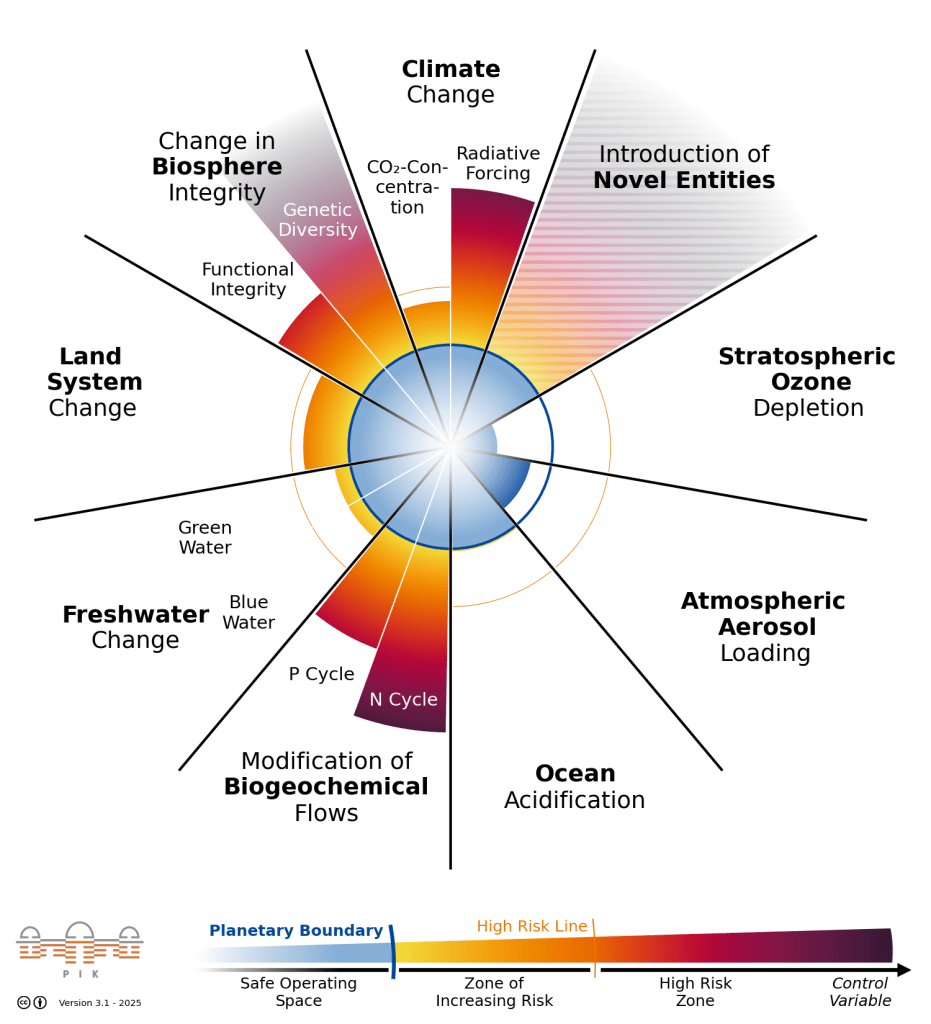
 Chasing Tales